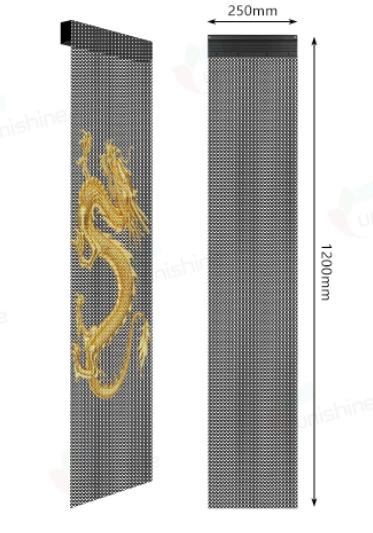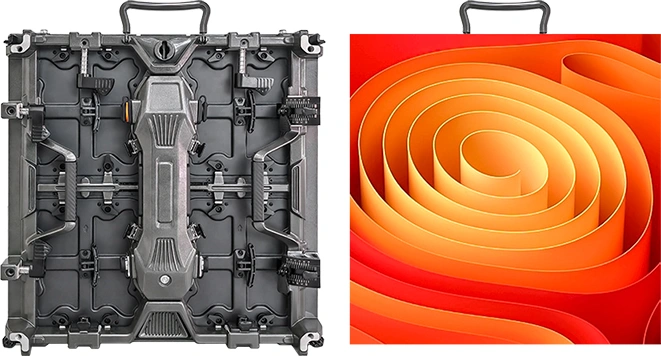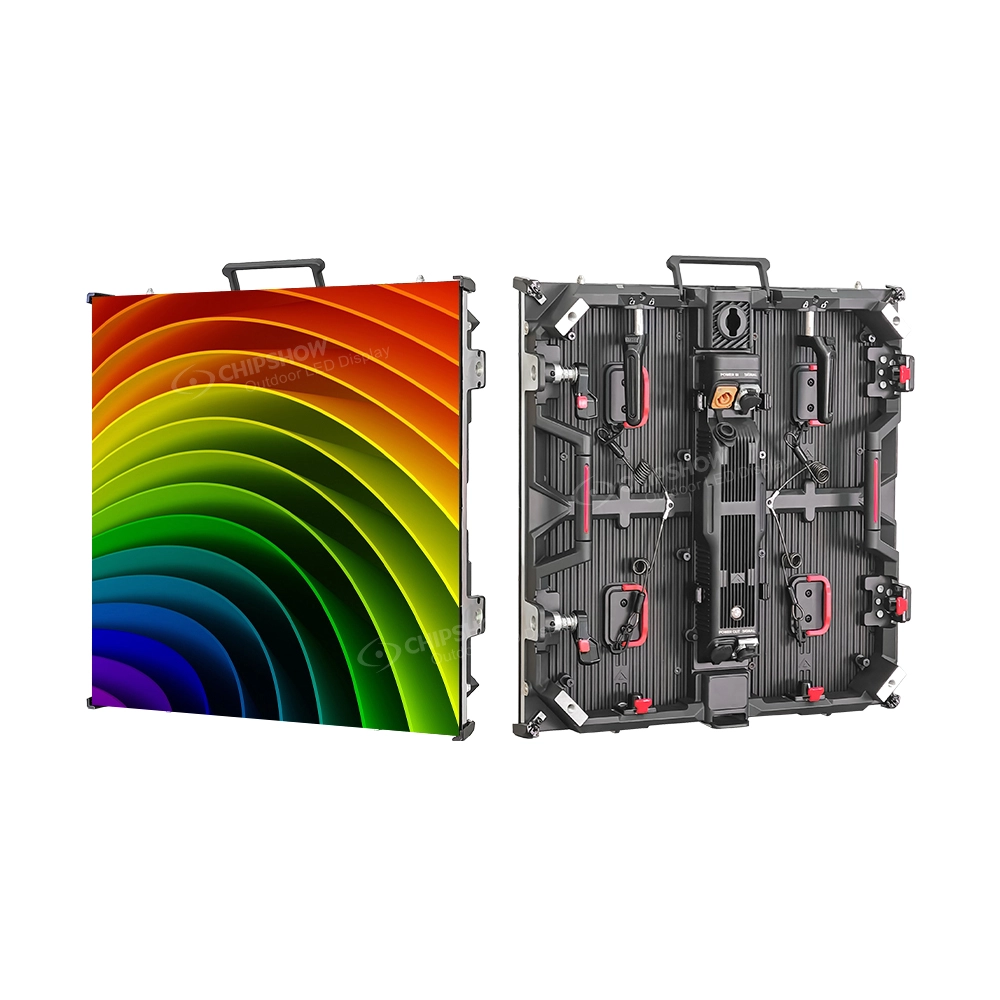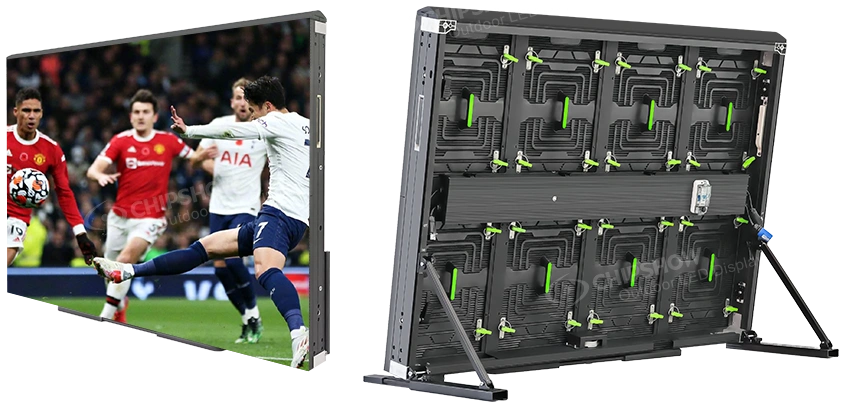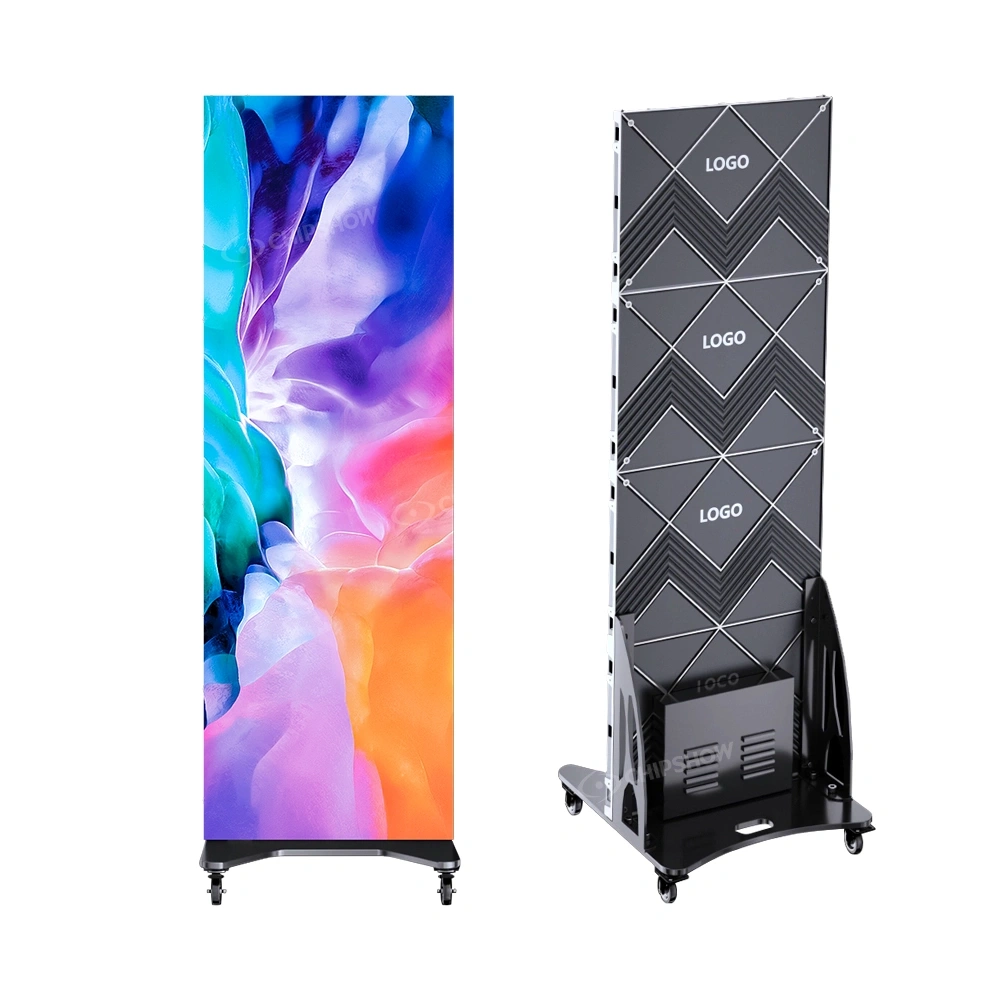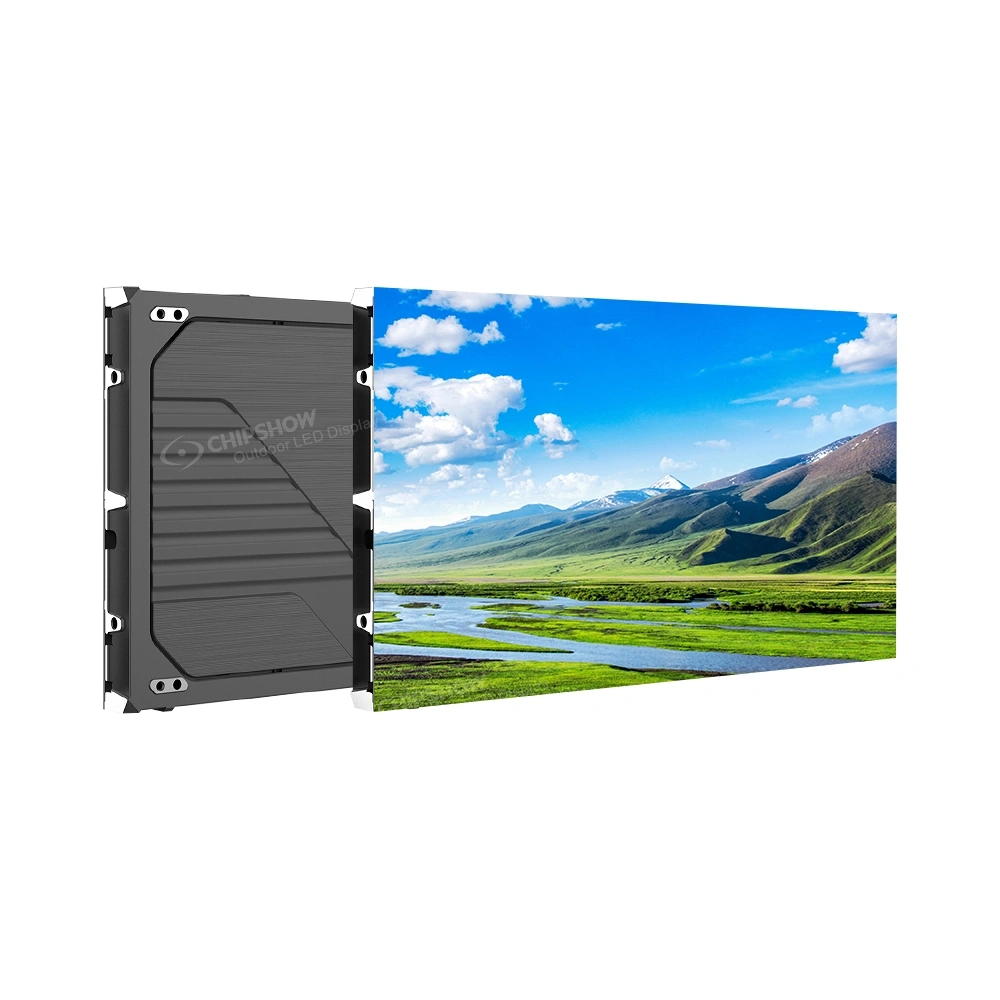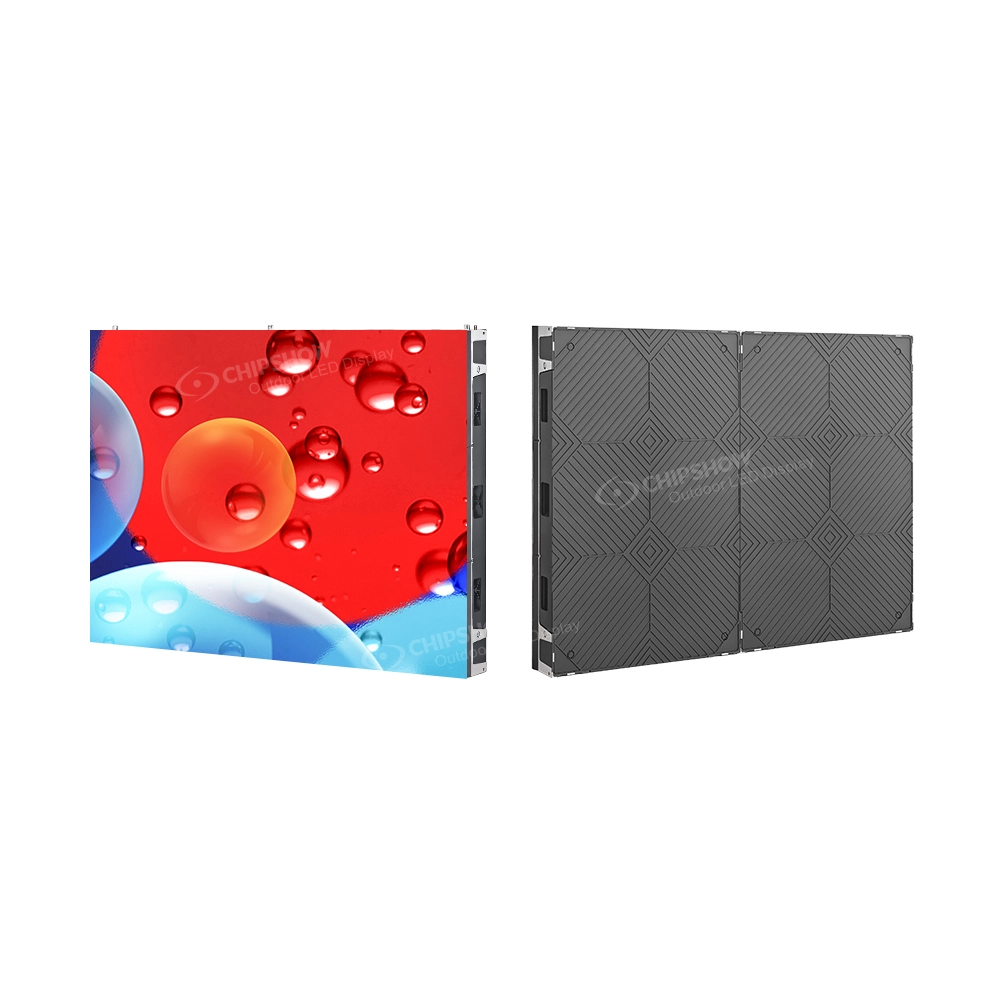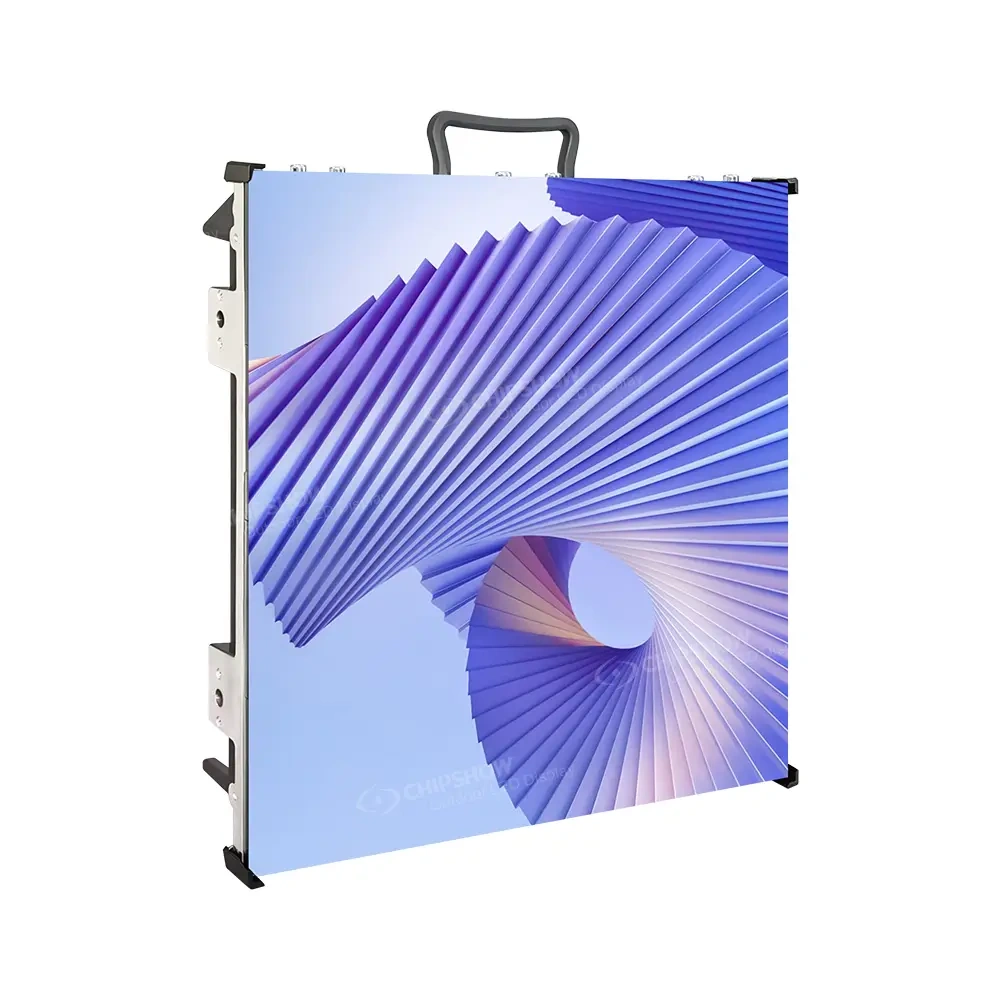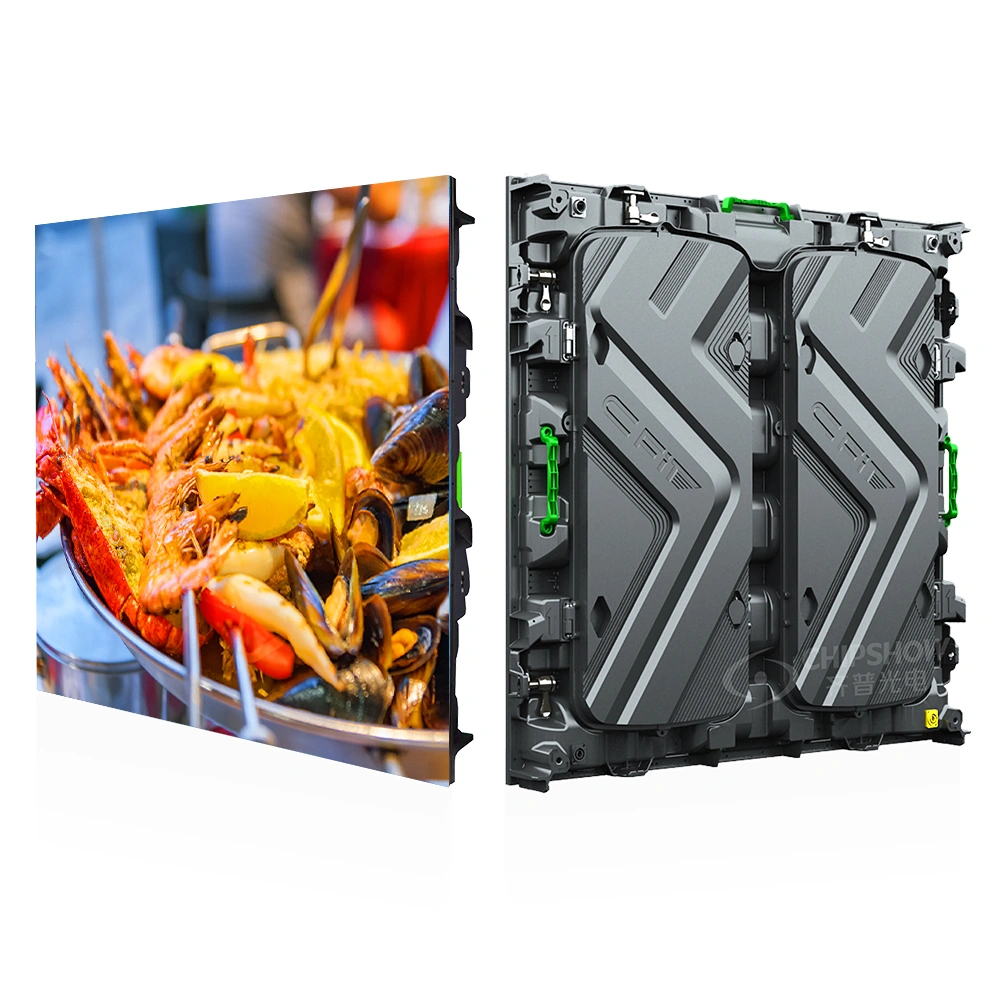
TL;DR: A rental LED screen ships as cases — flight cases for 500 mm cabinets, reinforced cartons for 1000 mm — and the case count depends on screen area and cabinet format together. A 100 m² screen ships in 20 to 67 cases and weighs 1.4 to 4.42 tonnes, and the two figures do not peak on the same configuration. Rigging beams, connection plates and screws follow the layout; receiving cards, spare modules and documents are agreed in the contract. All packing figures are manufacturer estimates, so confirm them against the packing list before booking freight.
Rental LED screen packing decides two numbers that a cabinet datasheet leaves out: how many cases arrive on site, and what the shipment weighs. A European rental company pricing a 60 m² or 120 m² build needs both before it can size truck space or ask for a freight quote. Choosing a cabinet on pitch, brightness, refresh rate and locking system is covered in the rental LED screen comparison guide; packing and delivery scope fall outside that comparison and are what this article covers. The figures in this article are manufacturer packing data, given per square metre so they scale with build size.
Calculating Case Count From Screen Area and Cabinet Format
A square metre of rental screen needs between 0.2 and 0.67 cases, depending on cabinet format. Two steps decide it. Screen area divided by the area of one cabinet gives the number of cabinets, and how many cabinets one case holds turns that into cases. A 100 m² screen built from 500 × 500 mm cabinets needs 400 cabinets, which at 8 per case is 50 cases. The same area built from 1000 × 1000 mm cabinets needs 100 cabinets, which at 5 per case is 20 cases. Change either number and the case count moves: the same 400 cabinets at 6 per case become 67 cases.
Packed weight per square metre is one full case divided by the area that case covers, so it is fixed once the cabinet format is chosen. Across configurations that number changes, while case count answers a different question. The two figures do not peak together: the configuration that needs the most cases is not the heaviest shipment. Across the configurations below, a 100 m² build carries between 1,400 and 4,420 kg in 20 to 67 cases, at 14 to 43 kg per square metre and 0.11 to 0.20 m³ per square metre.
Packed Weight and Volume Across Seven Configurations
Table 1 applies that calculation across three cabinet formats.
Table 1. Packed weight and volume by rental configuration
| Model | Cabinet | Cabinets per case | Packed weight per case | Packed weight per m² | Packed volume per m² | Case type |
| C-Arc | 500 × 500 mm | 6 | 55 kg | 36.7 kg | 0.193 m³ | Flight case |
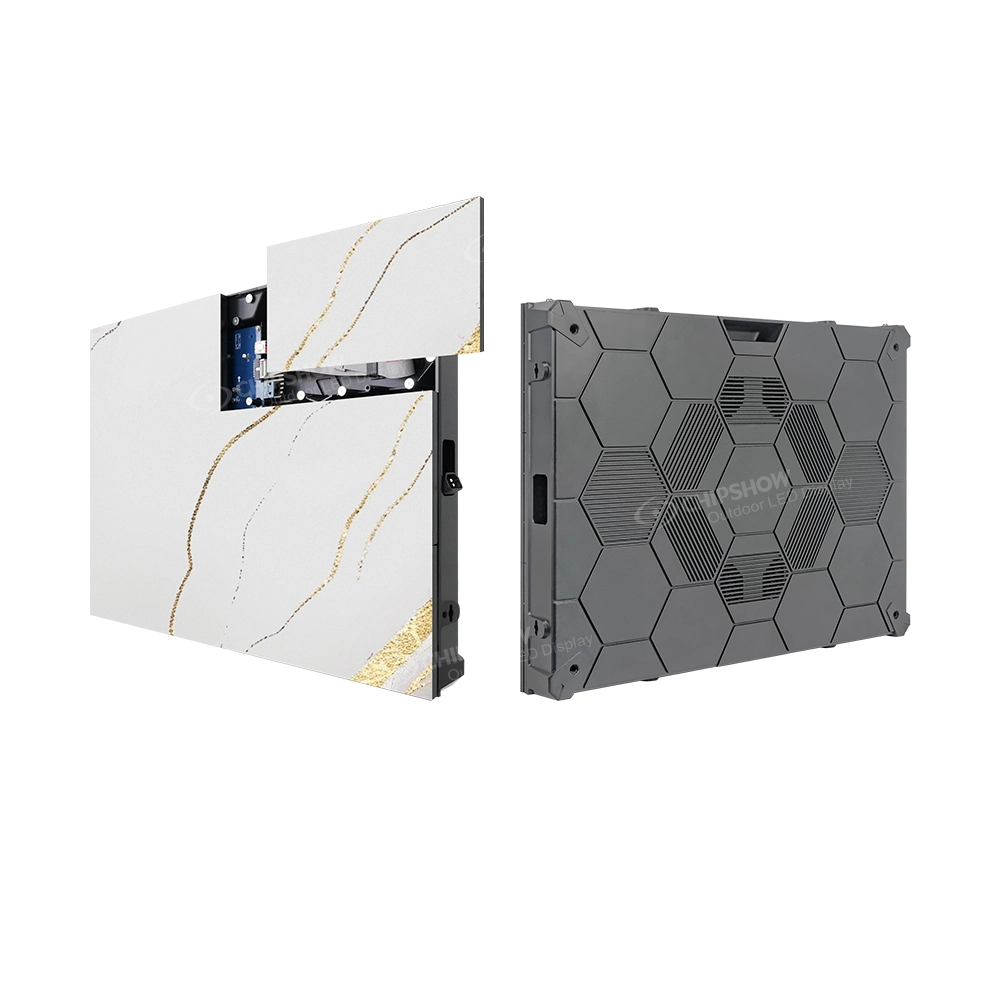
| C-Shine Plus | 500 × 500 mm | 8 | 77 kg | 38.5 kg | 0.192 m³ | Flight case |
| C-Rock Outdoor | 500 × 500 mm | 8 | 77 kg | 38.5 kg | 0.203 m³ | Flight case |
| C-Shine Plus | 500 × 1000 mm | 6 | 130 kg | 43.3 kg | 0.144 m³ | Flight case |
| C-Rock Outdoor | 500 × 1000 mm | 6 | 130 kg | 43.3 kg | 0.186 m³ | Flight case |
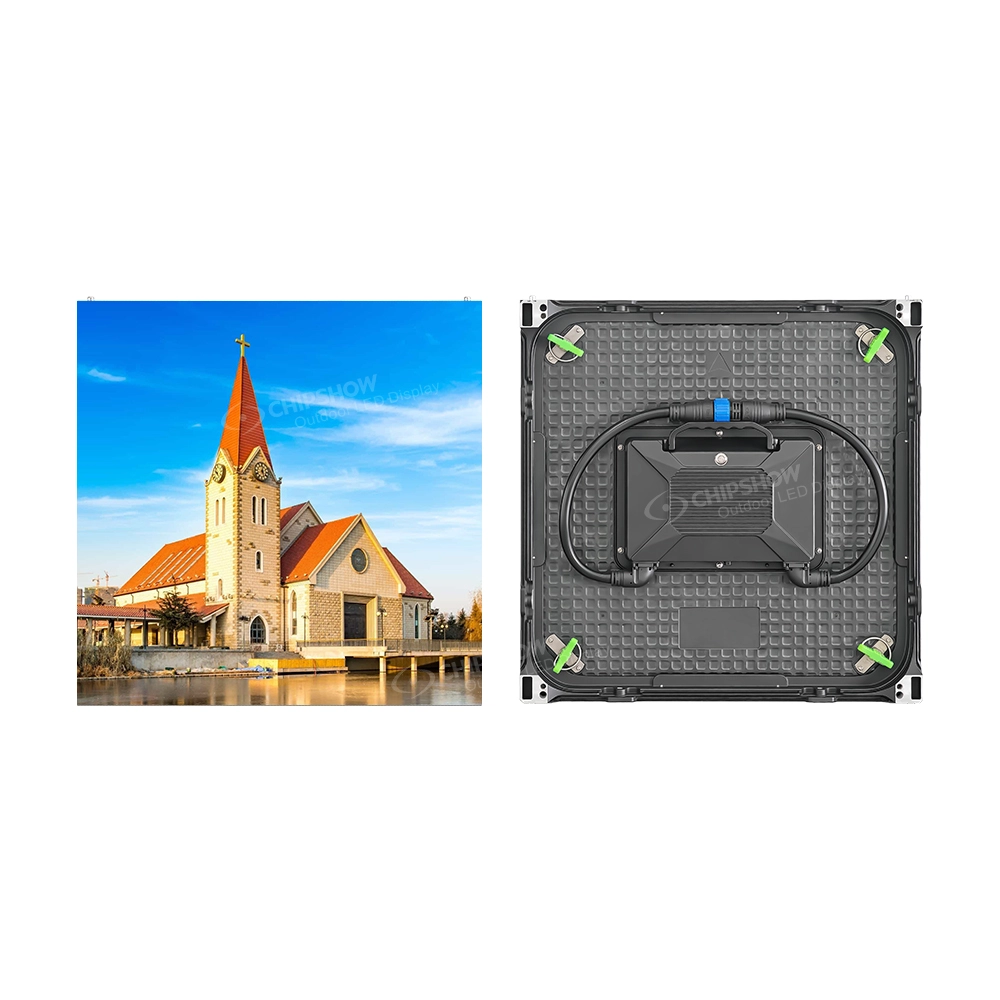
| C-Carbon P3.91 | 1000 × 1000 mm | 5 | 110 kg | 22.0 kg | 0.111 m³ | Reinforced carton |
| C-Carbon P8.93 | 1000 × 1000 mm | 5 | 70 kg | 14.0 kg | 0.111 m³ | Reinforced carton |
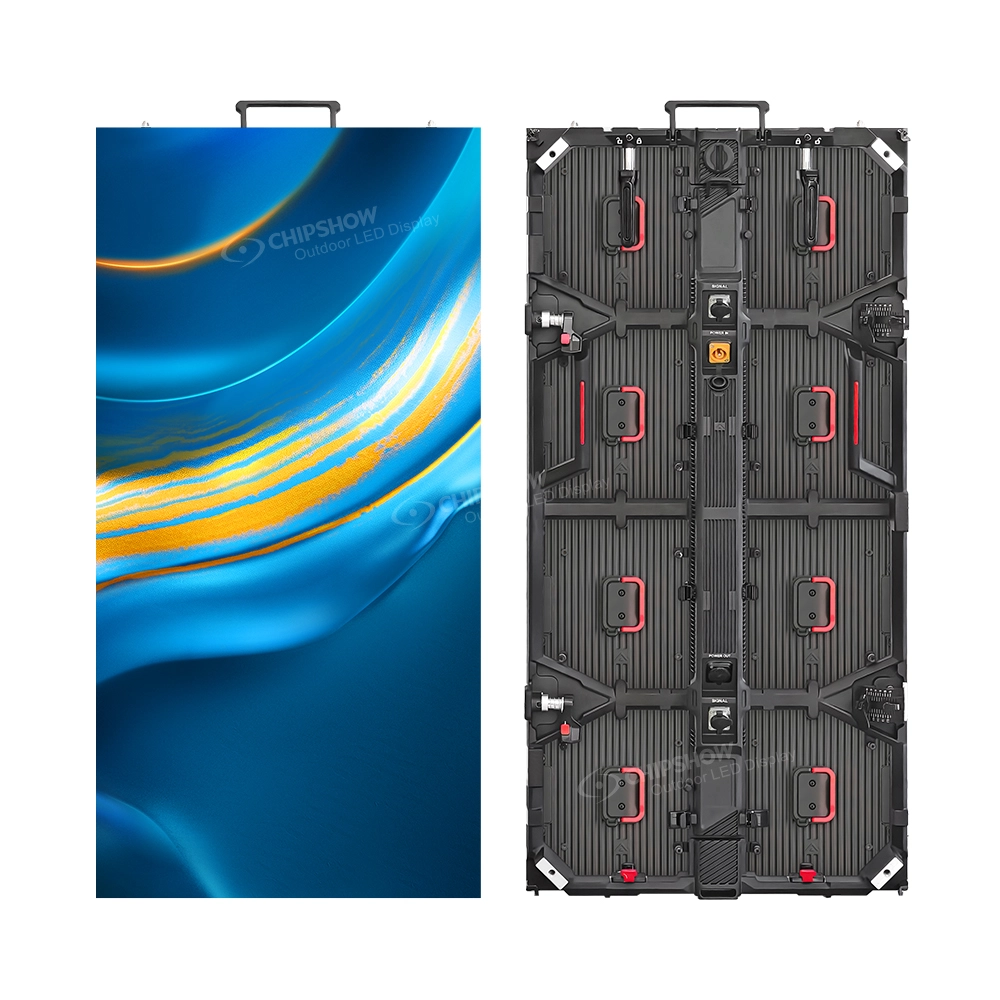
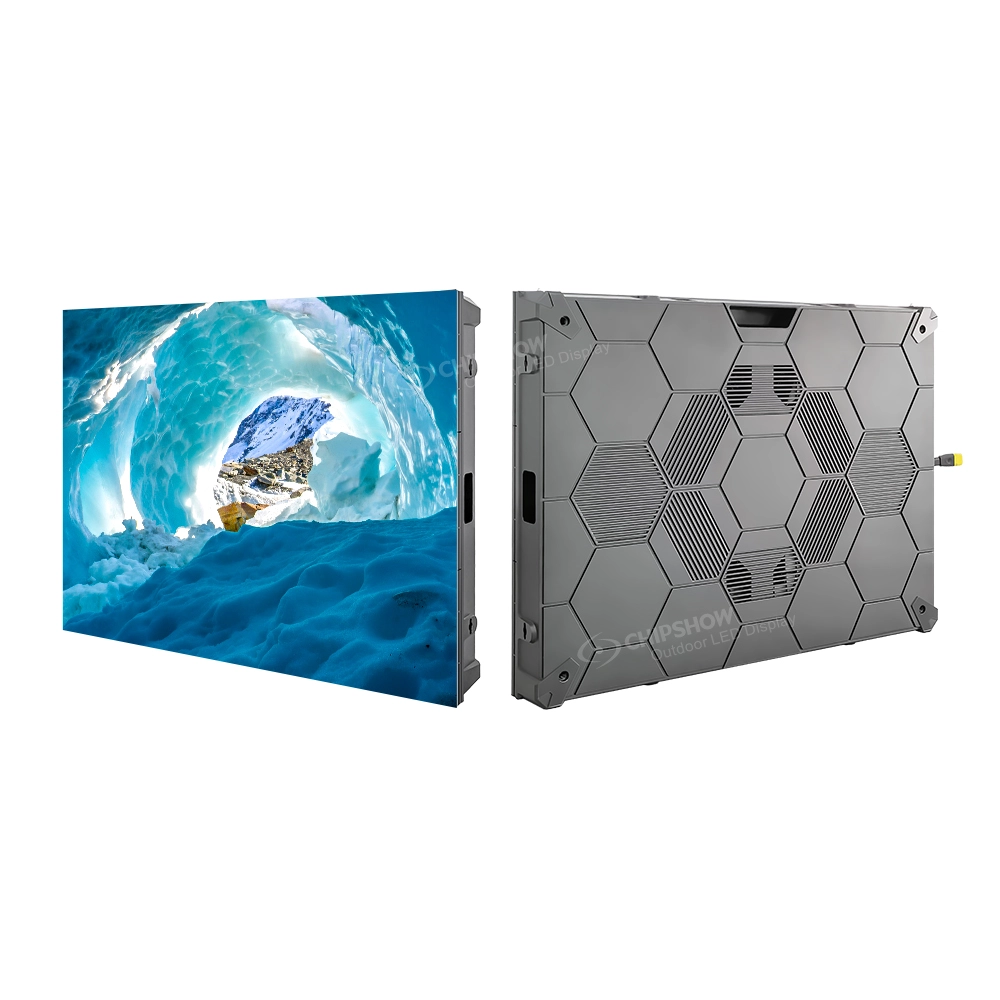
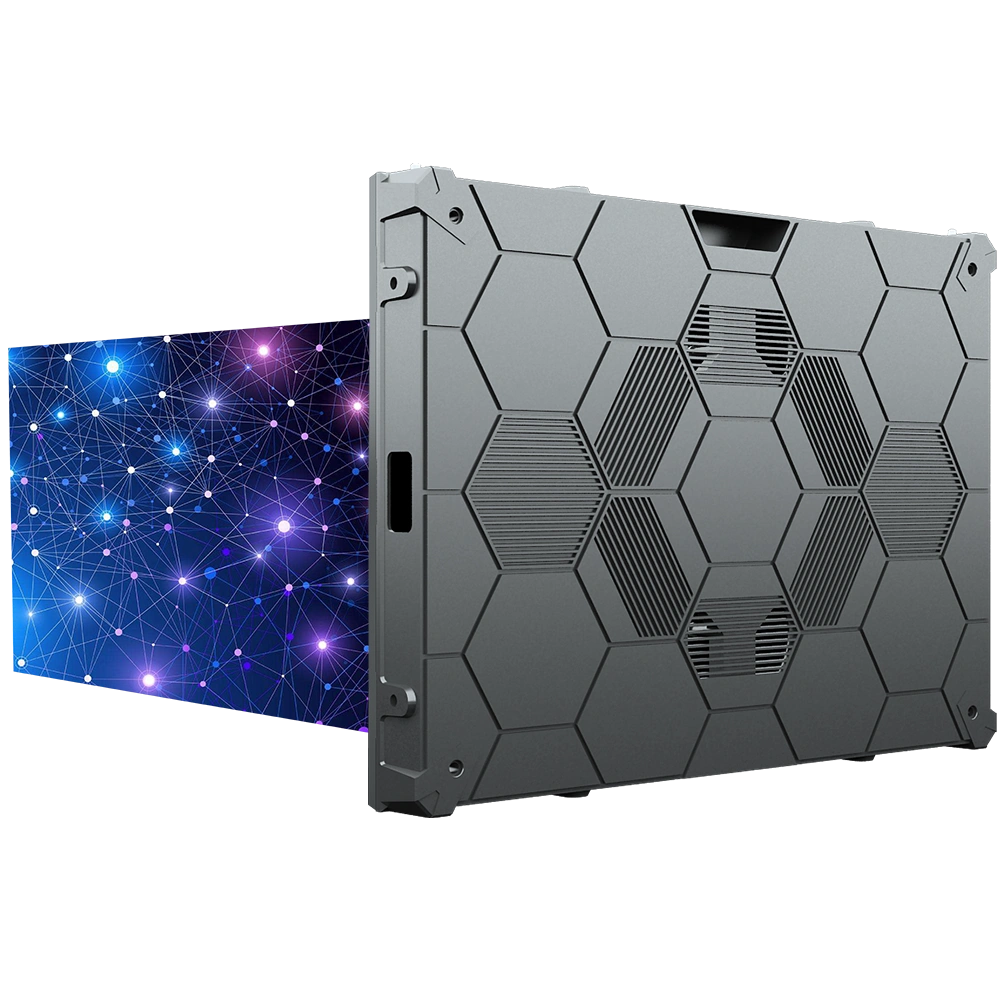
Two columns carry most of the decisions. Packed weight per square metre sets the freight quote. Packed volume per square metre sets how much floor and truck space the screen occupies, which is the figure a tour or event plan is built on. Cabinet specifications for each model are on its product page: C-Arc, C-Shine Plus, C-Rock Outdoor, C-Carbon P3.91, and C-Carbon P8.93.
The per-square-metre figures in Table 1 scale directly: multiply them by screen area for total packed weight and total packed volume. Case count comes from the number of cabinets. Round up, because a part-filled case takes the same floor space and the same freight slot as a full one.
Scaled to 100 m², the spread between configurations widens:
Table 2. A 100 m² screen, rounded up to whole cases
| Configuration | Cases | Total packed weight | Total packed volume |
| C-Arc 500 × 500 | 67 | 3,685 kg | 19.4 m³ |
| C-Shine Plus 500 × 500 | 50 | 3,850 kg | 19.2 m³ |
| C-Rock Outdoor 500 × 500 | 50 | 3,850 kg | 20.3 m³ |
| C-Shine Plus 500 × 1000 | 34 | 4,420 kg | 14.7 m³ |
| C-Rock Outdoor 500 × 1000 | 34 | 4,420 kg | 18.9 m³ |
| C-Carbon P3.91 | 20 | 2,200 kg | 11.1 m³ |
| C-Carbon P8.93 | 20 | 1,400 kg | 11.1 m³ |
Case count moves by a factor of 3.3 across these configurations, and total weight by a factor of 3.2. Weight per square metre stays under 44 kg in every 500 mm configuration and under 23 kg in the 1000 mm carton configurations.
Air freight pricing normally compares actual weight with a volumetric weight derived from carton dimensions, at a factor of 6,000 cm³ per kilogram. Carriers vary this factor, and the 6,000 figure is the common convention rather than a fixed rule. Six of the seven configurations in Table 1 exceed their volumetric weight and are charged on packed weight. C-Carbon P8.93 is the exception: its carton works out to roughly 93 kg volumetric against 70 kg packed, so air freight on that configuration is charged on volume rather than weight. Road and sea freight quotes follow different rules, and those quotes depend on packed volume as well as packed weight. Road freight adds a second constraint: vehicle weight and dimension limits differ across European countries, so the rental company still has to check any plan built on case count alone against the carrier’s available vehicle types before fixing it.
Every packing figure in Table 1 and Table 2 is a manufacturer estimate. Case capacity is fixed by the cabinet format, but the exact packed weight moves with the accessories loaded into the case. The figures assume cabinets in their cases, and the buyer has to confirm for the specific order whether connection plates, screws or control system items travel in the same case. Case dimensions also differ between models that share a cabinet format, so packed volume is not a function of cabinet size alone. Confirm the figures against the packing list before a freight booking is made.
Why the Same Cabinet Size Can Still Ship at a Different Weight
Cabinet size predicts packing weight within a range, not to the kilogram. Two pairs in Table 1 show why.
C-Arc and the 500 × 500 flat cabinets share the same footprint, but not the same case. C-Arc carries 6 curved cabinets per case at 55 kg. C-Shine Plus and C-Rock Outdoor carry 8 flat cabinets at 77 kg. Per square metre the three land within 1.8 kg of each other. The curved case cuts 28.6% off the case weight while giving up 25% of its screen area, and that larger cut is what keeps it slightly lighter per square metre. For a 100 m² build the difference shows up as case count instead: 67 cases for C-Arc against 50 for the flat cabinets.
C-Carbon P3.91 and C-Carbon P8.93 make the opposite point. Both use a 1000 × 1000 mm cabinet, both pack 5 cabinets per case, and both ship in the same carton footprint. Their packed weights differ by 40 kg, at 110 kg and 70 kg respectively. With the carton and the cabinets per case identical, the difference has to come from the cabinet itself: the P8.93 cabinet is the lighter of the two.
The practical sequence is two steps. Estimate the case count and packed weight from cabinet format, using Table 1. Then confirm the figure for the specific model and revision on the order, because cabinet construction inside one format is not uniform. A figure taken from the first step alone will be close, and occasionally out by 40 kg per case.
What the Packing Data Does Not Cover
The figures above cover the first row of the table below, and they stop at the case. Three further items sit outside those figures: rigging beams and connectors, spare modules, and documents. None of them follows from cabinet format or screen area, and the table places each by what decides it.
| Group | What it covers | What decides it |
| Ships with the cabinet order | Cabinets, control system | Screen area and cabinet format |
| Follows the rigging layout | Rigging beams, connection plates, screws | Truss or ground support design |
| Agreed separately | Receiving cards, spare modules, operating documents | Contract terms |
Only the first group is fixed at the point of order, and it is the group a quotation for cabinets tends to cover. The two groups below it are where a cabinet quotation can leave gaps that only surface at load-in.
Rigging Beams, Connection Plates and Screws
These follow the layout, so no fixed quantity applies across projects. A flown truss wall and a ground-supported stage wall load the cabinets differently, use different beam spans, and need different connector quantities.
Two of these differences affect the shipment. Beam count and length change how much vehicle space the shipment needs. Whether the beams travel inside the cabinet cases or in separate cases decides the case count, and a shipment costed at 50 cabinet cases can arrive as 50 plus several beam cases. Framing and support types are compared in choosing rental LED cabinets for small and mid-size events; that article covers which support suits which layout, and the question here is only how the chosen layout changes the shipment.
Receiving Cards and Spare Modules
These follow the contract and the rigging plan rather than a fixed quantity. A rental company that assumes a standard spare quantity will not find it in the packing list.
Three details belong in the order: which model and cabinet revision the spares match, how many units of each, and how the spares are recorded against cabinet serial numbers. The revision is the part a spare list can get wrong, because a receiving card built for one cabinet generation does not necessarily serve the next. Spares planning across a rental fleet is covered in planning a small to mid-size event LED system. What has to be in the case on the night of a show is a separate question about show readiness, and this article stays with what is agreed at order stage.
Operating Documents and the Compliance Set
A rental screen order involves two document sets, and they are easy to treat as one. The operating set supports assembly, operation and service: assembly drawing, signal and power wiring diagram, control configuration backup, serial number and batch list, and the packing list. The buyer confirms at order stage which of these travel with a specific order rather than assuming the full set. The compliance set supports market access, and verifying it before an order is placed is covered in how to check LED display CE marking documents before ordering; this article does not repeat that.
The packing list links the two sets. It is what a site team checks the case count against on arrival, and the only place where the case, the cabinet and the accessories are recorded together. Ask for it in advance, not with the goods.
What Stays Fixed and What Changes With the Project
The three lines below are the checklist this article builds toward. Only the first is settled by the cabinet order. The second follows the layout. The third is agreed in the contract.
| Fixed, layout-based, or contractual | What to confirm at order stage |
| Fixed | Case count and packed weight from cabinet format |
| Layout-based | Beam count and length, separate cases, added weight |
| Contractual | Spares: model and revision match, quantity, serial number record. Documents: packing list in advance, assembly and wiring drawings. |
The order of checks follows the order of cost. Case count sets the truck and the load-in plan. Packed weight sets the freight quote. Accessories and spares set what actually arrives, and they are the items a cabinet quotation can leave out because they are not cabinets.
A rental company that fixes all three lines before signing has a shipment it can plan around. One that fixes only the first line has a screen, a quote for cabinets, and a set of open questions that surface at load-in.
Packing figures for a specific project can be confirmed before an order is placed through the Chipshow Europe contact page.
Frequently Asked Questions
Q1:How much does a rental LED screen weigh when packed?
Between 14 and 43 kg per square metre of screen, depending on cabinet format. A 500 × 500 mm cabinet packed in a flight case lands between 36.7 and 38.5 kg per square metre. A 500 × 1000 mm cabinet lands at 43.3 kg. A 1000 × 1000 mm cabinet in a reinforced carton lands between 14 and 22 kg. These are manufacturer estimates; confirm them against the packing list before ordering.
Q2:Are flight cases included in the quotation?
Ask before the quote is issued. Flight cases can be quoted as a separate line from cabinets and control system, so the quotation should state whether they are included, how many, and whether the cases are rated for the stacking and transport the project needs. Cases that are not in the quote will not arrive with the screen.
Q3:Can accessories ship in the same case as the cabinets?
It depends on the accessory and the case design. Connection plates and screws are configured with the cabinets they serve; ask the supplier to confirm whether they travel inside the cabinet case. Rigging beams follow the layout and may ship in separate cases, which changes the case count. Confirm the packing arrangement before the freight quote is requested, because a separate beam case is an extra case on the truck.
Q4:What spare parts should be agreed at order stage?
Receiving cards and spare modules are two items that belong in the contract. Confirm the model and cabinet revision each spare matches, the quantity of each, and how the spares are recorded against cabinet serial numbers. Spare quantities are agreed per order rather than fixed to a ratio, so an order that does not state them will not include them.