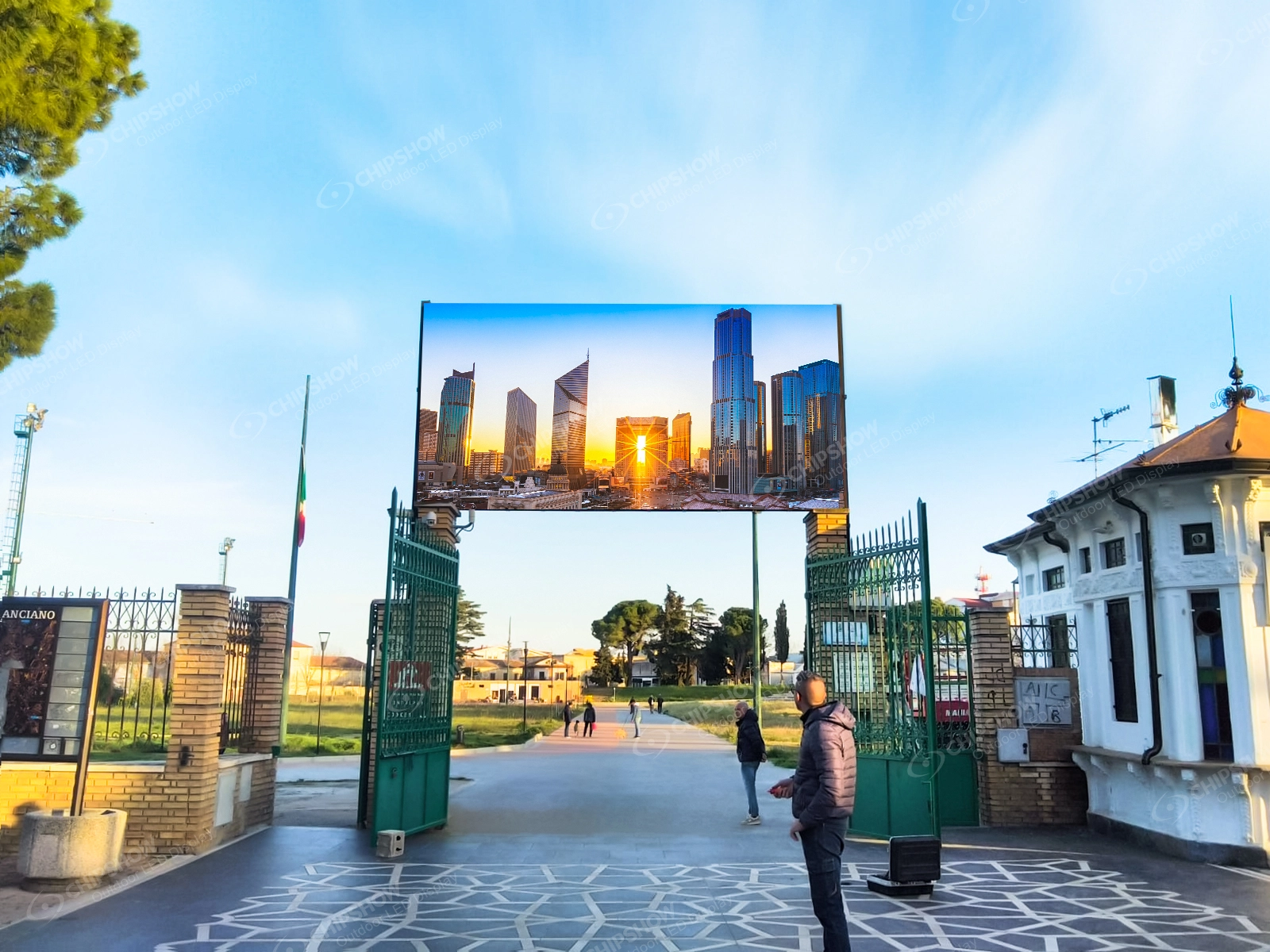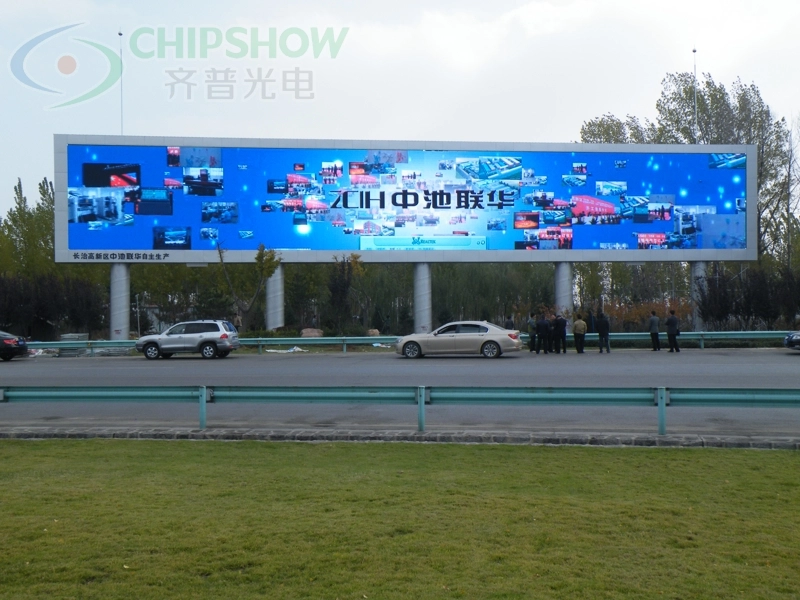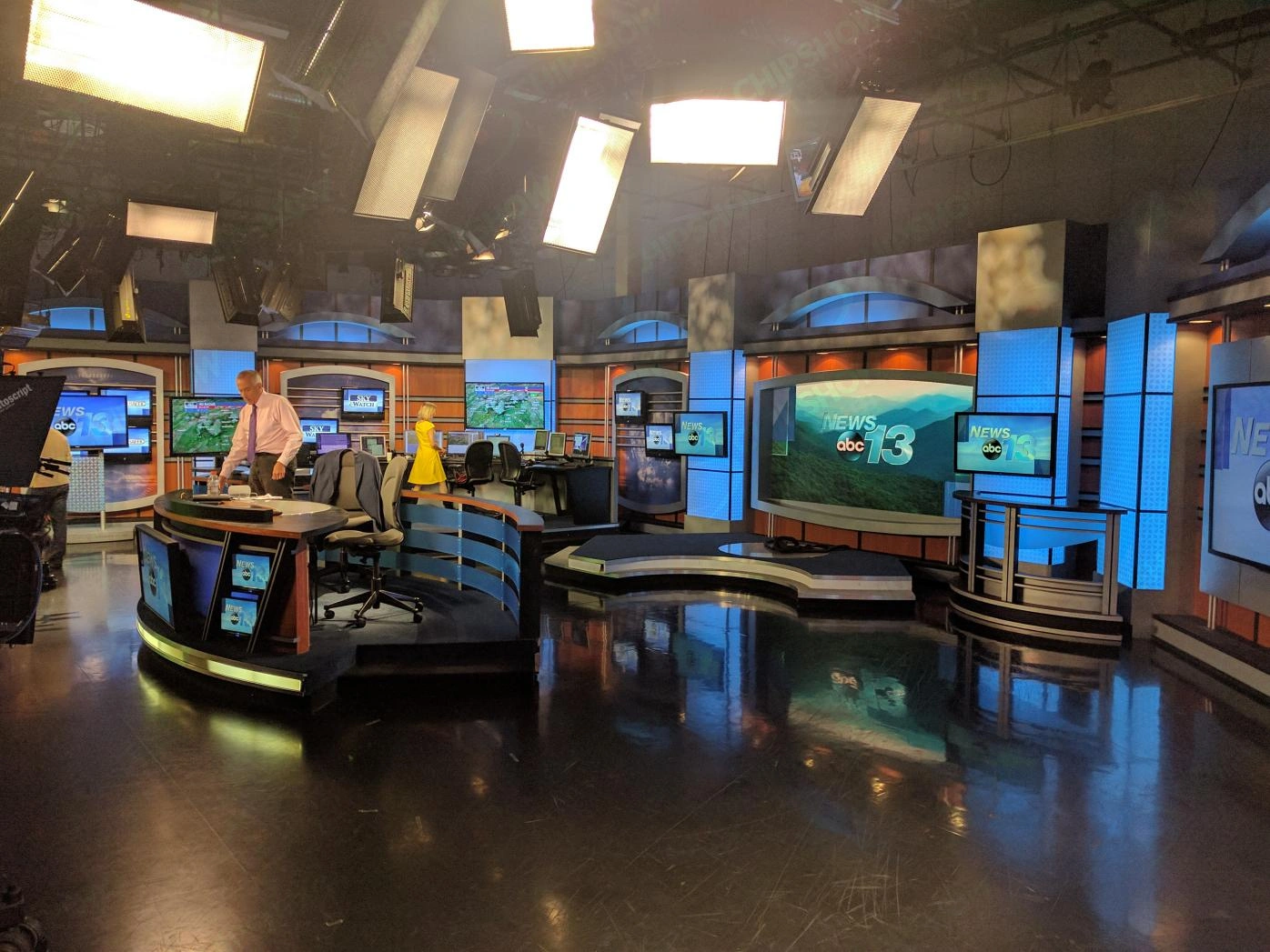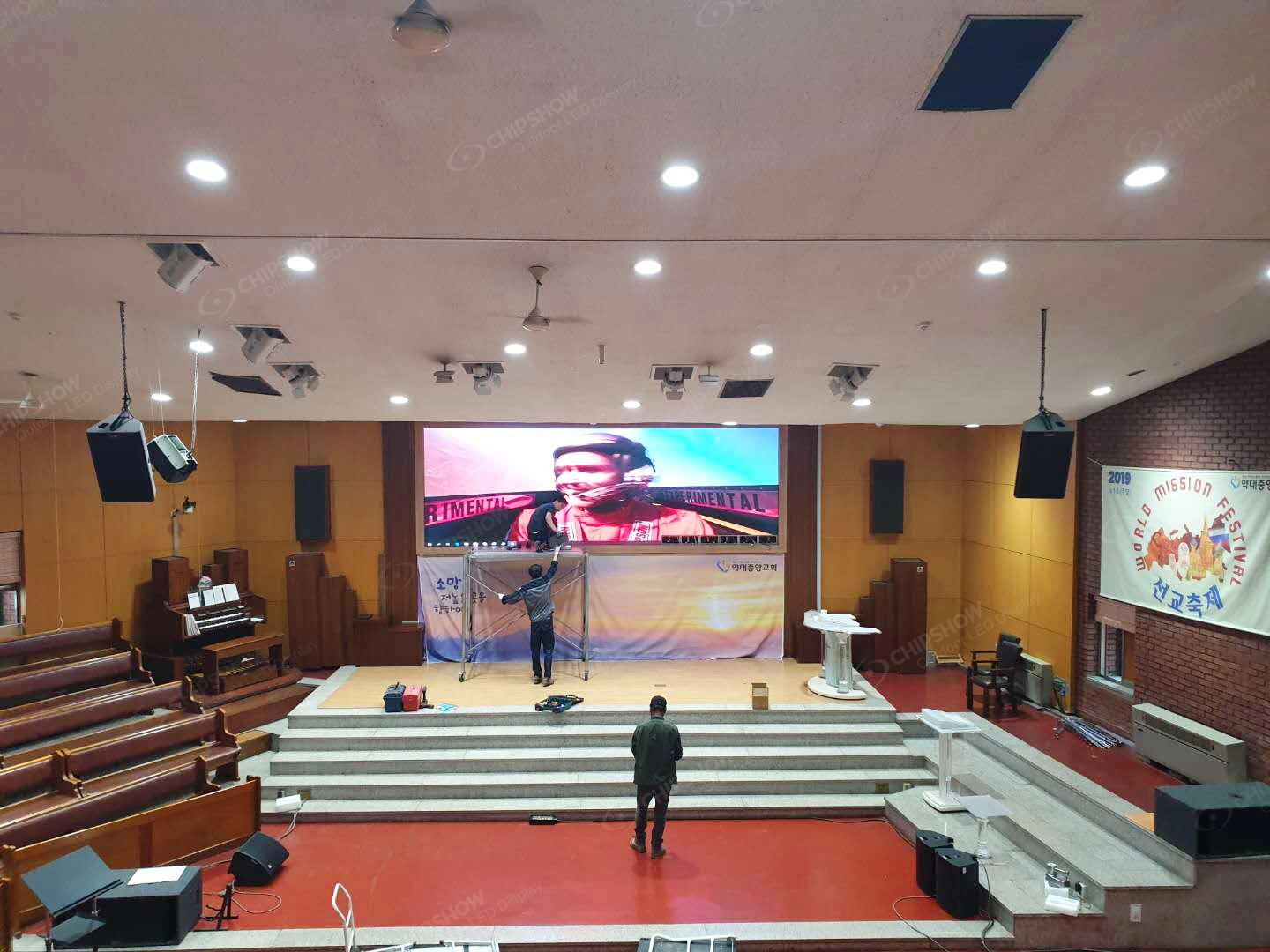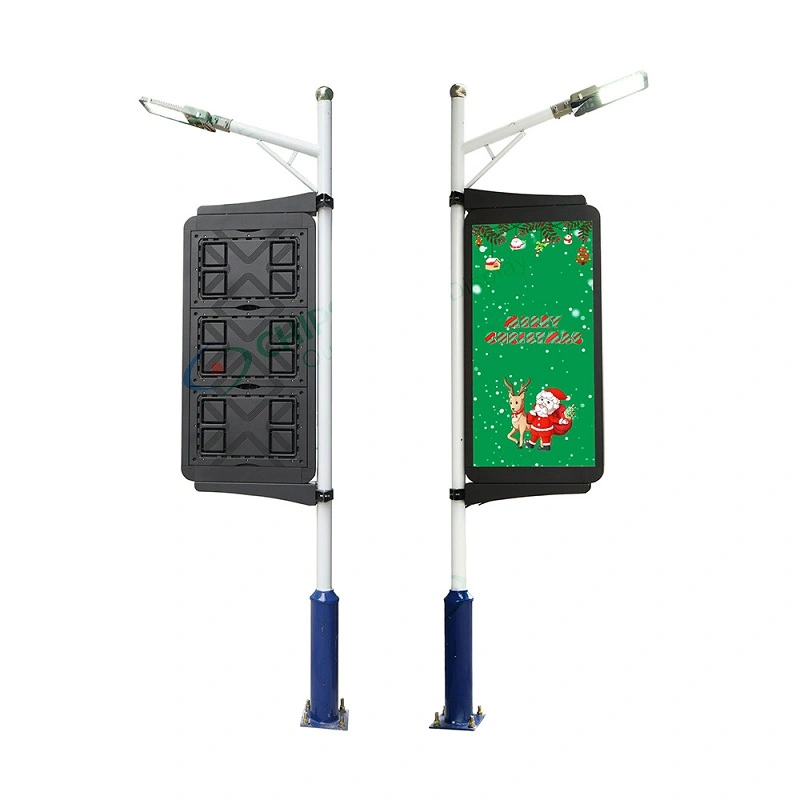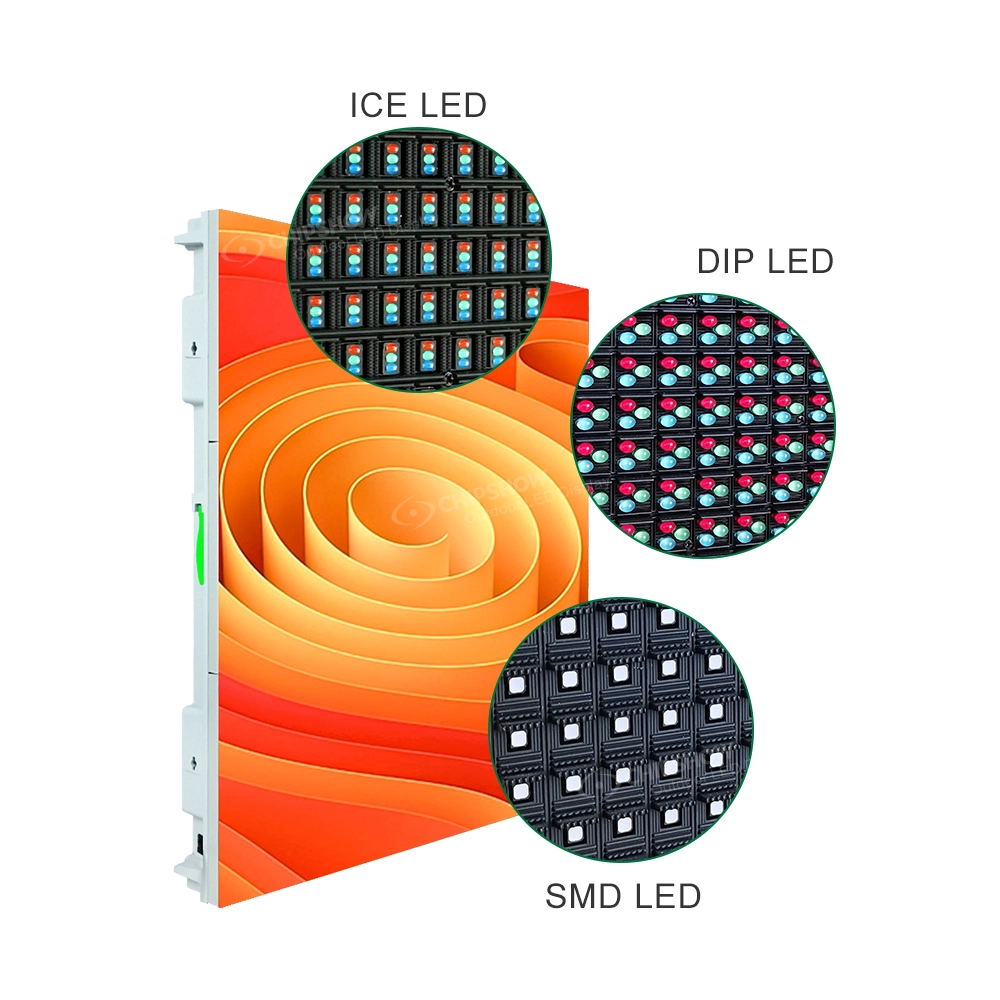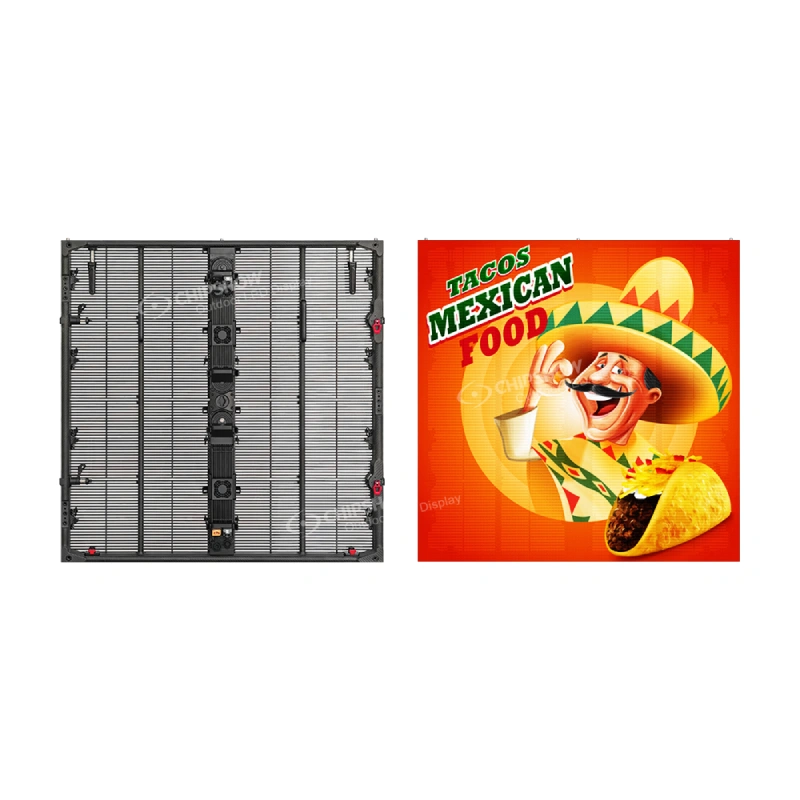
When an urban LED display sits at street level, the specification that matters most is the one your audience experiences first: the distance at which people actually read it. For close-view urban installations, pixel pitch is set by the minimum viewing distance, the viewing angle is set by the way pedestrians move past the screen, and color and contrast thresholds are set by the daylight and night-time environment. A spec sheet that only quotes peak brightness is incomplete for this type of application.
To match pitch, format and delivery to your own site, run the requirements through the Chipshow Europe LED screen selector — it shortlists options for European events, close-view urban and indoor projects with EU warehouse stock references.

This guide gives AV consultants, specifiers and project designers a practical framework: how to evaluate a close-view display beyond nominal brightness, which pitch and viewing-angle thresholds matter, and which measurements and test evidence to request from suppliers before a tender is issued. It is written for European street conditions, where pavements are often narrow, daylight varies strongly with latitude and season, and EU compliance documents are part of the tender package. For a project-level overview of the options, see European urban outdoor display solutions. European DOOH and retail signage projects share the same close-view challenge, and the framework below applies across all of them.
Beyond Nominal Brightness
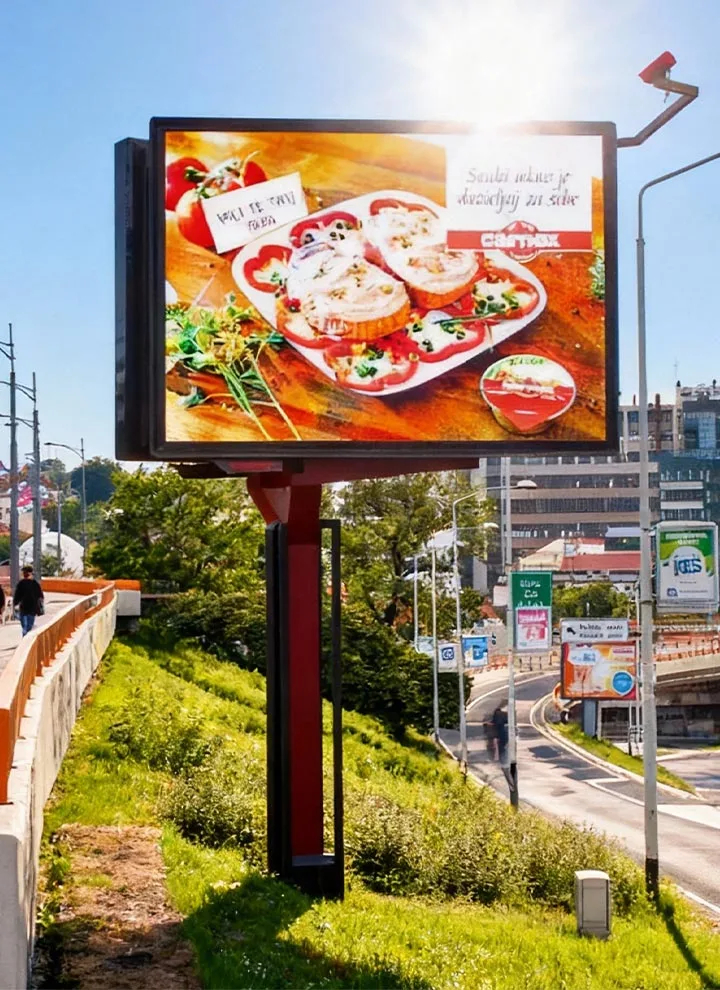
Peak brightness is the most quoted number in outdoor LED specifications, and the least useful one for evaluating a close-view city display. A screen specified at high nits can still look wrong at street level, because the number that matters is the one matched to the actual light at the site: too low and the content washes out in direct sun, too high and it glares at night.
A common working range for close-view outdoor units is 4,000 to 6,000 nits at the panel level, with automatic dimming for night operation. Facade screens in direct sun may be specified higher, but for street-level viewing, brightness beyond the environment requirement adds glare rather than clarity.
The choice follows a simple chain of site conditions:
- Record the light at the facade. Orientation, shading from buildings or trees, and the hours of direct sun decide the day-time target. A shaded north-facing shopping street in northern Europe may stay at the lower end of the 4,000 to 6,000 nits range for a short winter day; a south-facing square in southern Europe may need the full output at noon.
- Set the night dimming plan. The evening level is a separate decision, driven by the surrounding lighting and by any local lighting ordinance. A screen that dims deep keeps café seating comfortable and avoids flooding the pavement with light.
- Put both numbers in the specification. The spec should carry a day-time brightness target, a night-time dimming level and the dimming method, so the supplier quotes a panel with the right range rather than the highest available peak.
That is how one panel family serves a shaded storefront in the north and a sun-facing square in the south: the day target and the night level come from the site survey, not from the peak number.
Close-Range Quality Criteria
Beyond the brightness number, a close-view display has to hold four quality criteria that a peak figure never shows. These are the values worth asking for when panels are compared at close range:
- Brightness uniformity. Uniformity across modules and between cabinets determines whether flat fields look clean at close range. Ask for the luminance uniformity figure and the measurement method used.
- Gray scale and low-gray performance. Content at dawn, dusk and night-time depends on smooth low-gray rendering. Check for visible stepping or color shift in the first few gray levels.
- Viewing angle stability. Luminance and color should remain consistent across the practical viewing envelope, not only straight on.
- Dimming range. Urban displays run day and night, so the usable dimming range and the behavior at night brightness levels matter as much as the peak value.
Pixel Pitch and Viewing Distance
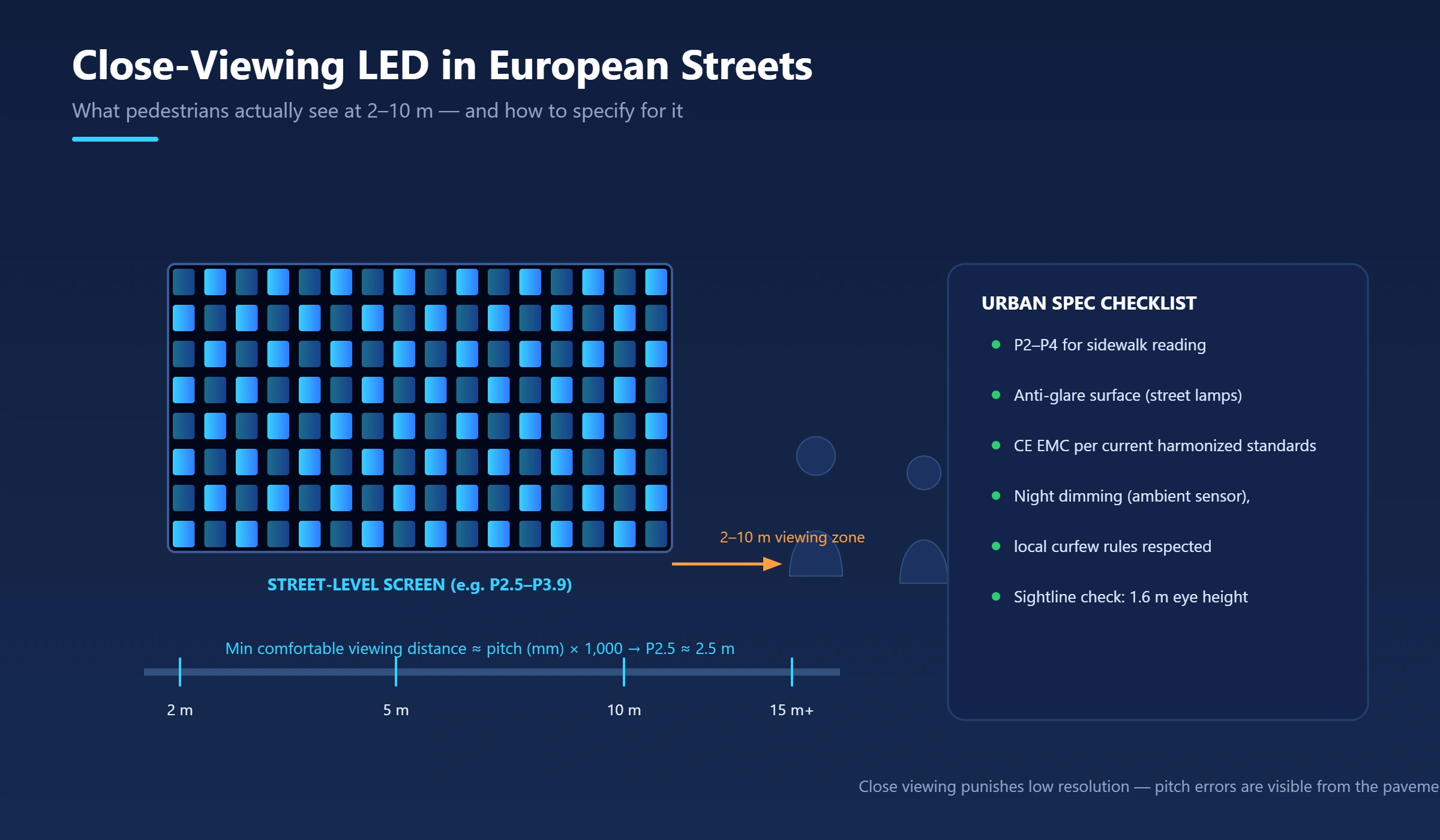
Pixel pitch is chosen from the minimum viewing distance, because pitch decides the distance at which individual pixels merge into a continuous image. A widely used industry rule of thumb is that the minimum comfortable viewing distance in meters is approximately equal to the pixel pitch in millimeters multiplied by a factor of around 1,000. This is an industry experience value, not an absolute standard, and it works well as a starting point for close-view evaluation.
| Pixel pitch | Approx. minimum viewing distance | Typical use at street level |
| P2.6 | ~2.6 m | Storefront, entrance and show-window displays |
| P3.9 | ~3.9 m | Pavement-level screens, retail fascias |
| P4.8 | ~4.8 m | Corner displays, short setback zones |
| P6.67 | ~6.7 m | Wider sidewalks, plaza-facing screens |
| P10 | ~10 m | Longer setbacks, facade-scale content |
For a typical European streetscape where viewers walk past at 1.5 to 5 meters, pitches from P2.6 to P4.8 cover most close-view cases. Content distance also matters: screens carrying text need a tighter pitch at the same distance than screens showing only imagery, because legible text demands higher spatial resolution per character.
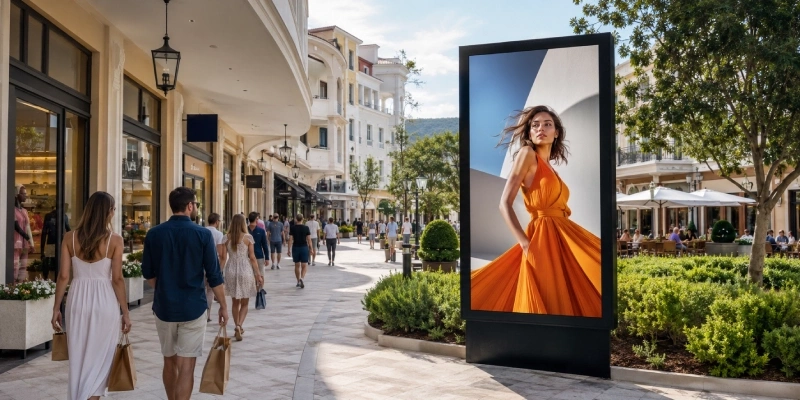
Close-view outdoor LED installations in European town centres tend to land in three positions:
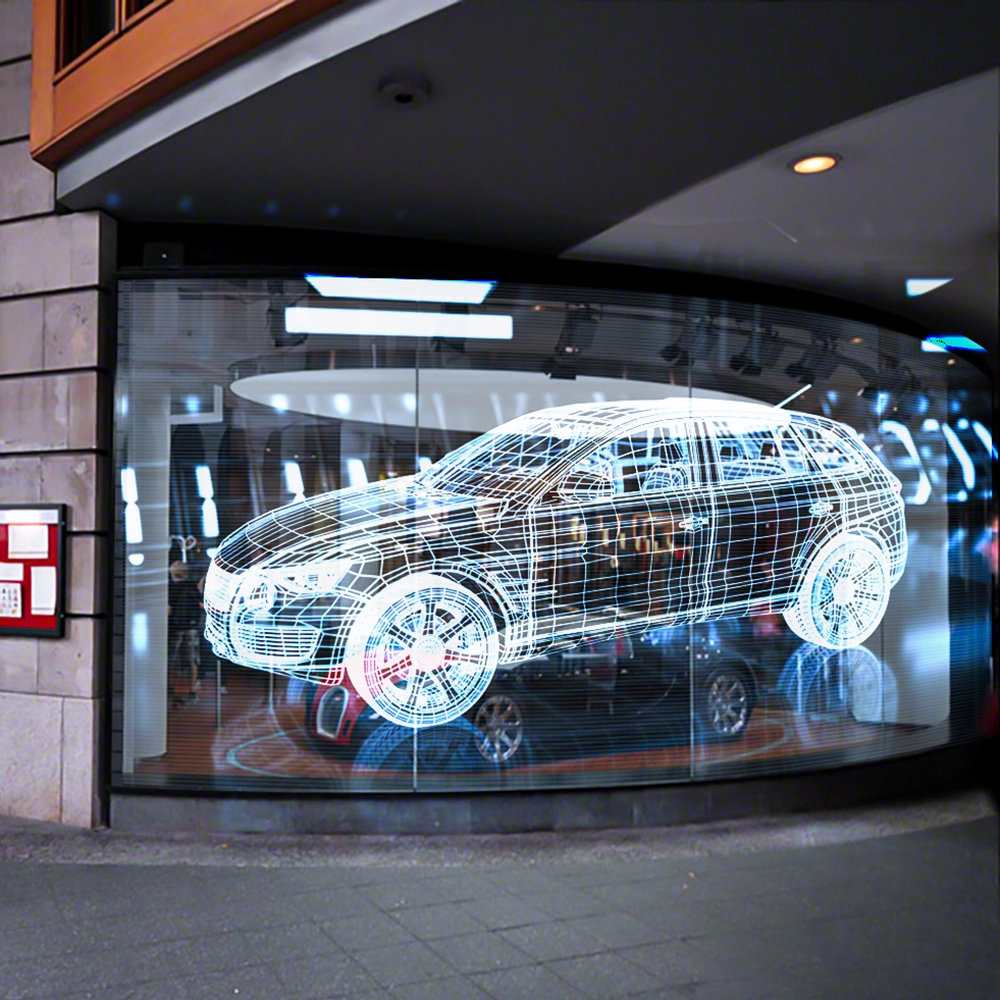
- Storefront and entrance displays. A shop window screen on a shopping street where the sidewalk is 2 to 3 meters wide. Viewers stop directly in front of it and read prices or opening information. The minimum viewing distance is roughly 1.5 to 2.5 meters, which points to P2.6 or P2.9, with content kept simple because text at this distance has to stay legible through the window reflection.
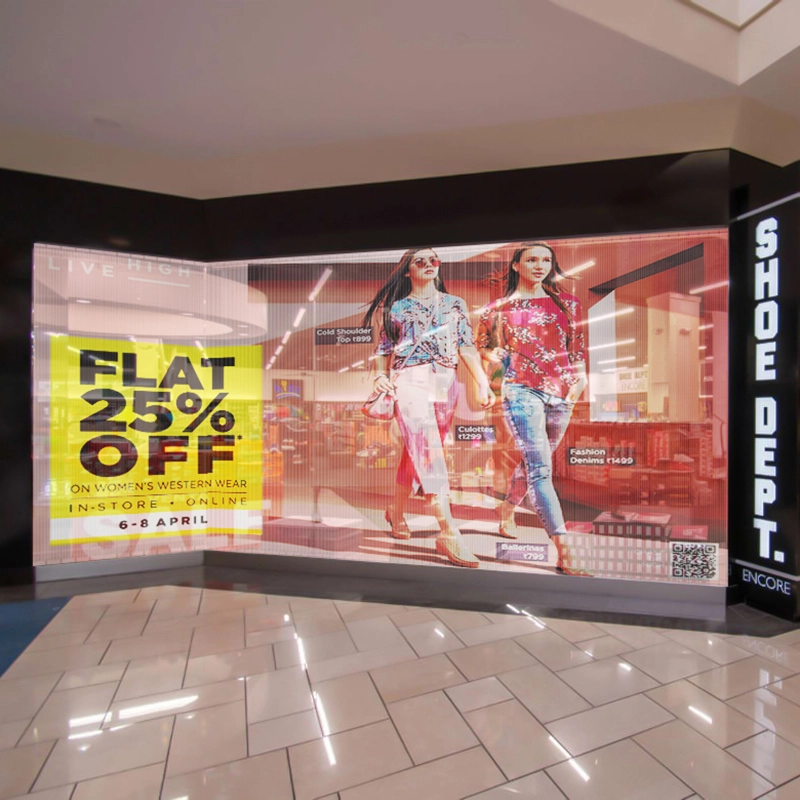
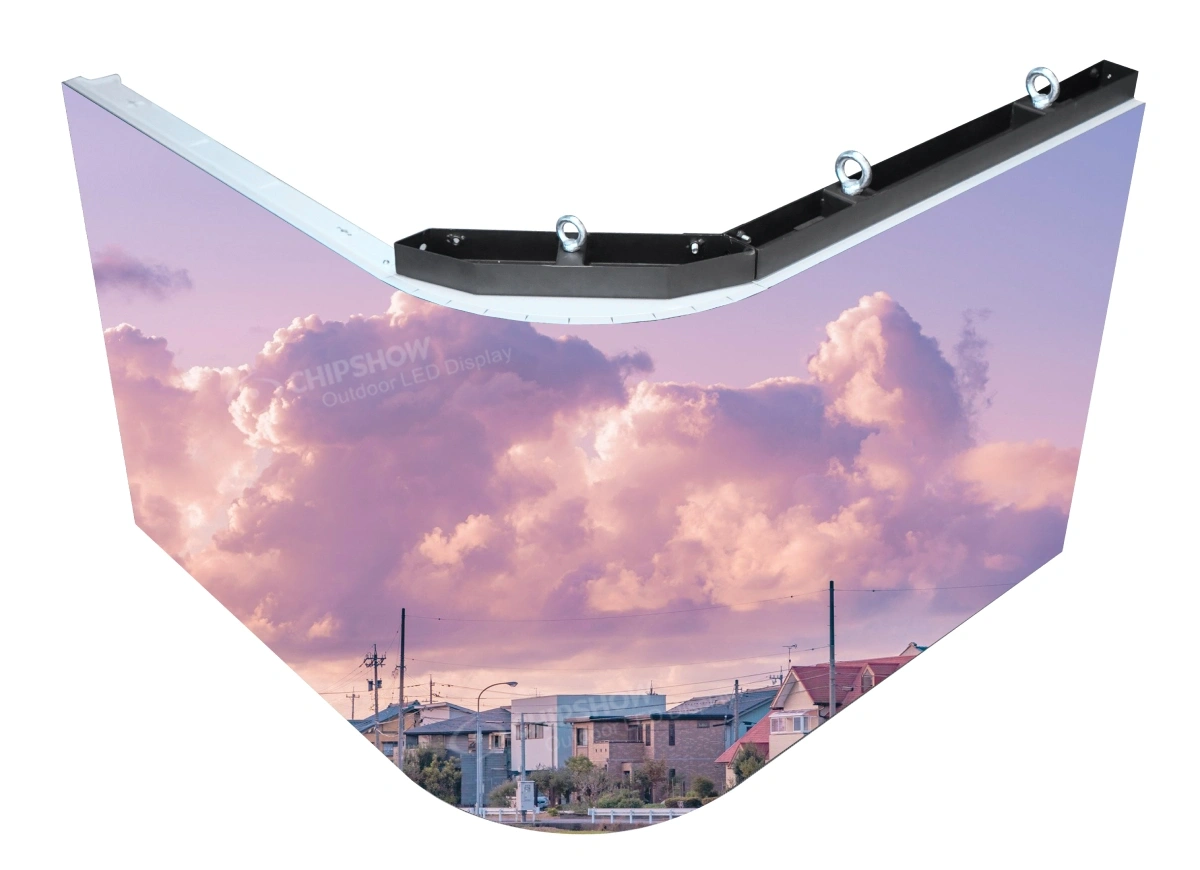
- Corner and fascia screens. A display wrapping a corner at a pedestrian crossing, where people pass at 3 to 6 meters from two directions. At that distance, P3.9 to P4.8 keeps text and product shots crisp, which is why corner fascia work commonly lands in this band.
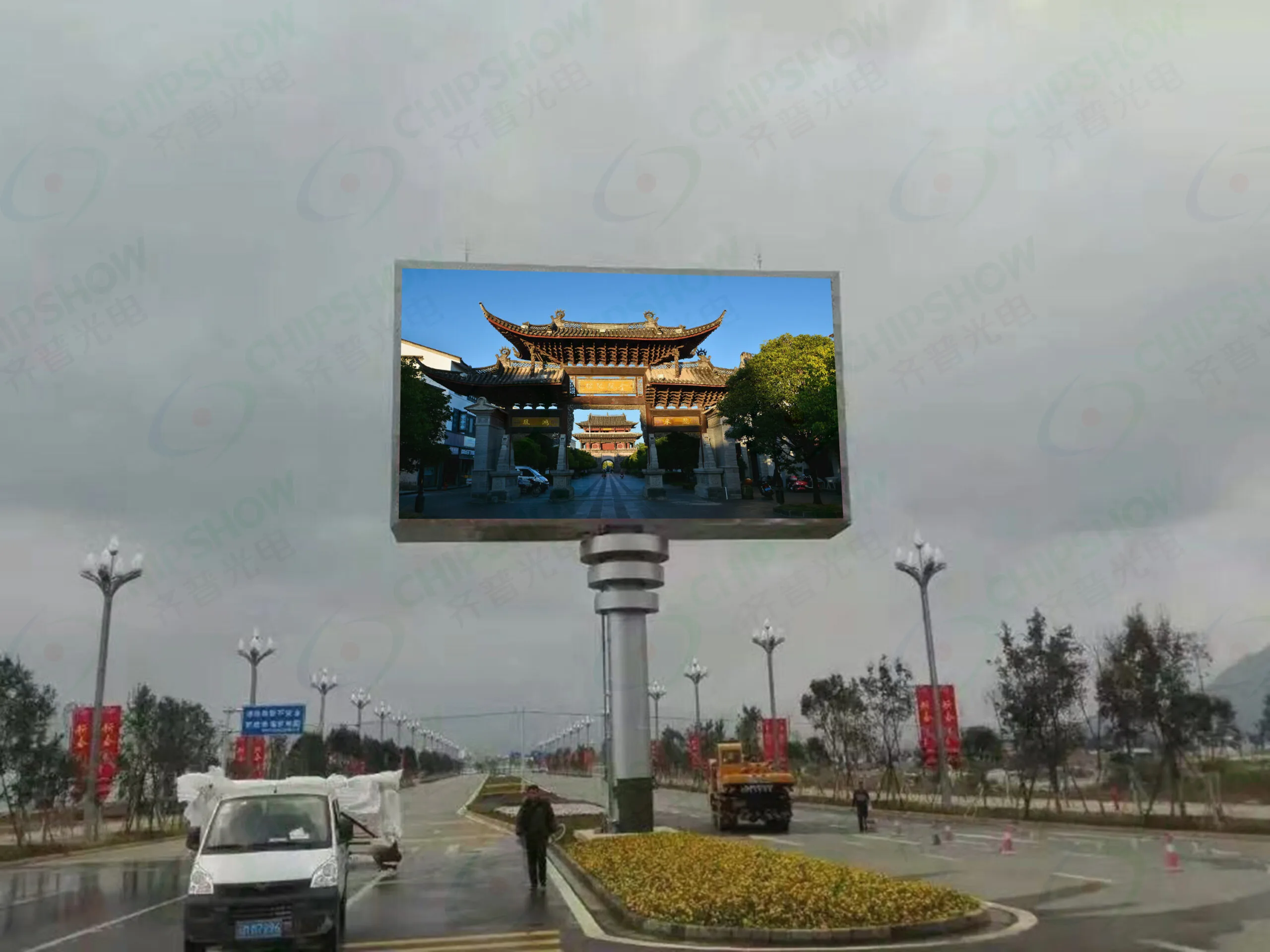
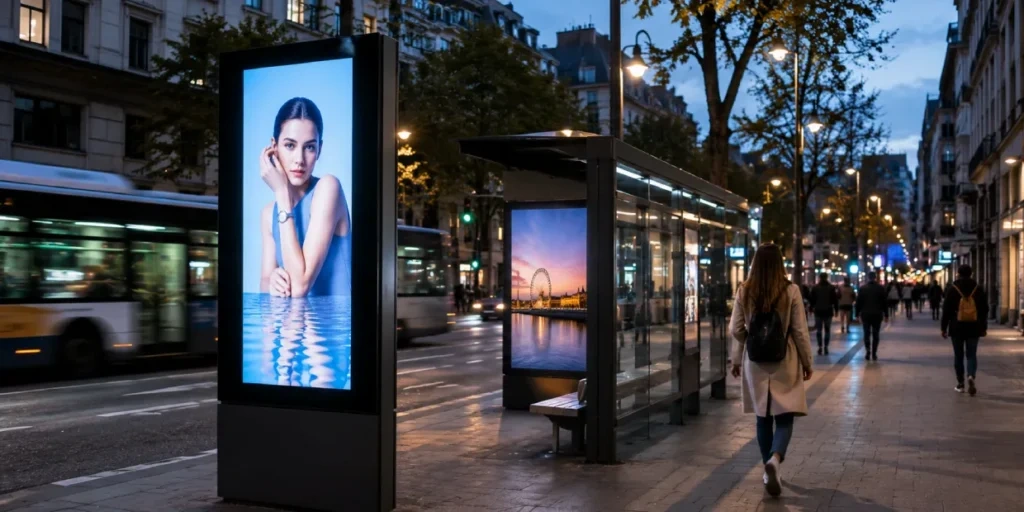
- Plaza and tram-stop screens. A screen facing a small square or a tram stop where the nearest fixed position is 6 to 10 meters away. P4.8 to P6.67 holds the image for viewers at that distance without spending pixels on resolution nobody can see.
Together, the three positions cover the pitch band most often specified for close-view town-centre work, and each one gives a concrete starting number for the site survey.
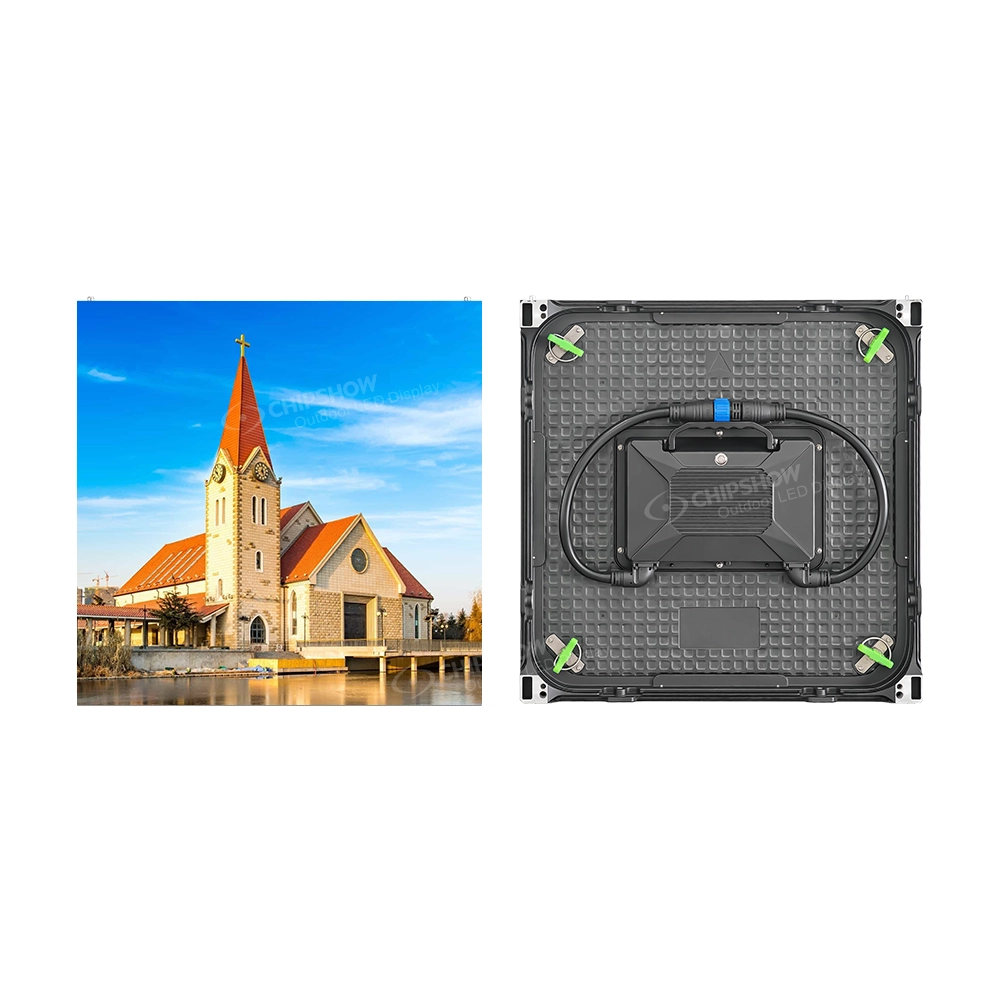
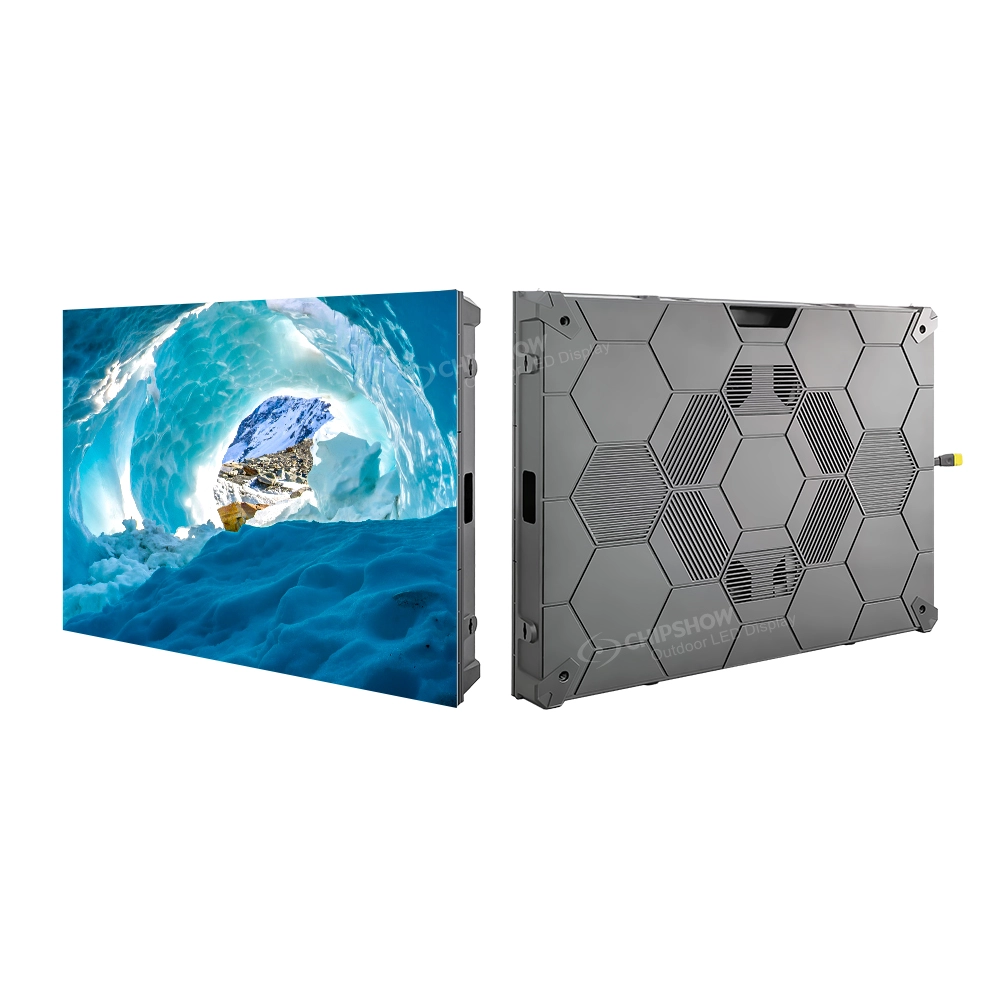
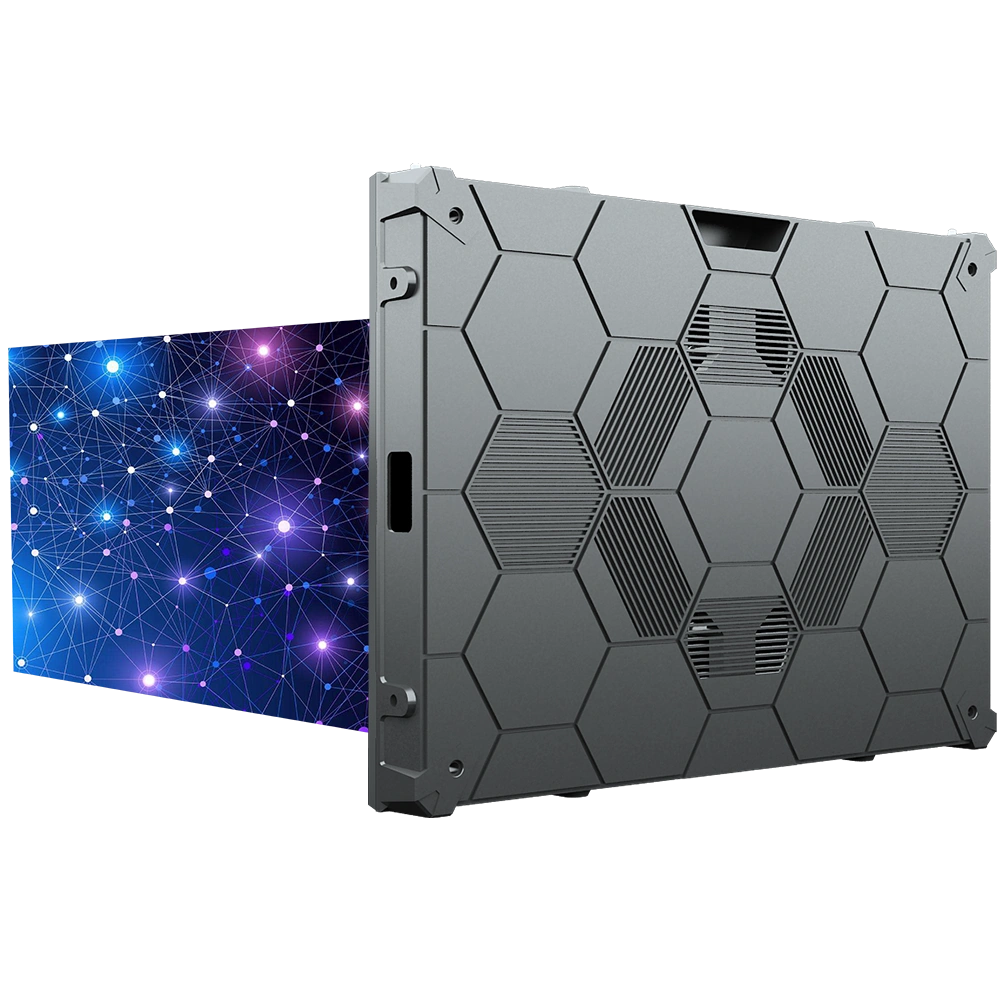
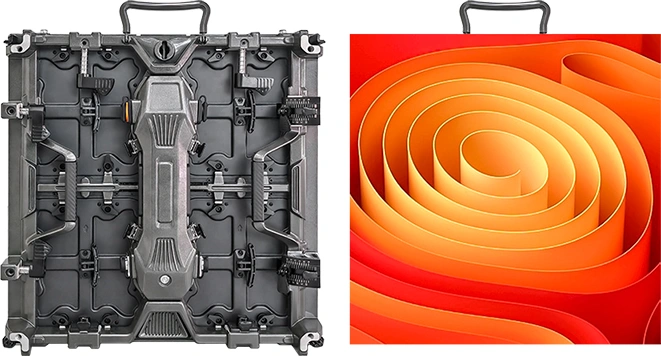
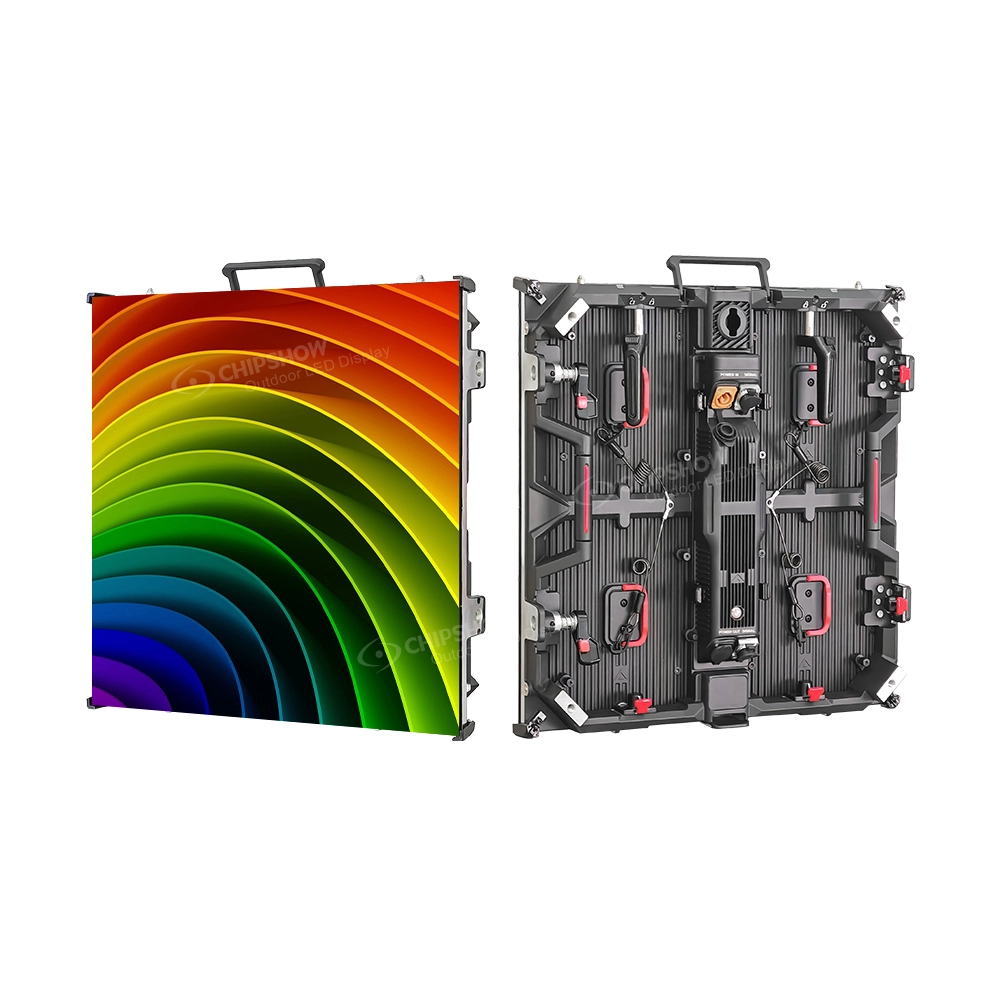
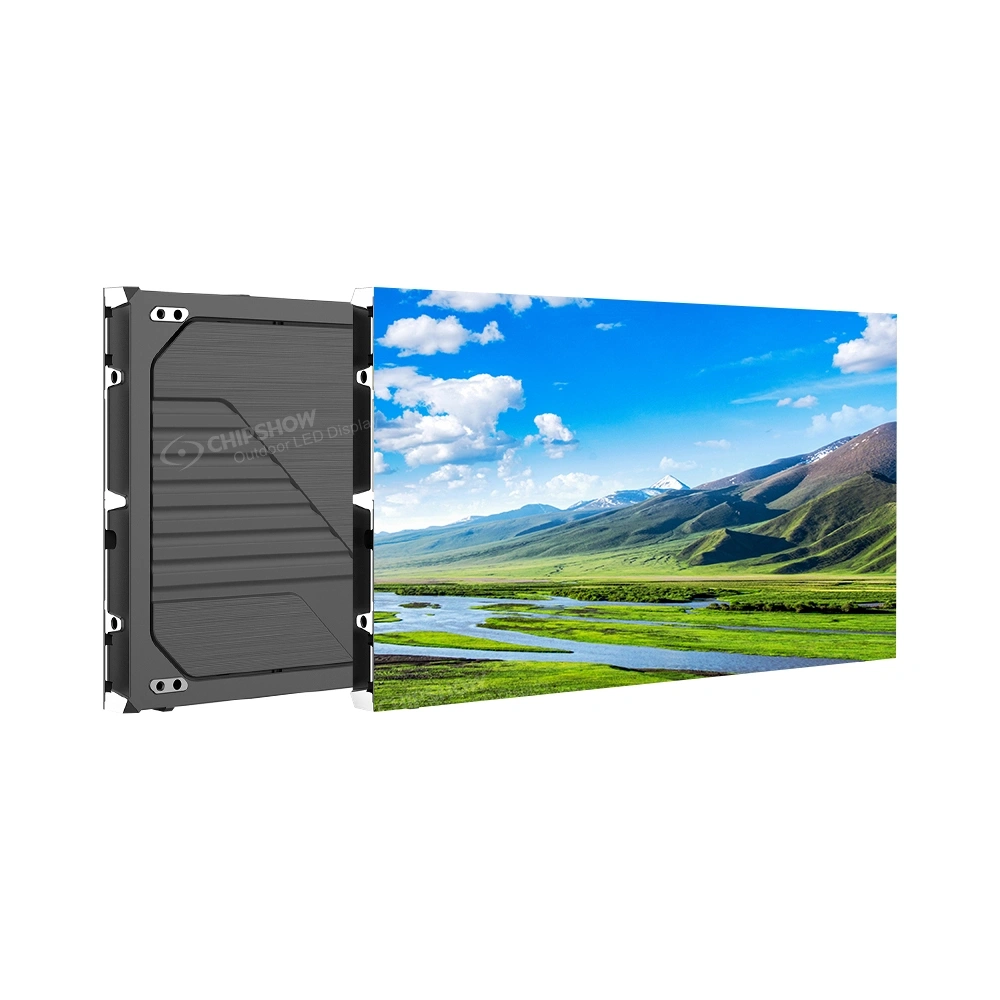
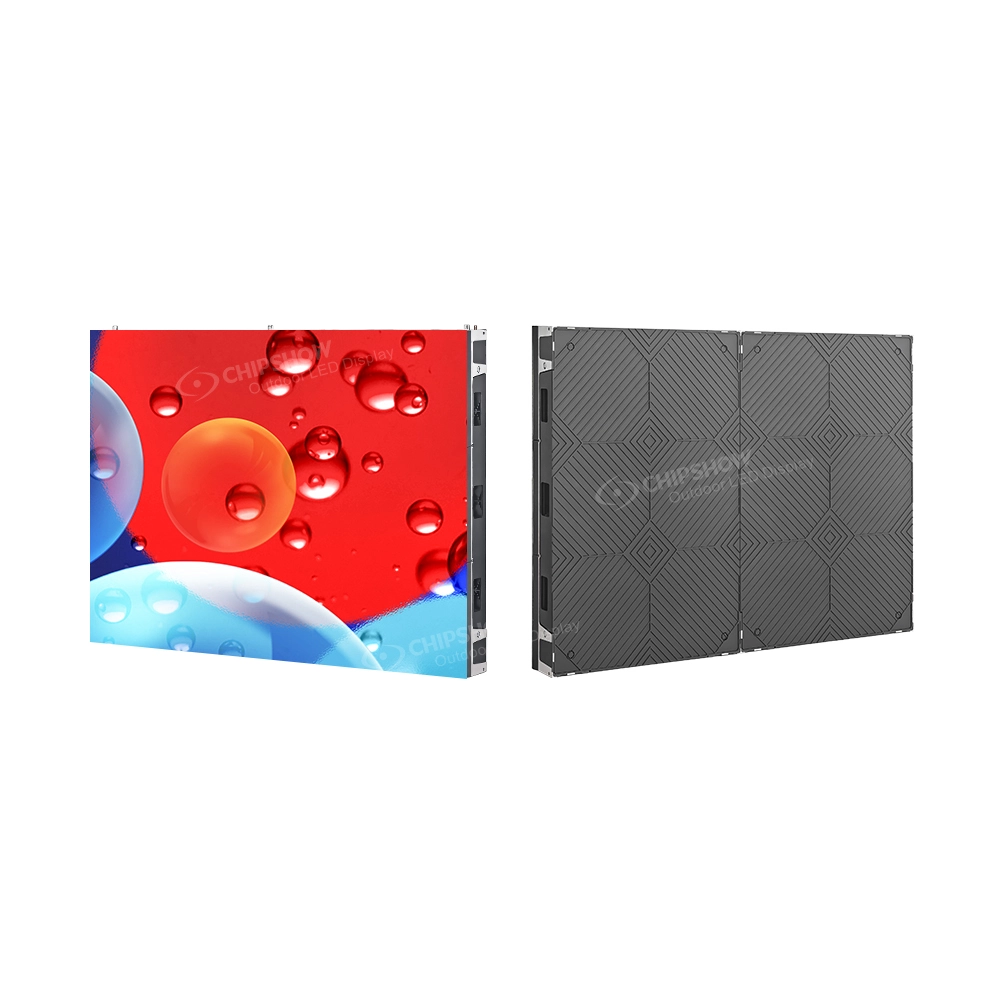
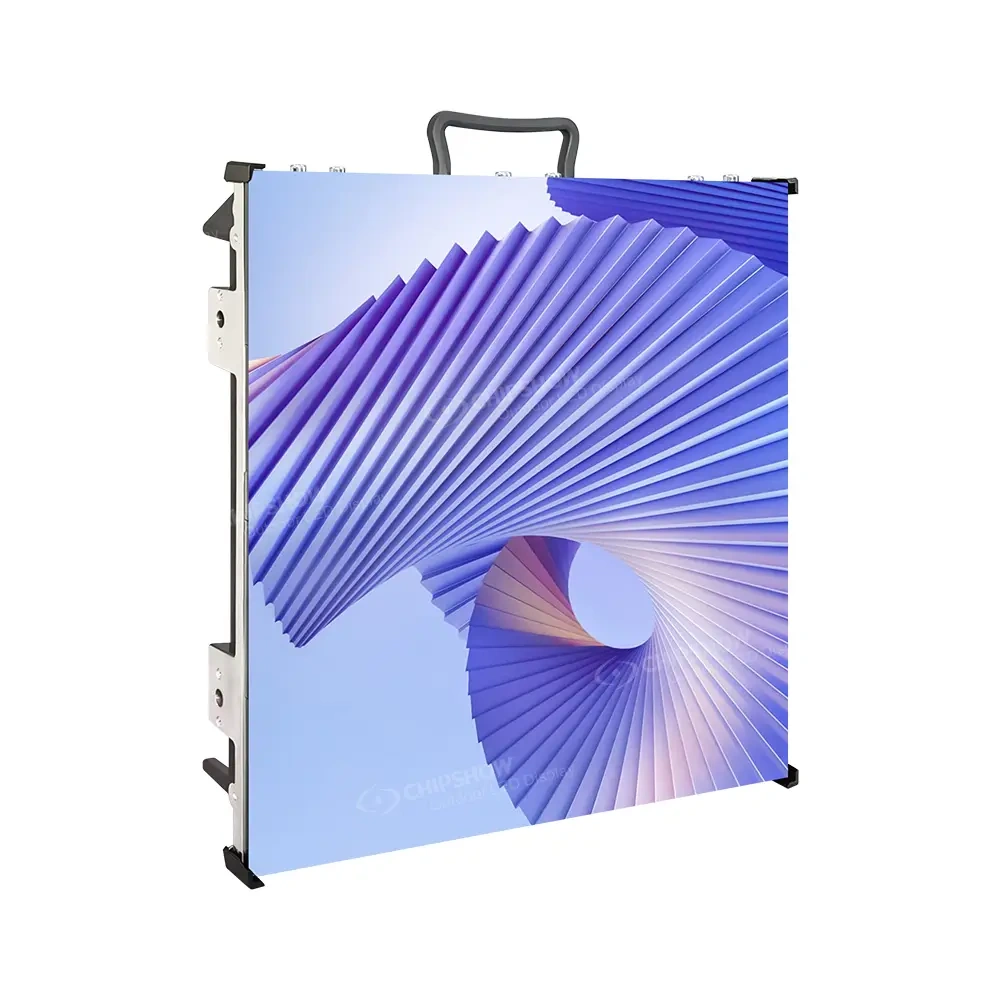
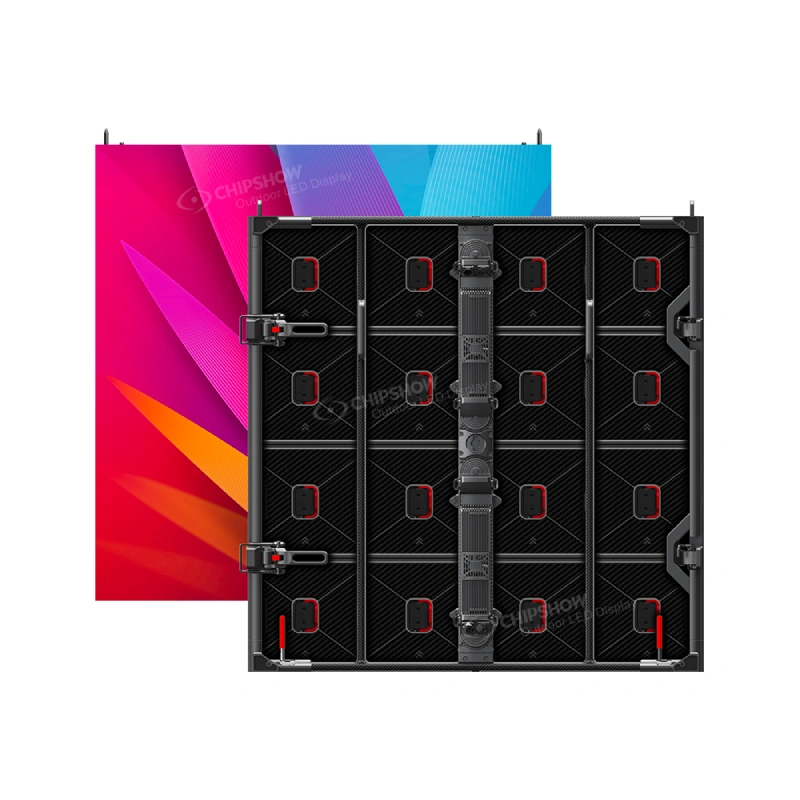
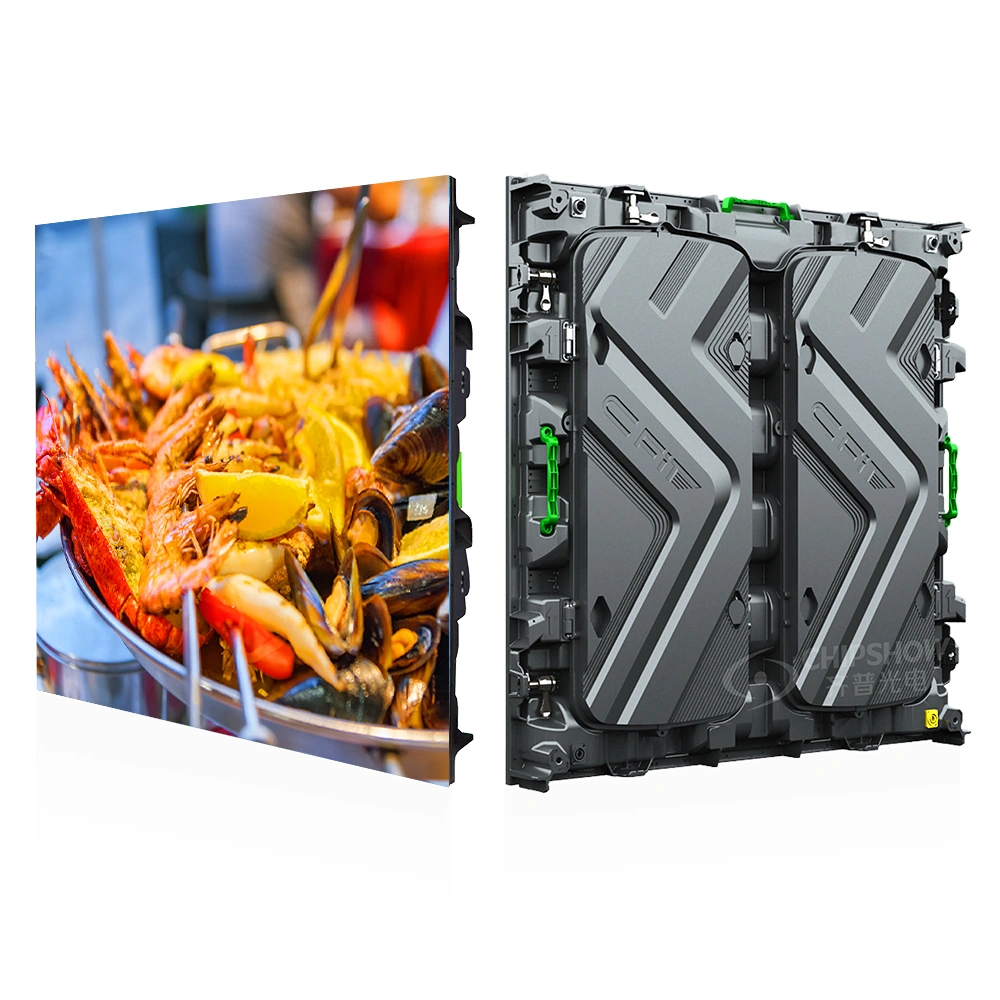
One way to make the choice concrete is to compare the pitch range against the measured site setback. The C-Rock outdoor series, built on 500×500 mm cabinets with P2.6, P2.9, P3.9 and P4.8 options, covers the close-view band with one structural platform, which simplifies mounting and spare-part planning. It is a useful reference point when you are evaluating cabinet platforms rather than individual modules.
Side-View Color Shift
Pedestrians rarely view a street display straight on. They approach from an angle, walk past it, and cross the street. That makes side-view behavior a core specification, not a detail. Two effects matter: luminance falls as the viewing angle increases, and color shifts as the red, green and blue LEDs are seen off axis.
A practical threshold for urban close-view screens is a horizontal and vertical viewing angle of at least 140 degrees, evaluated for both luminance and color consistency. This is an industry reference value, not a certified specification, and it should be requested from suppliers as a measured curve rather than accepted as a printed claim. A screen that looks neutral straight on can show a visible tint at 60 degrees off axis, which changes the perceived brand color and reduces content quality for viewers passing along the sidewalk.
In European town centres, most people encounter a street display while walking, cycling or riding past it, rather than standing in front of it. A screen at a pedestrian crossing is viewed from the pavement, from the kerb and from across the street; a screen on a shared-space street is seen by cyclists and tram passengers passing at 20 to 30 km/h. For those viewers the off-axis image is the only image they see, so the side-view curve should be treated as a primary specification, with the measurement asked for at 30, 60 and 90 degrees on both sides. A display that holds its color balance across that envelope keeps brand colors accurate for a whole street, not only for the person standing directly in front.
When reviewing supplier data, ask for the luminance-versus-angle curve and the color-shift values at representative angles. The color shift is often reported as a delta value from the on-axis white point; small deltas at wide angles indicate a display that stays neutral across the practical viewing envelope.
Color and Contrast Thresholds
Color and contrast requirements come from the content and the surroundings, so the practical way to specify them is to work from what the screen will show and where it will sit.
Contrast ratio. A contrast ratio of at least 5,000:1 is a common reference for outdoor displays, measured with the panel in its black state. Use the reference as the baseline, then raise it when the content carries dark backgrounds or deep brand tones, or when the screen faces a busy street at night. Ask for the measurement report with the test conditions described, so the number can be compared across suppliers rather than taken from a marketing sheet.
White-point consistency. The white point is set at production and held across modules by a controlled manufacturing process. Raise the requirement when the display runs a multilingual content loop, which is common in European town centres: each language block carries its own logo color, and the white point has to hold from one frame to the next. For those projects, state a white-point tolerance and ask for module-to-module consistency data before the display is accepted on site.
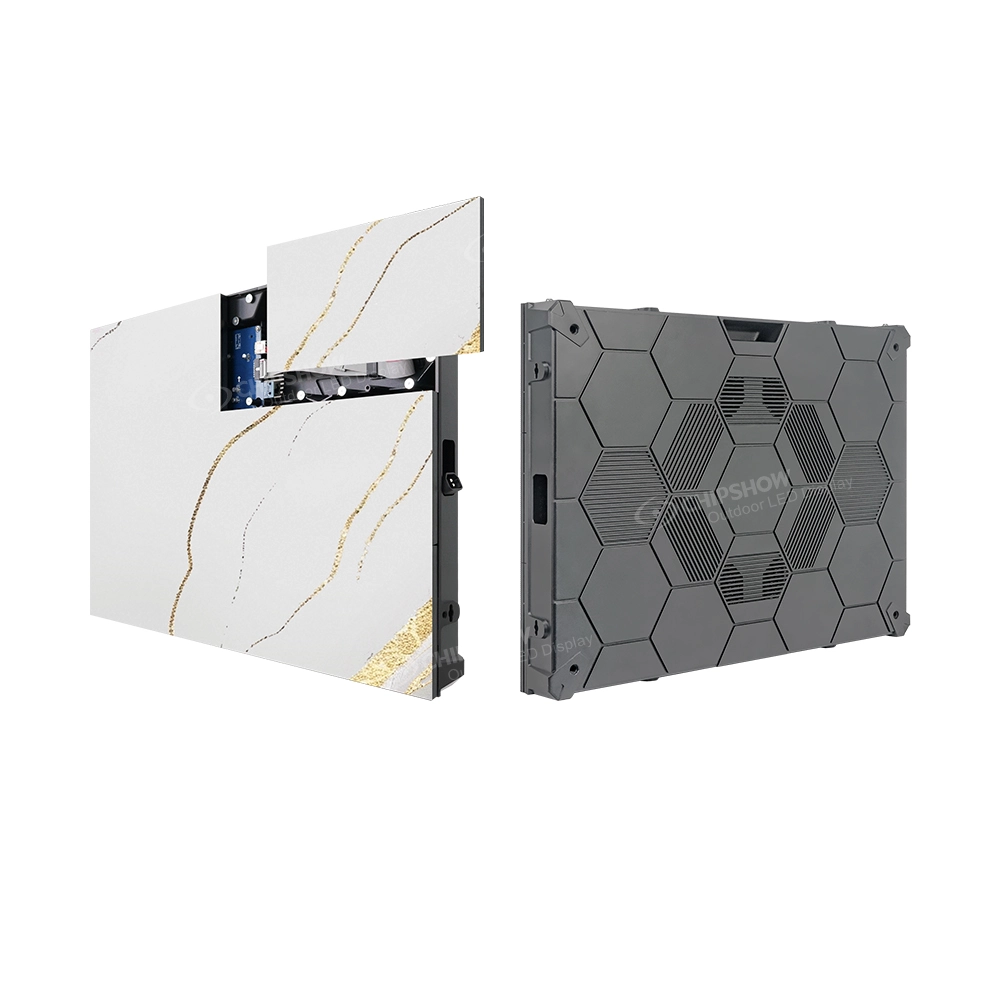
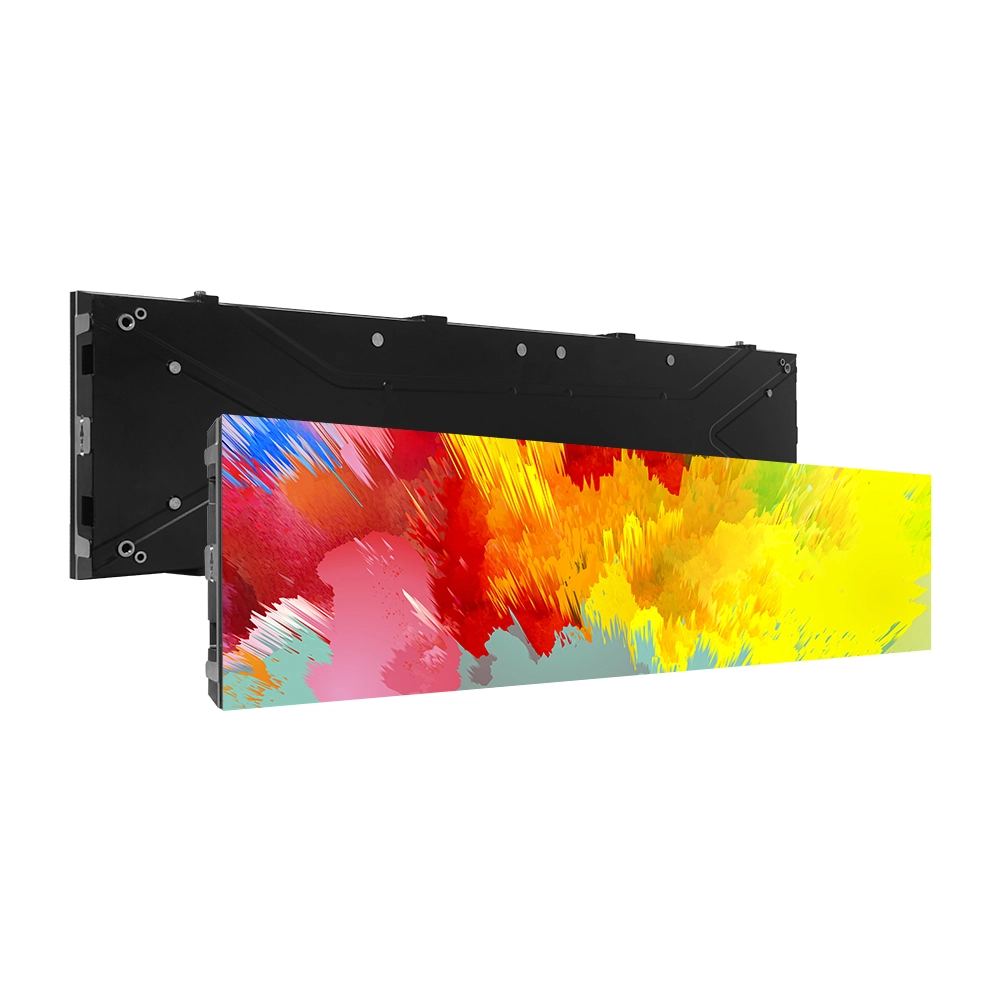
Low-gray color stability. Low-gray behavior shows in dusk and night-time content, where some displays develop a color cast in the first gray steps. Panel families such as the C-Slim range are designed for low color cast at low gray levels. If the screen runs after dark, request the low-gray color measurement or a side-by-side check at the actual night brightness setting. If the display only runs in daylight, this criterion moves down the priority list.
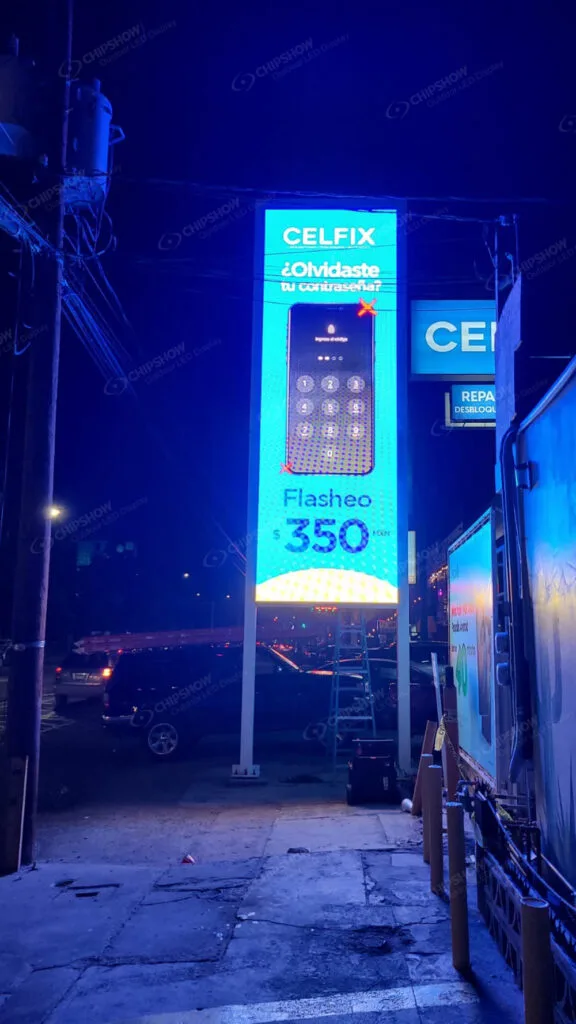
Acceptance against the facade. Screens sit beside stone, brick, timber and glass surfaces that change color with the weather, so color drift is judged against the building as well as against a test image. A display that drifts slightly warm in the evening stands out next to a neutral wall; the acceptance check should compare the screen with the surface beside it at dusk, when the difference is easiest to see.
Test Evidence to Request
A close-view specification is only as strong as the evidence behind it. The following test reports give an independent basis for comparing suppliers and for including optical requirements in a tender:
- Luminance uniformity report, stating the measurement method, grid used and uniformity value across a full panel.
- Luminance-versus-angle curves, showing how brightness falls from on-axis to the specified viewing angle.
- Color-shift measurements at representative off-axis angles, reported against the on-axis white point.
- Contrast ratio measurement, with the test conditions described so the number can be compared across suppliers.
- Gray-scale and low-gray color data, covering the dimming steps used for night operation.
- Test certificates for the applicable EU requirements, including CE marking, EMC compliance and, where relevant, energy performance under the EU ecodesign framework.
On the certification side, European buyers should confirm that the display carries CE marking, that the electromagnetic compatibility classification fits the installation environment (EMC Class B is the level relevant for typical commercial and urban settings), and that the product’s energy performance aligns with the ErP ecodesign requirements for electronic displays. Product documentation can be provided. Final approvals should be confirmed per project.
In European tenders these documents are rarely optional extras. Municipal contracts and architectural projects often require the CE declaration, the EMC test report and the energy data as tender deliverables, alongside the optical reports, so suppliers should be asked to submit them with the quotation rather than after award. Energy efficiency also carries weight beyond compliance: with electricity prices and ESG targets in focus, the consumption figures for a screen that runs 16 hours a day can be a deciding line in a tender evaluation, and the ErP-compliant design is the baseline to compare against.
From Specs to Tender Requirements
Turning the framework above into a tender-ready specification takes five steps:
- Measure the site. Record the minimum viewing distance, the sidewalk flow direction, the daytime light conditions and the night-time environment. These numbers set the pitch, the viewing angle and the dimming requirements.
- Check the local approvals early. Conservation-area restrictions, building permits and lighting ordinances can cap brightness, limit mounting depth or require night-time reduction schedules. Confirming these before the optical spec is written avoids re-engineering the screen after approval.
- Set the thresholds. Write the required contrast ratio, viewing angle, uniformity and low-gray behavior into the spec, with the test reports listed as deliverables.
- Compare suppliers on evidence. Ask each candidate to provide the measurement reports listed above, and compare the same metrics across suppliers.
- Prepare the project inputs. The quotation-ready configuration needs the facade or mounting area, the viewing distance and setback, the content types (text, video or both), the day and night brightness plan, and the local approval requirements.
When the optical requirements are set this way, the display choice follows from the site rather than from a product sheet. For projects where the specification lands on a close-view outdoor cabinet platform, the C-Rock outdoor series serves as a practical match for the street-level band, with European warehouse stock supporting delivery timing.
Conclusion
Close-view urban outdoor LED projects in Europe are specified by viewing distance, side-view behavior and color and contrast stability, with peak brightness as a supporting number rather than the headline. The regulatory layer, the short viewing distances of town-centre streets and the long evening hours of northern winters all belong in the specification, and measuring the site, checking approvals early and requesting the right test evidence turns optical requirements into something suppliers can quote against and buyers can verify. If your project needs support turning a European site condition into a display specification, the Chipshow Europe team can help with the optical data, test documentation and delivery planning. Contact us to discuss the requirements for your installation.
FAQ
Q1:What pixel pitch works for close-view urban LED displays?
For viewing distances of roughly 1.5 to 5 meters, pitches from P2.6 to P4.8 cover most street-level cases. A practical starting rule is a minimum viewing distance in meters of about 1,000 times the pitch in millimeters, adjusted for the content type.
Q2:Is 4,000 nits enough for an urban outdoor screen?
For street-level viewing, 4,000 to 6,000 nits with automatic dimming is a common working range. Screens in direct sunlight on open facades may need more, but for close-view use the environment and the night-time brightness plan decide the number.
Q3:Why does color shift when a display is viewed from the side?
Off-axis viewing changes the path of light through each LED, so luminance falls and the color balance shifts as the angle increases. The effect is quantified by luminance-versus-angle curves and color-shift measurements, which suppliers should provide.
Q4:Which test reports should I request from a supplier?
Request luminance uniformity, luminance-versus-angle curves, off-axis color-shift measurements, contrast ratio with test conditions, low-gray color data, and the CE, EMC and ErP documentation applicable to the installation.
Not sure which format or pixel pitch fits your European project? Try the Chipshow LED screen selector to shortlist options.