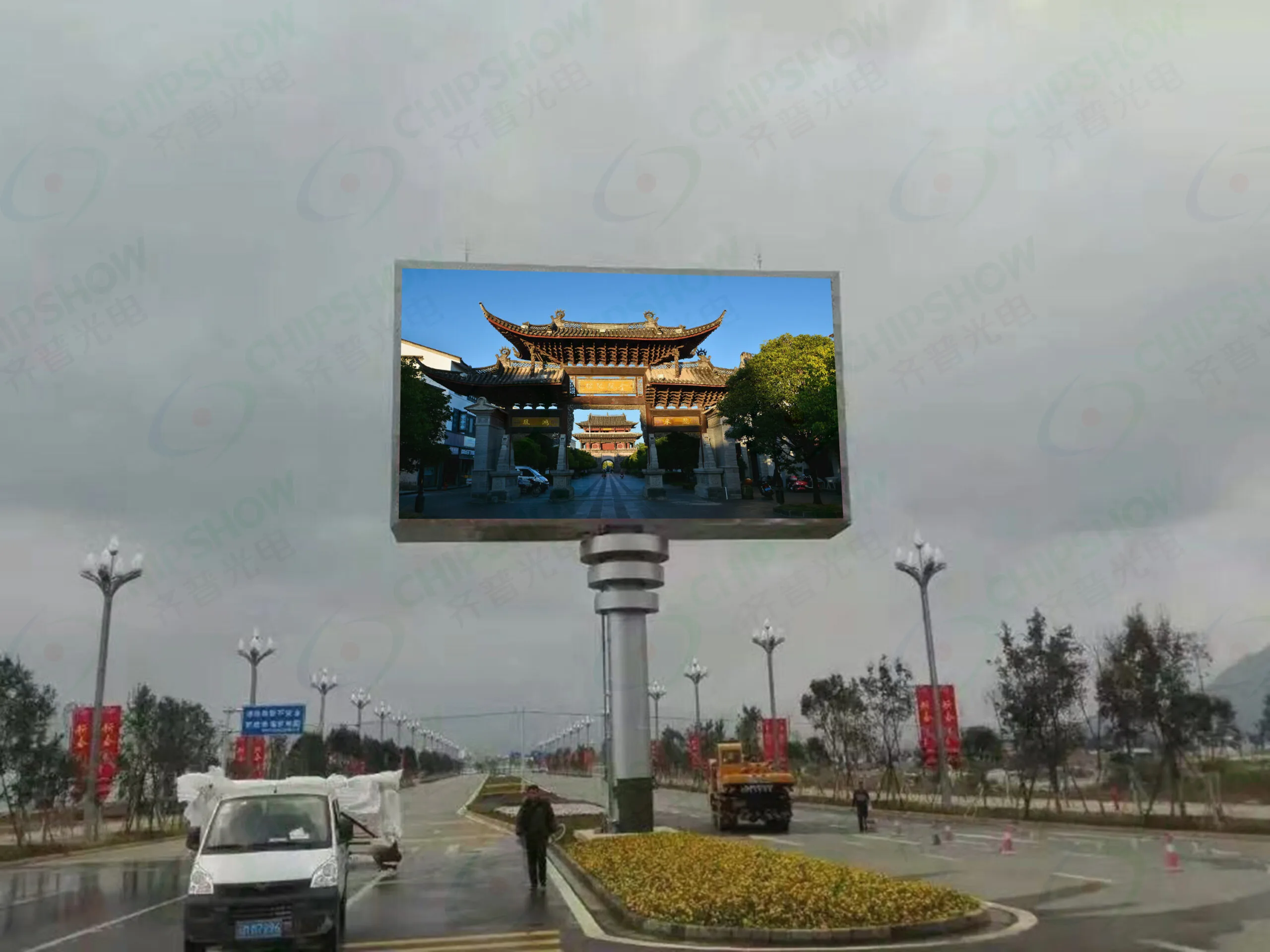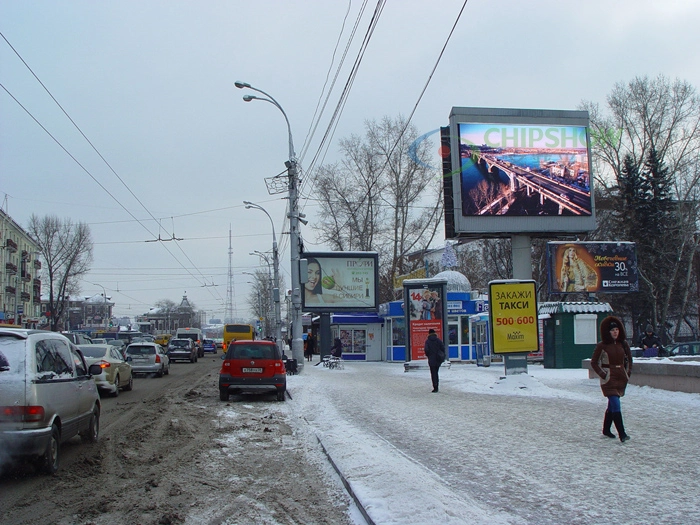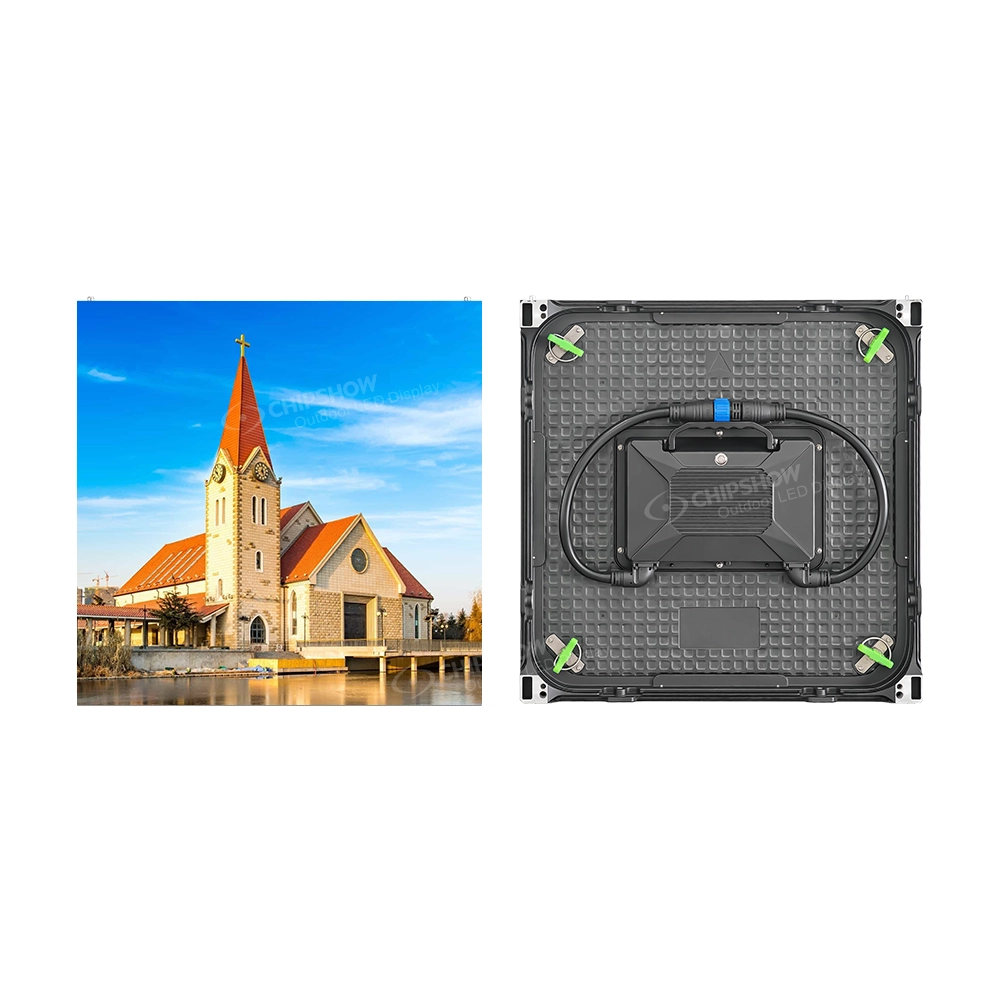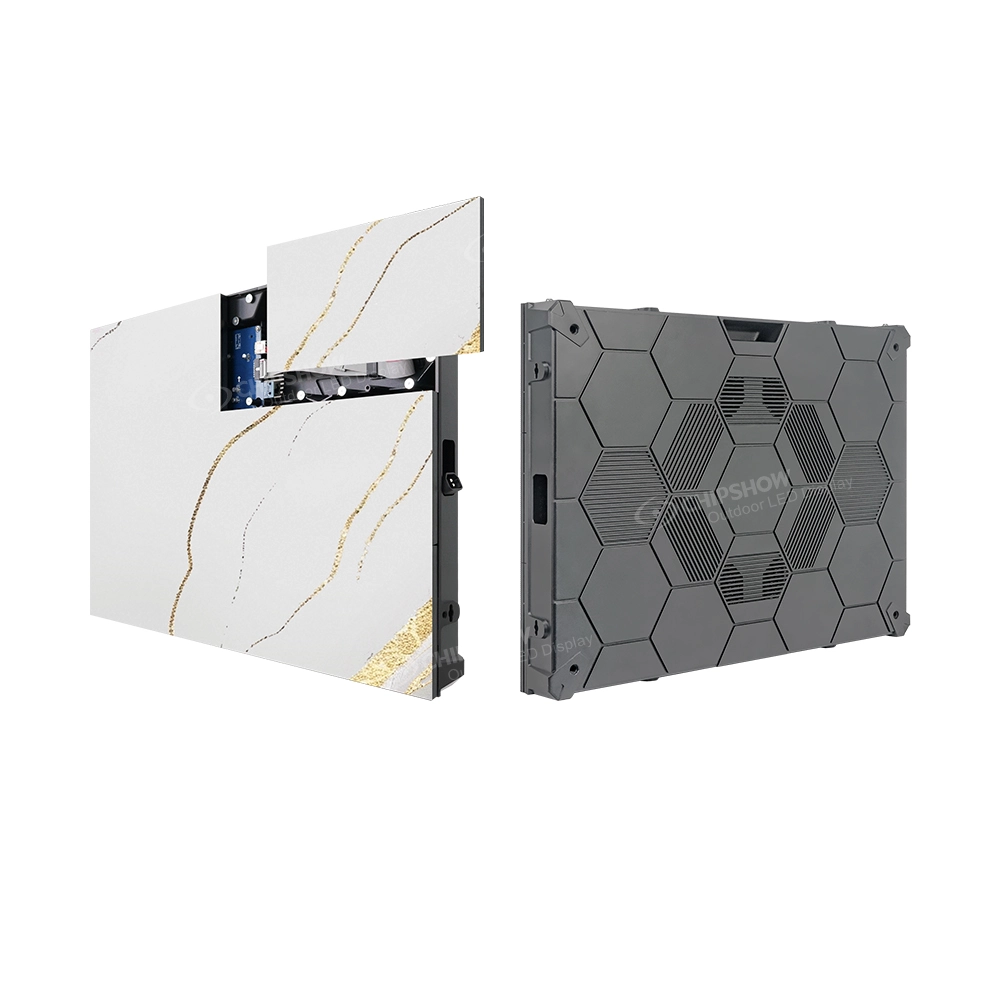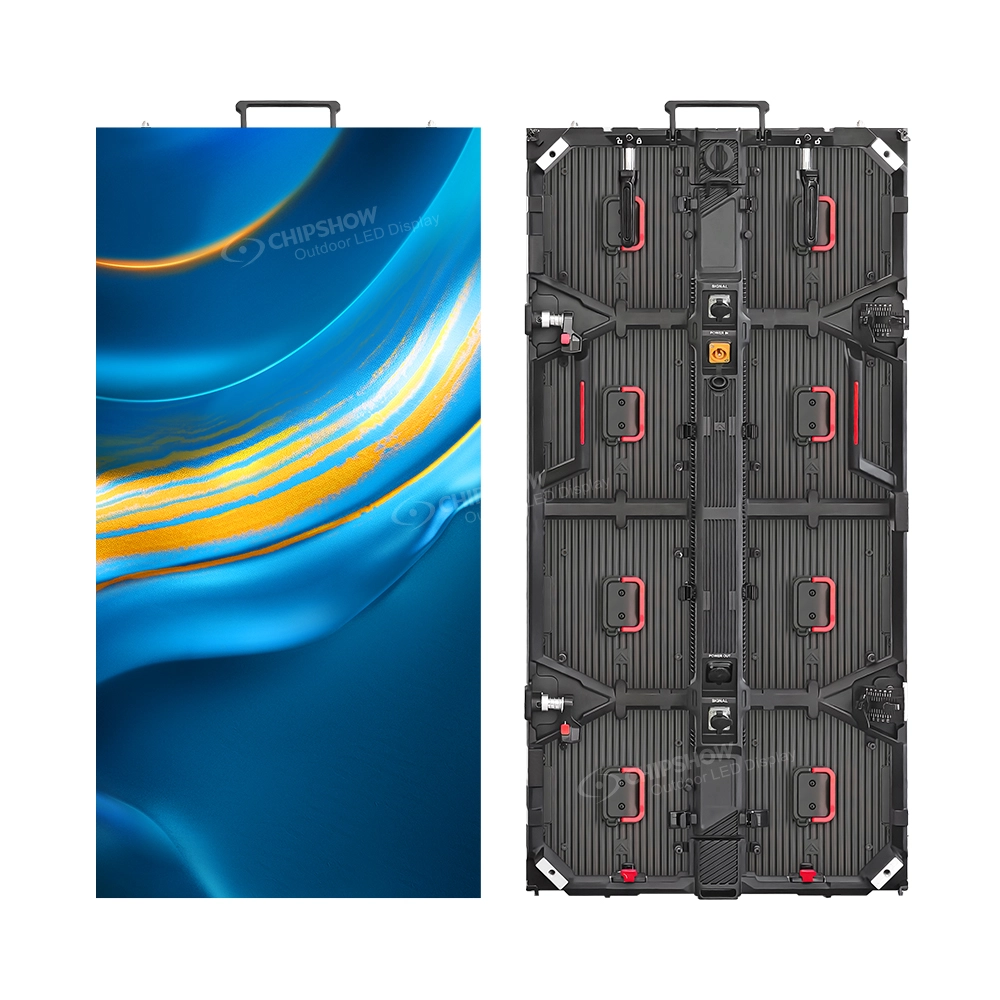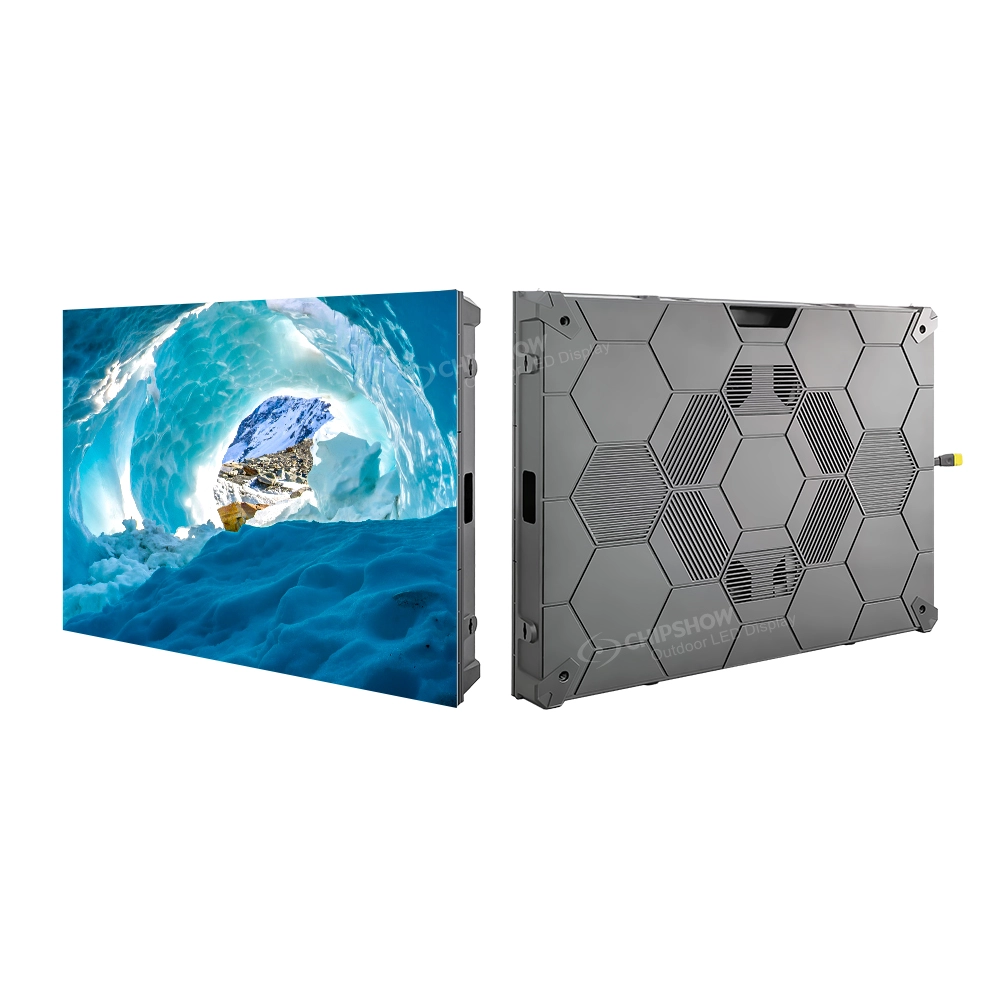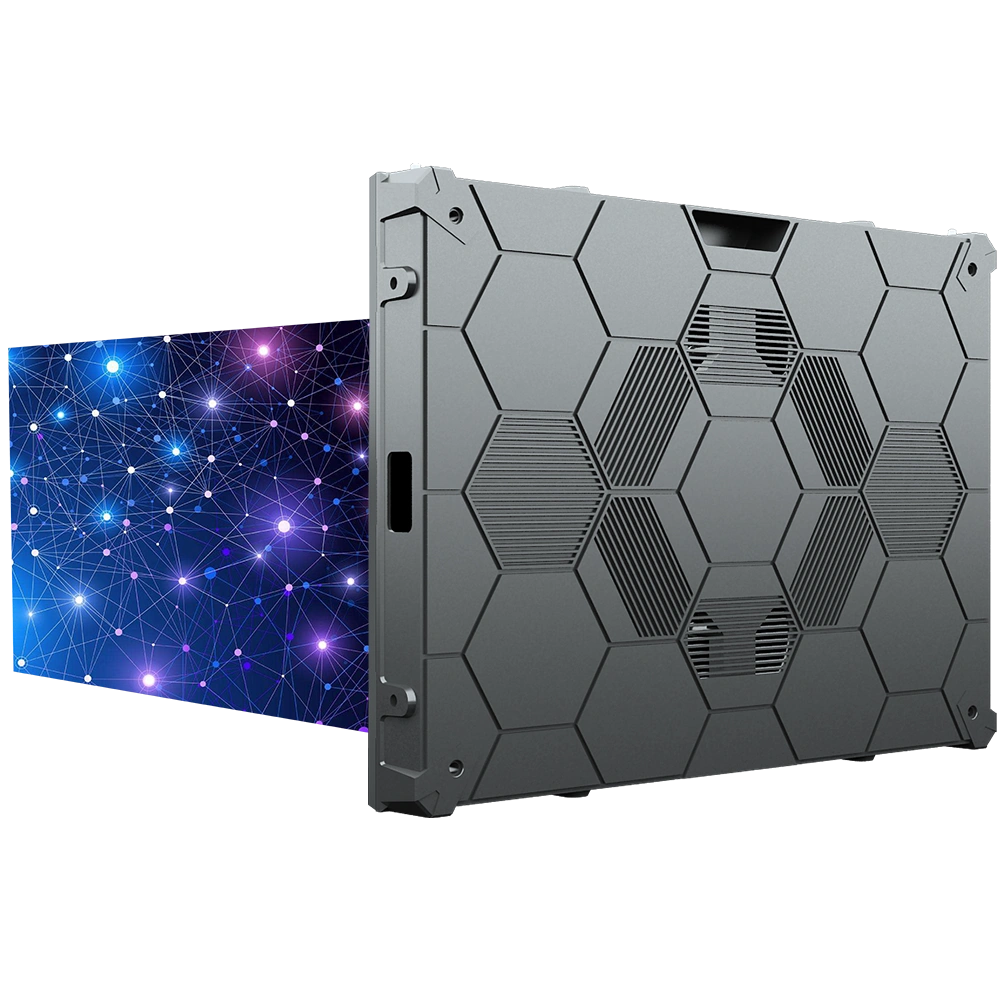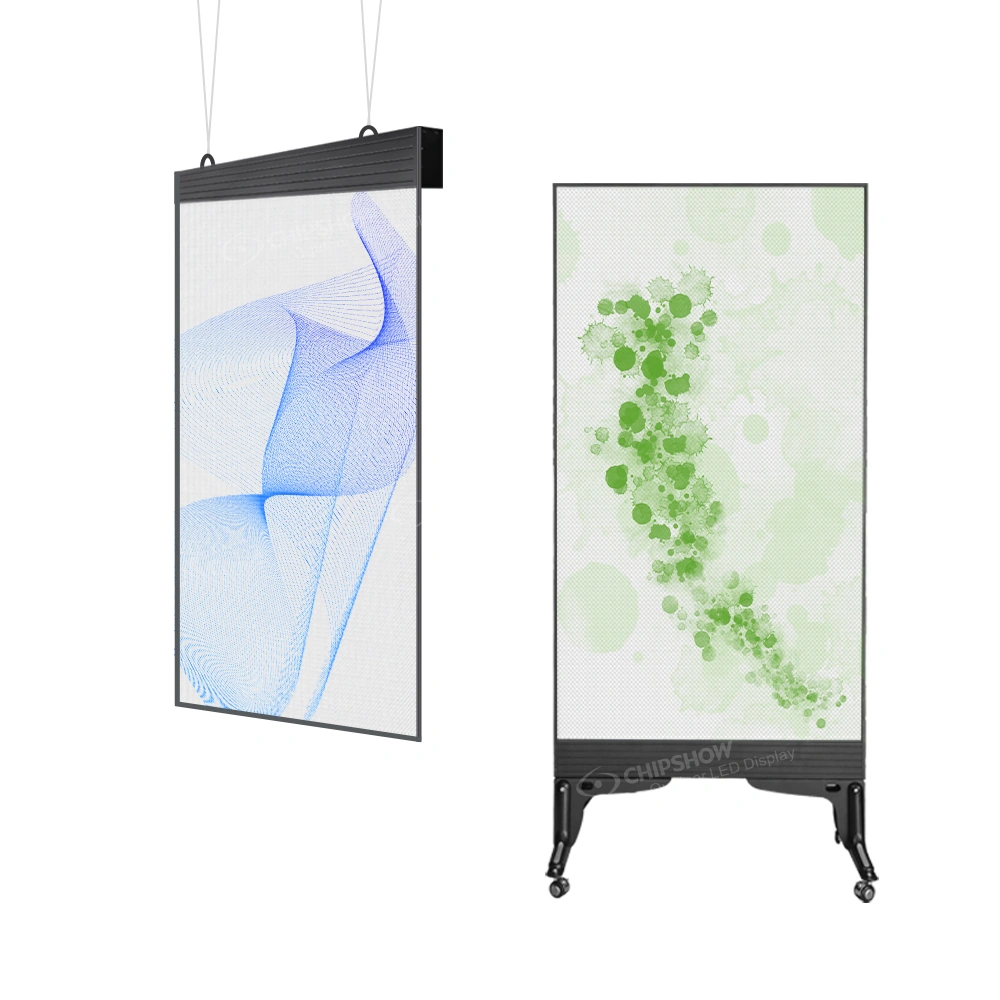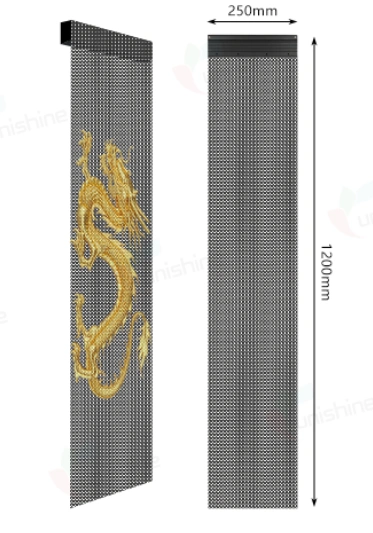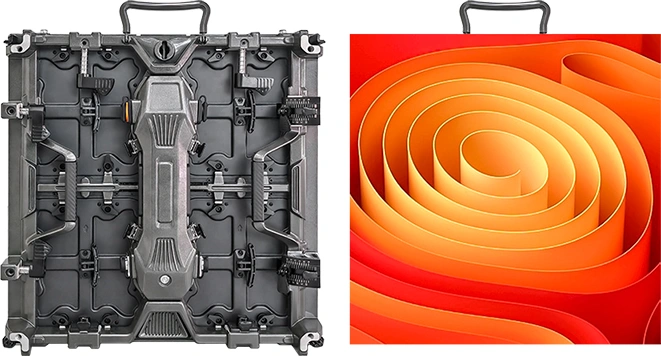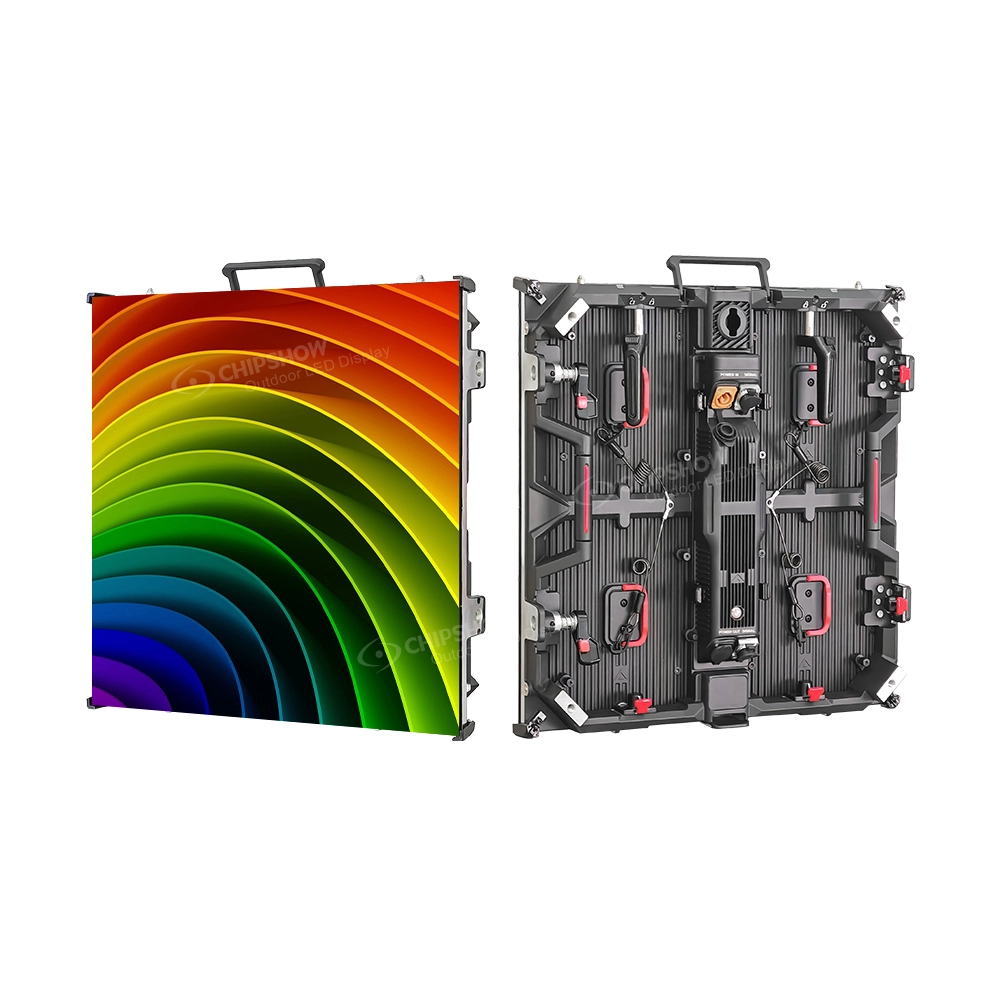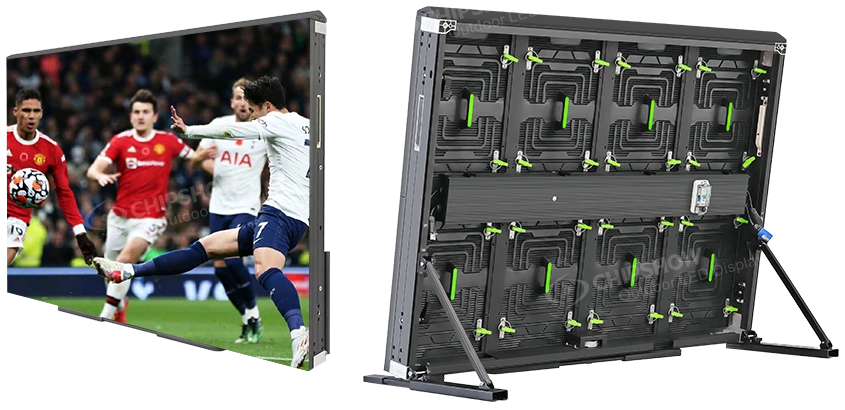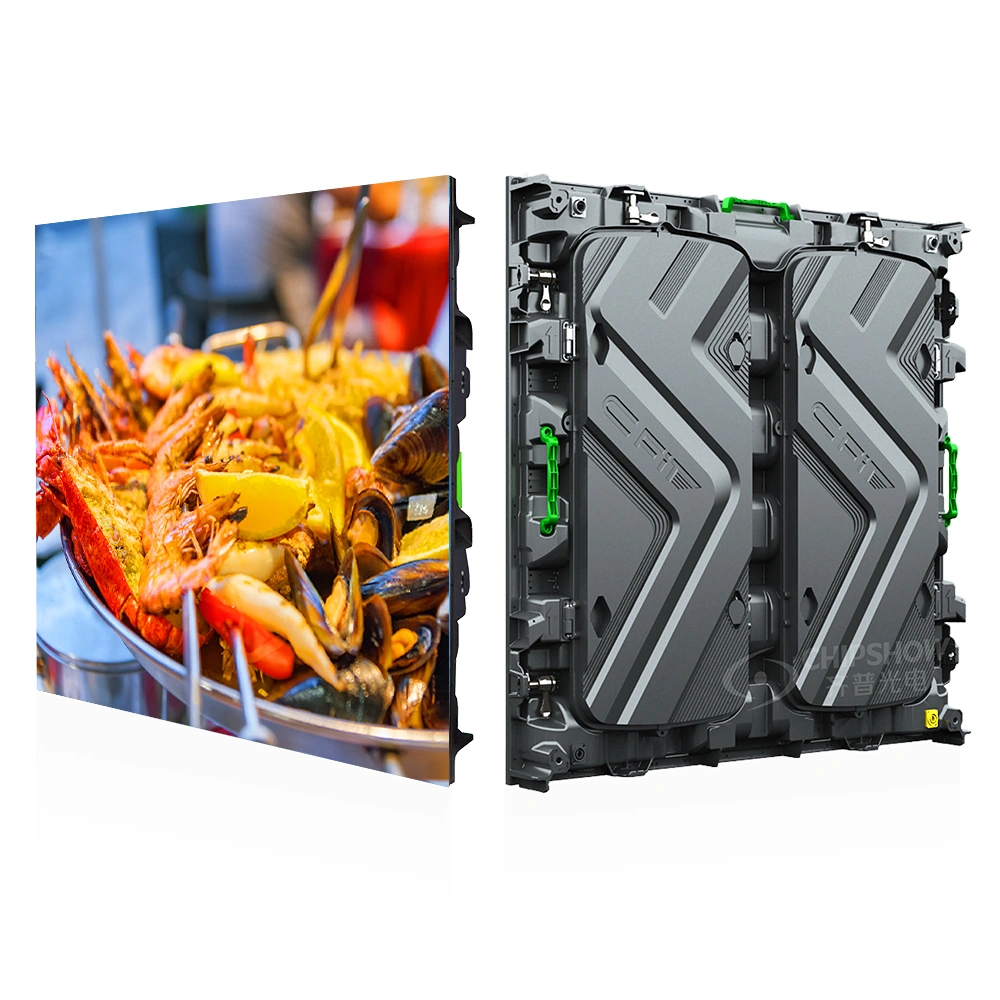
In European commercial environments, the choice between an LED video wall and a projector is often determined by factors that the specification sheet alone cannot answer: the ambient light flooding a city-centre retail unit within a mixed-use building, the regulatory requirements governing electromagnetic emissions in proximity to residential tenants, and the energy performance data increasingly requested by public procurement frameworks. A projector that serves a dimmable meeting room adequately will fail in a glass-walled corporate lobby the moment sunlight enters. This comparison examines how each technology performs against the lighting, cost, regulatory, and maintenance conditions that European commercial buyers navigate during procurement.
You can size this to your venue in minutes with the Europe LED screen selector: pick your nearest viewer, choose the format, and compare product references.
How the Two Technologies Differ
A projector emits light through a lens onto a reflective surface. The viewer sees reflected light. An LED video wall emits light directly from each pixel; every diode on the panel surface is an independent light source. This single difference determines almost everything else about how each technology performs in European commercial environments.
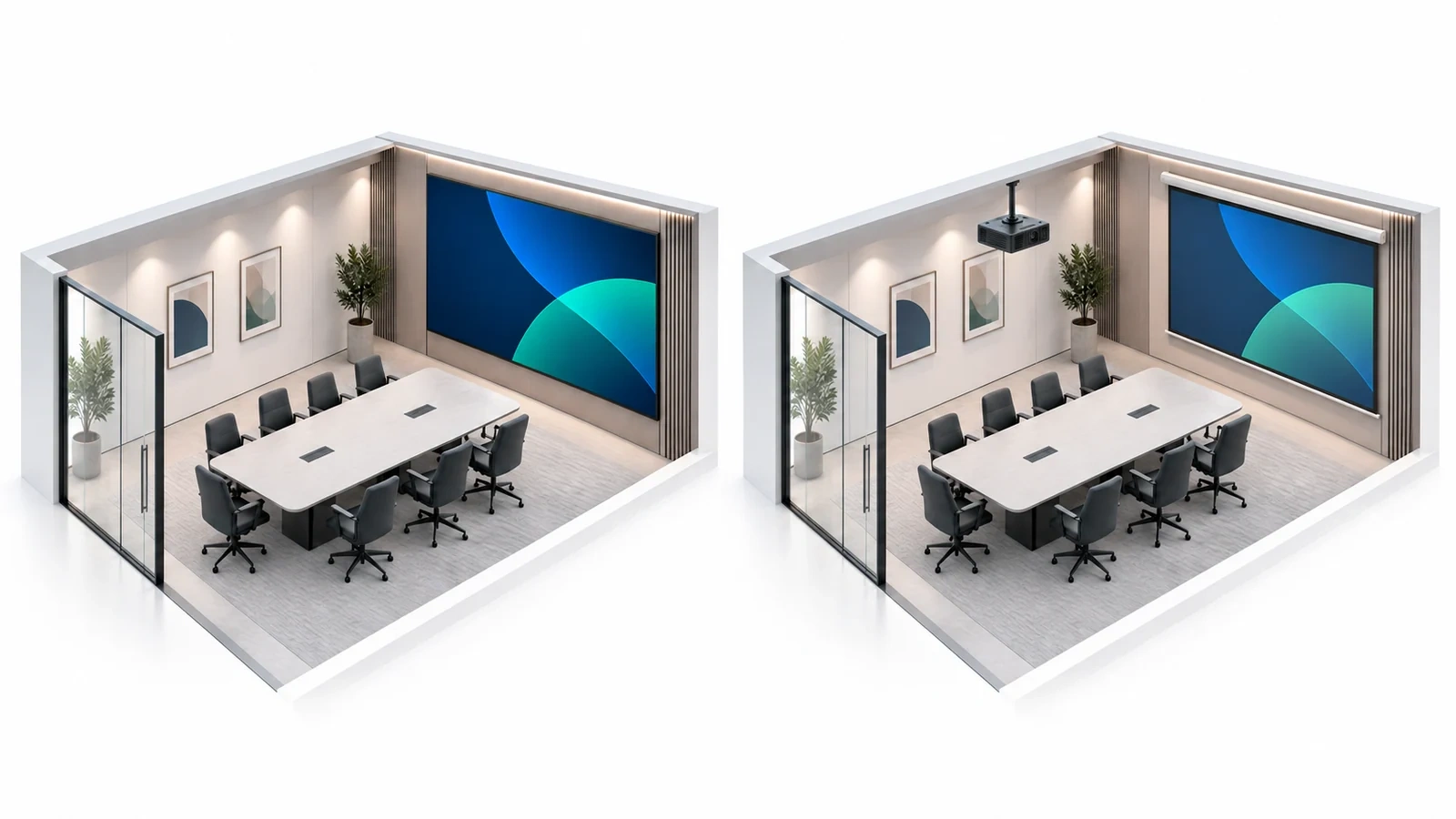
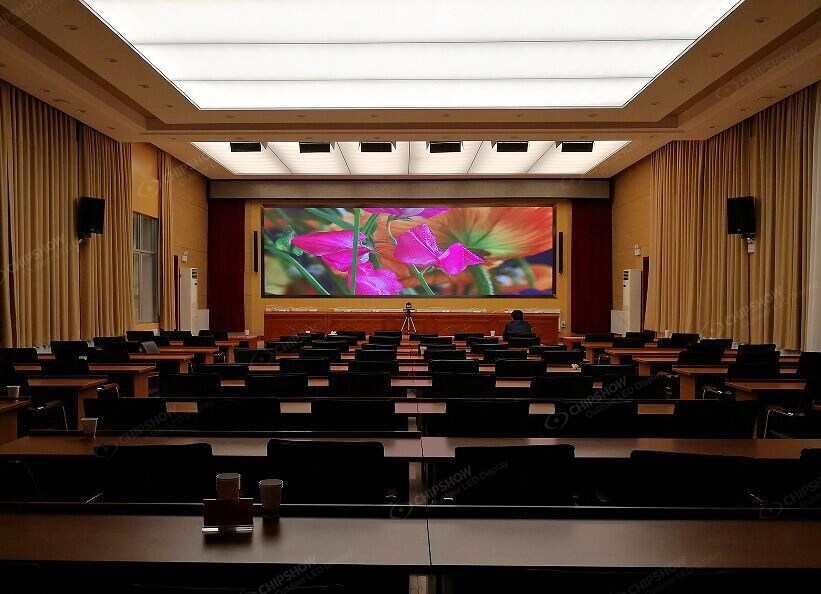
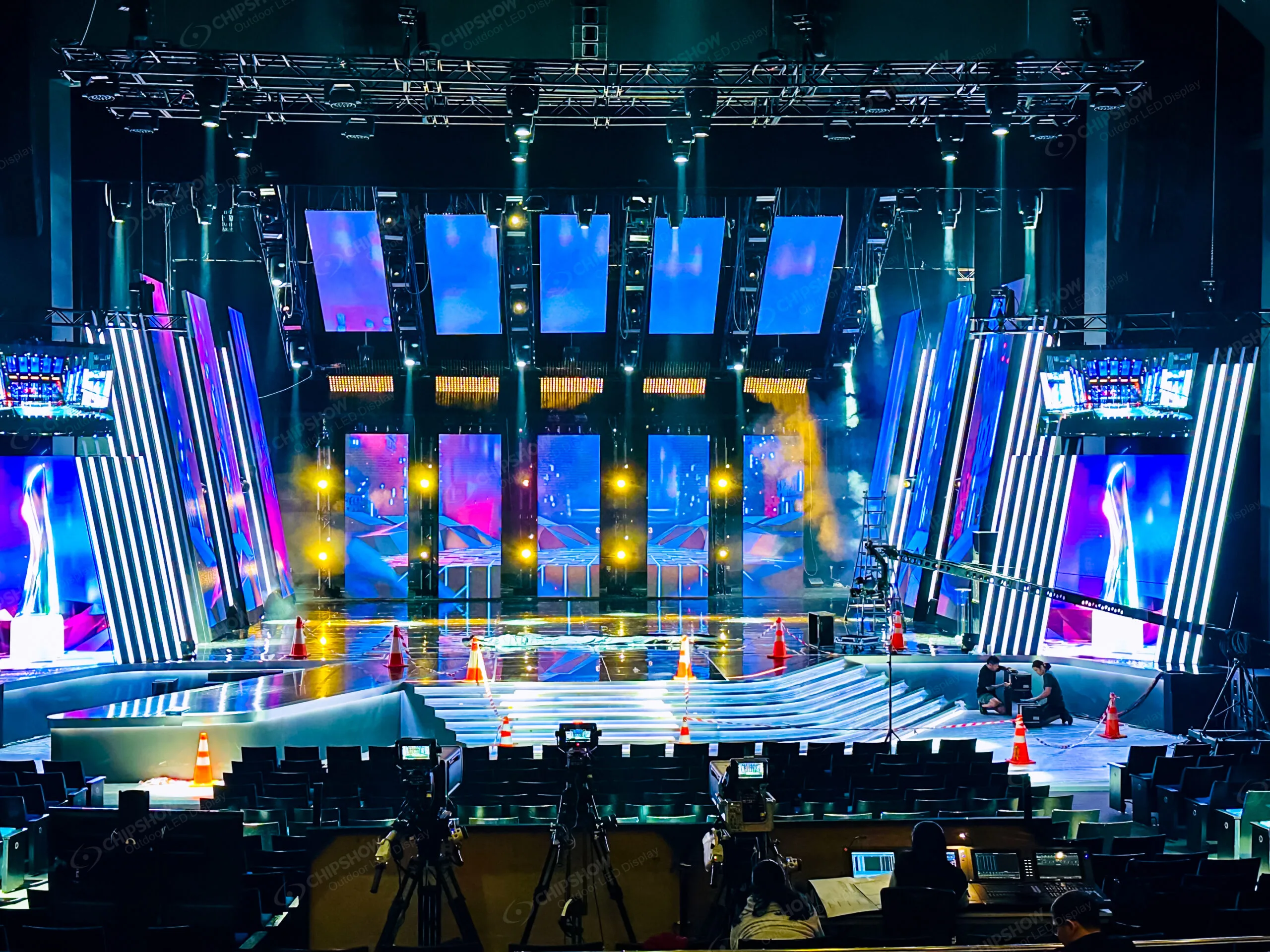
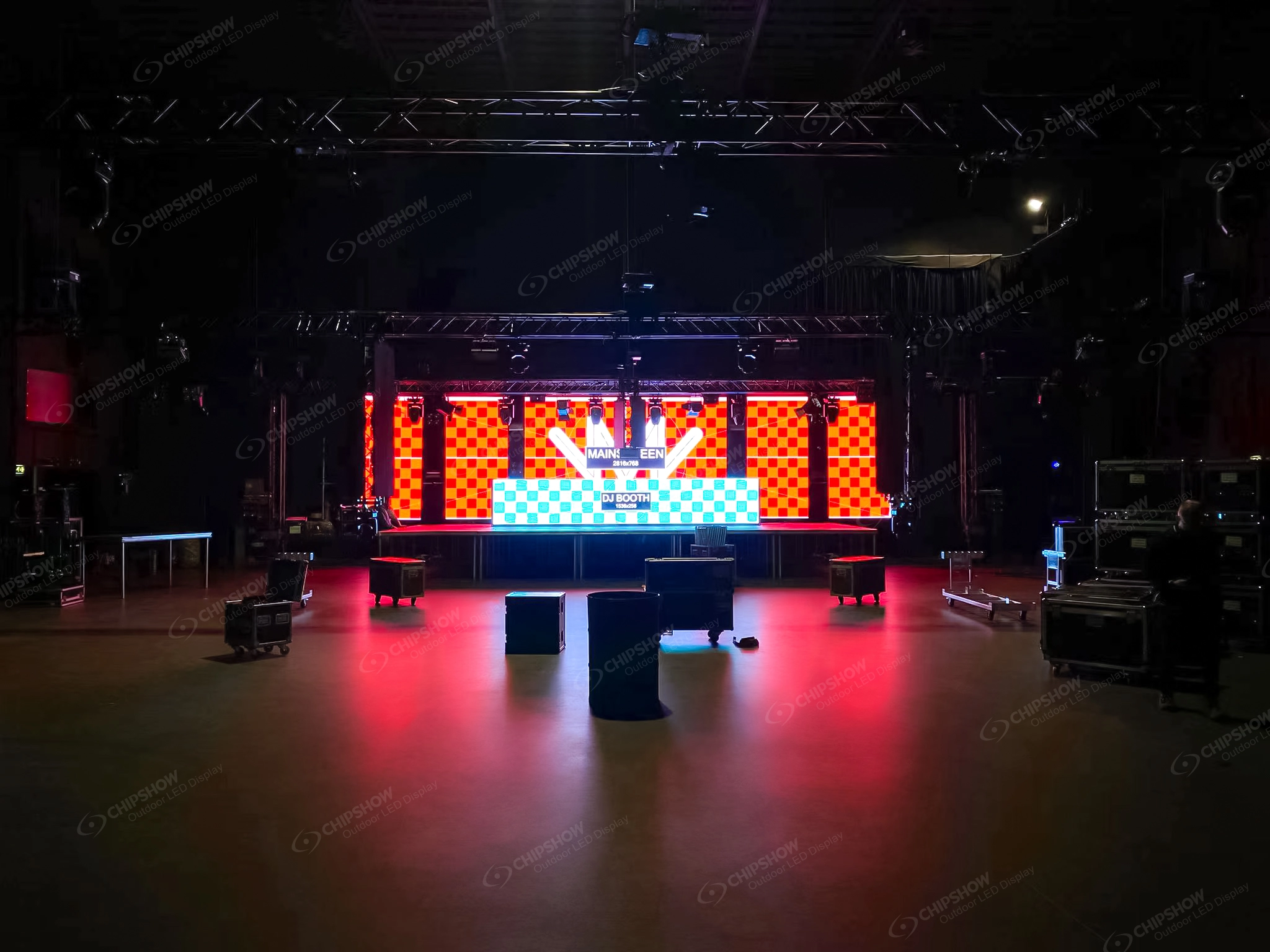
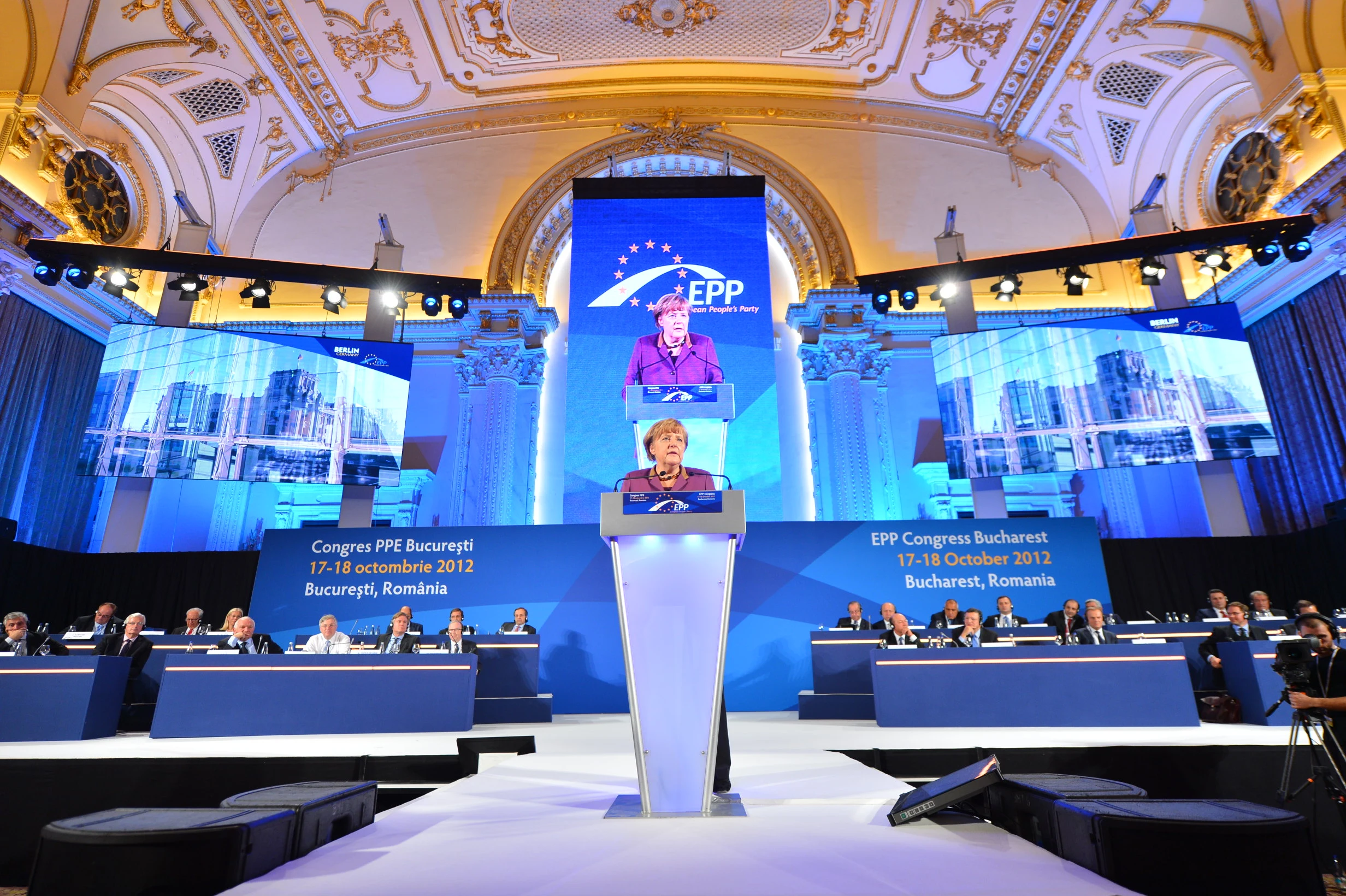
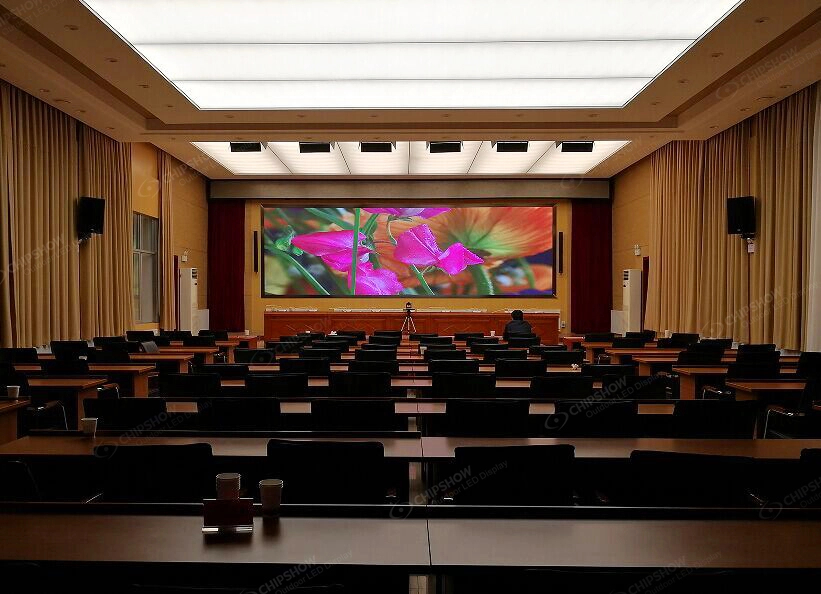
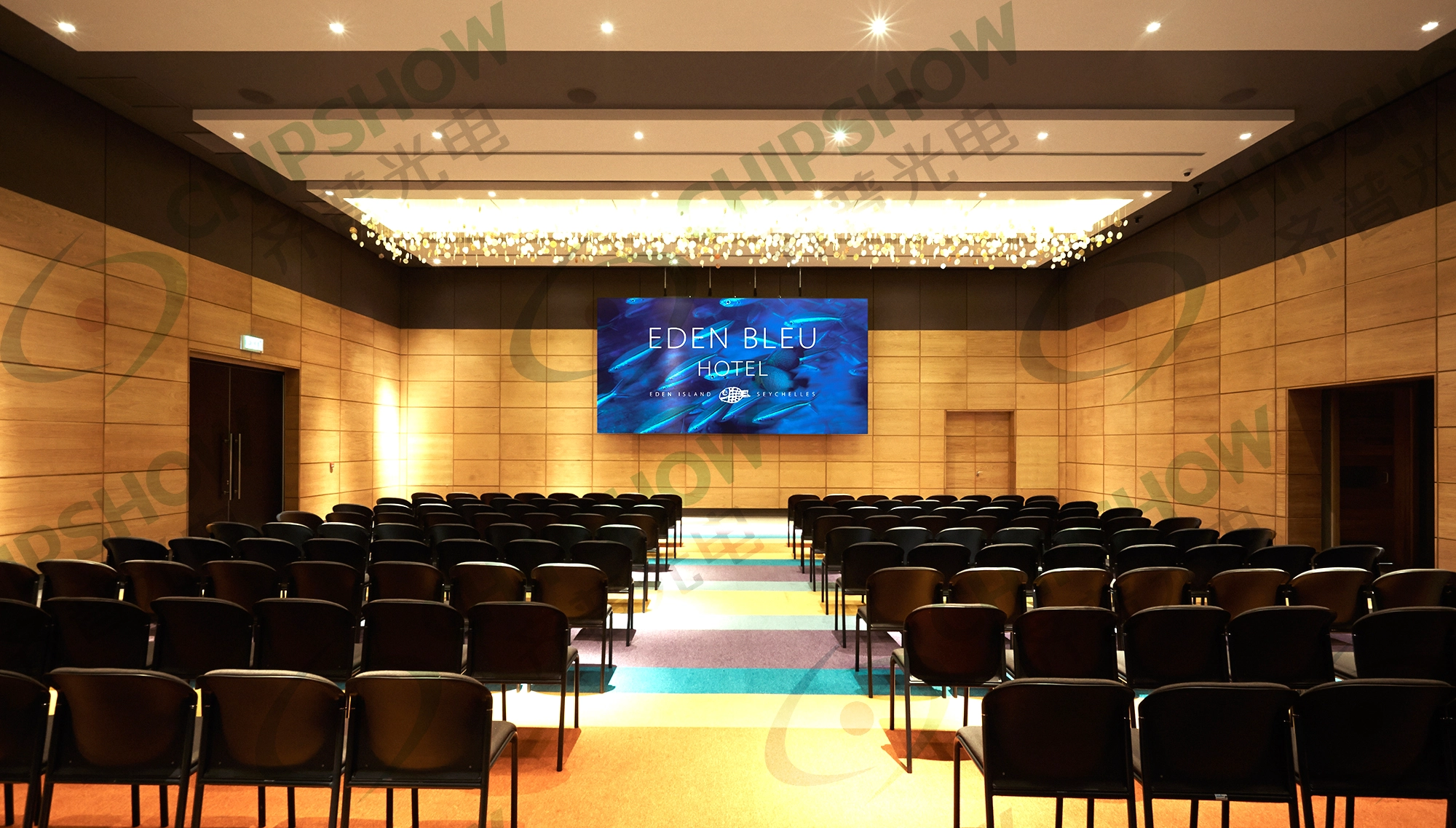
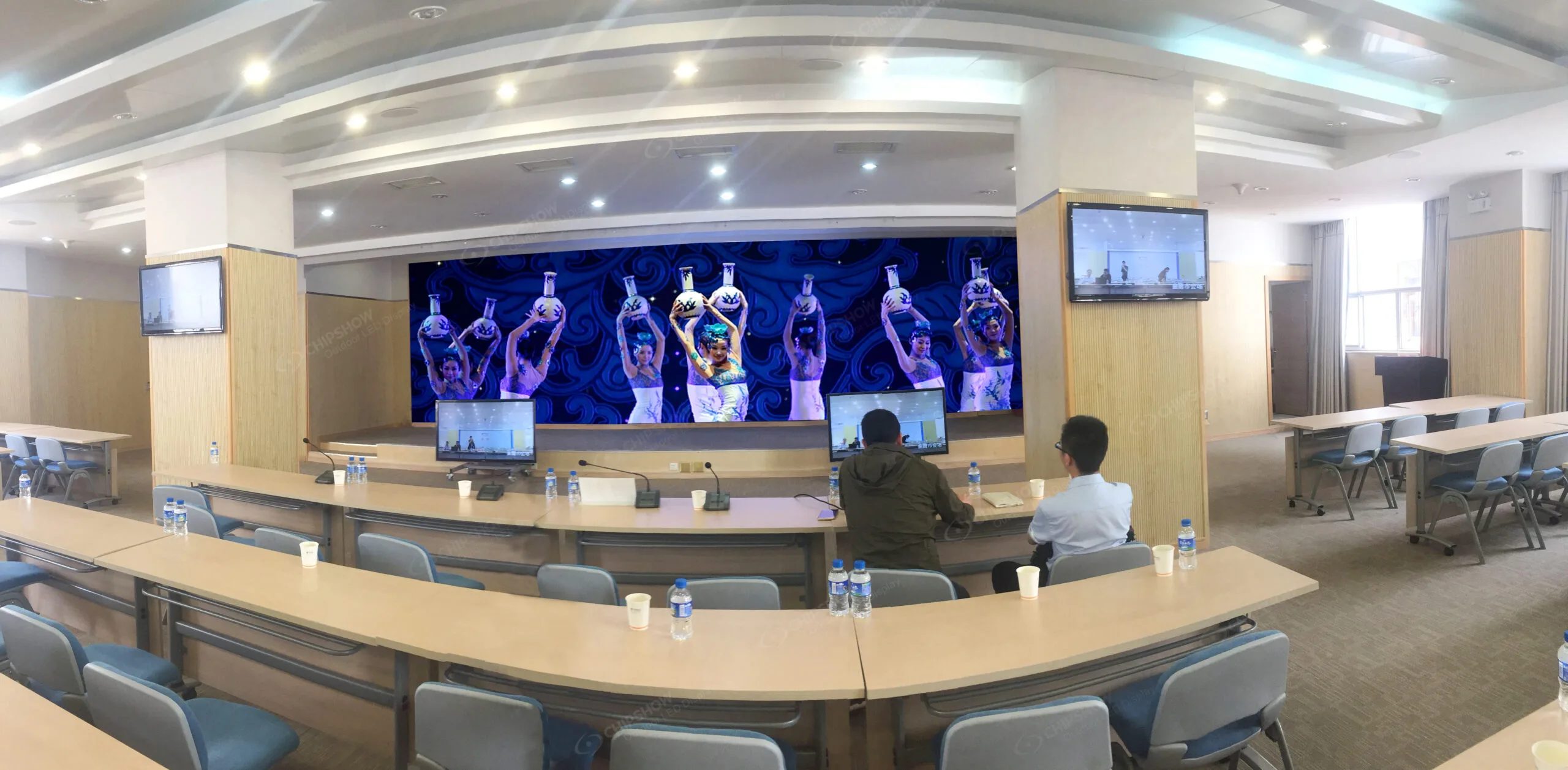
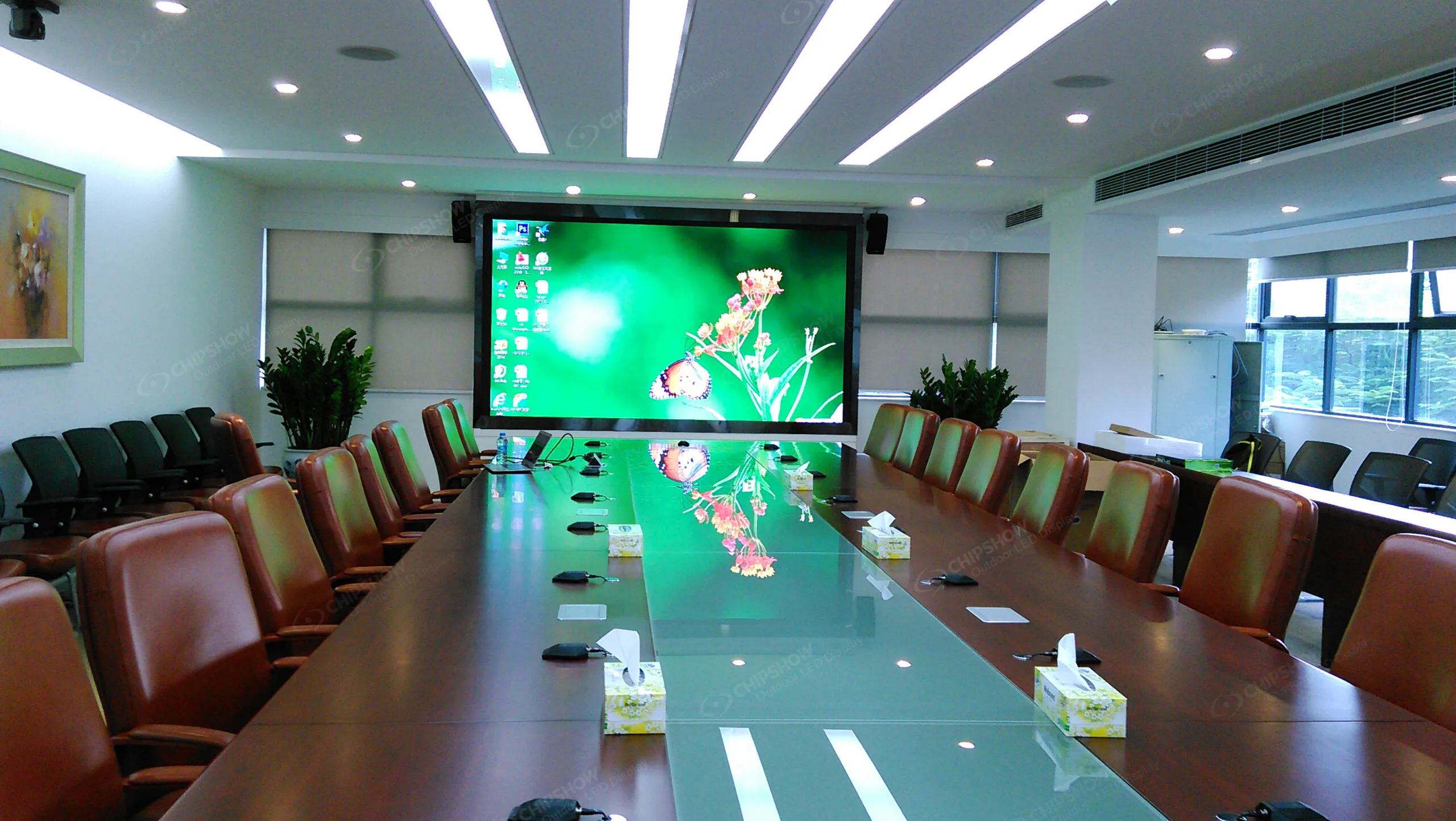
Concept illustration comparing an LED wall with a projector in the same room. Review both with your own content and lighting to judge which suits the space.
Brightness is the most visible consequence. A projector rated at 10,000 ANSI lumens distributing light across a 10-metre-wide screen produces approximately 100 lux at the surface—adequate in a darkened room, but visibly washed out under the ambient light of a retail store or a sunlit corporate lobby. An LED video wall operating at 1,000 nits remains clear and legible under the same conditions. For outdoor or semi-outdoor commercial environments, LED panels rated at 5,000 nits or higher are readable in direct sunlight.
Image formation also differs. A projector produces a single continuous image whose sharpness degrades as the projection distance increases. An LED wall consists of individual modules assembled into a continuous surface; the image quality is consistent edge to edge, and the resolution is determined by pixel pitch rather than projection optics. A P2.5 panel resolves clearly at 2.5 metres. A P1.5 panel resolves at 1.5 metres. The relationship between pitch and viewing distance is linear and predictable.
Lifespan is the third differentiator. A standard projector lamp lasts 2,000 to 5,000 hours before replacement. Laser-phosphor projectors extend this to 10,000 to 30,000 hours. An LED panel is rated for 50,000 to 100,000 hours—over a decade of daily commercial use before brightness degrades to half the original output. For installations in retail or public environments where equipment access for scheduled maintenance disrupts operations, the absence of lamp and filter replacements over the deployment period represents a measurable reduction in operational disruption.
Comparing Cost Over Time
An LED wall vs projection cost comparison cannot stop at the purchase invoice. The total cost over the deployment period tells a different story for each technology.
A mid-range laser projector driving a 5-metre-wide image in a controlled indoor environment costs less to acquire than an LED video wall of equivalent surface area at P2.5 pitch. The projector requires a projection surface and mounting hardware, but the total initial outlay is typically lower. Its ongoing cost includes lamp or laser module replacement at scheduled intervals, filter cleaning, and ambient light control measures such as blackout blinds or dimmable lighting.
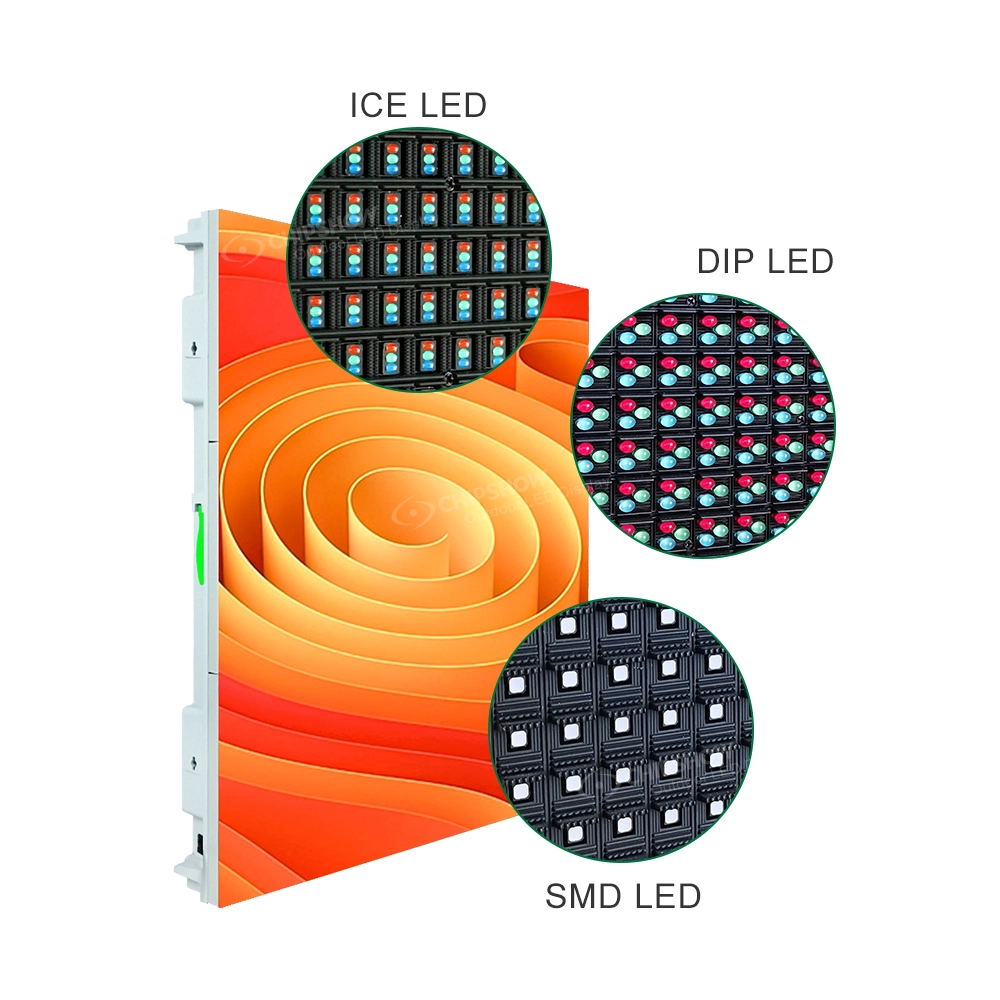
An LED video wall carries a higher initial cost—panels, mounting frame, video processor, and installation labour—but ongoing cost is limited to electricity and occasional module replacement. There are no lamps, no filters, and no light-control infrastructure to maintain. Standard SMD panels draw approximately 250 to 300 W/m² at operational brightness, while common-cathode COB panels draw 180 to 220 W/m². The lower power consumption of energy-efficient LED designs aligns with the energy performance documentation increasingly required for publicly funded and municipally owned installations across EU member states.
The break-even point depends on daily operating hours, ambient light control, and local electricity rates, so it should be compared using dated quotes rather than assumed. A like-for-like comparison would cover purchase price, expected usage hours, power consumption assumptions, installation, light control, service and spare parts, and any financing terms over the same period. In a conference room with limited daily use, a projector may come out ahead in some scenarios; in a retail storefront, transport hub, or outdoor advertising installation with long operating hours and limited ambient light control, an LED wall may come out ahead in others. The result depends on the specific assumptions, so treat any single period as scenario-dependent rather than a guaranteed outcome.
Matching Technology to Environment
The physical environment often settles the decision before any cost comparison is made. An LED display vs projector evaluation begins with the room, not the spec sheet.
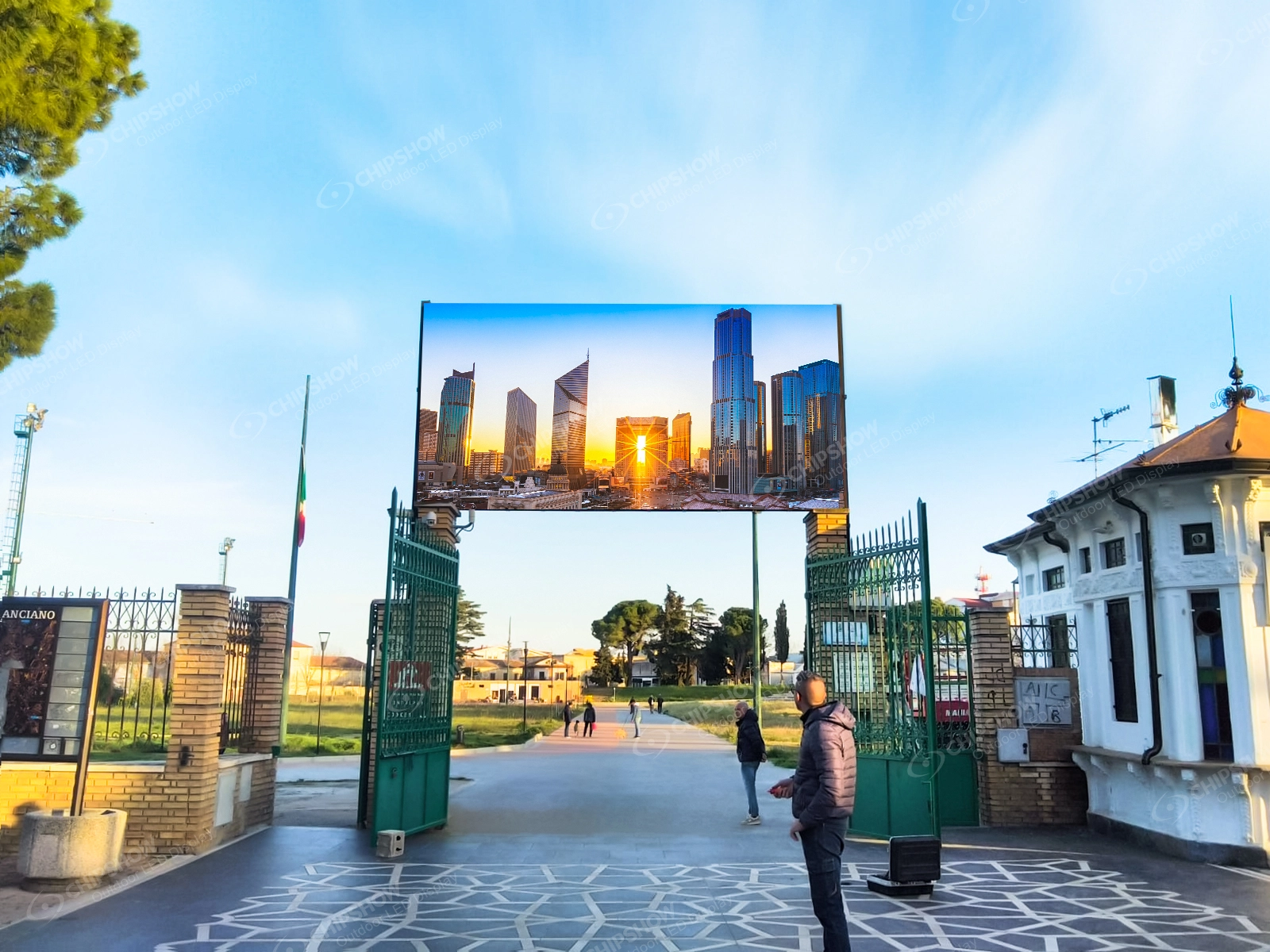
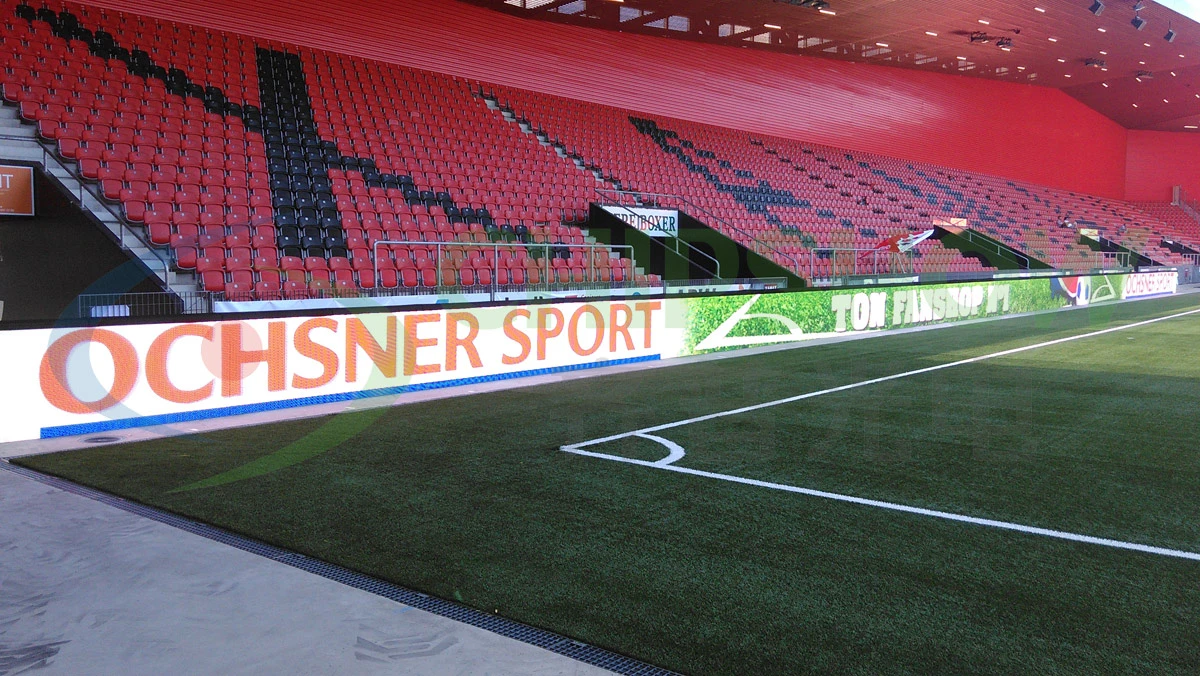
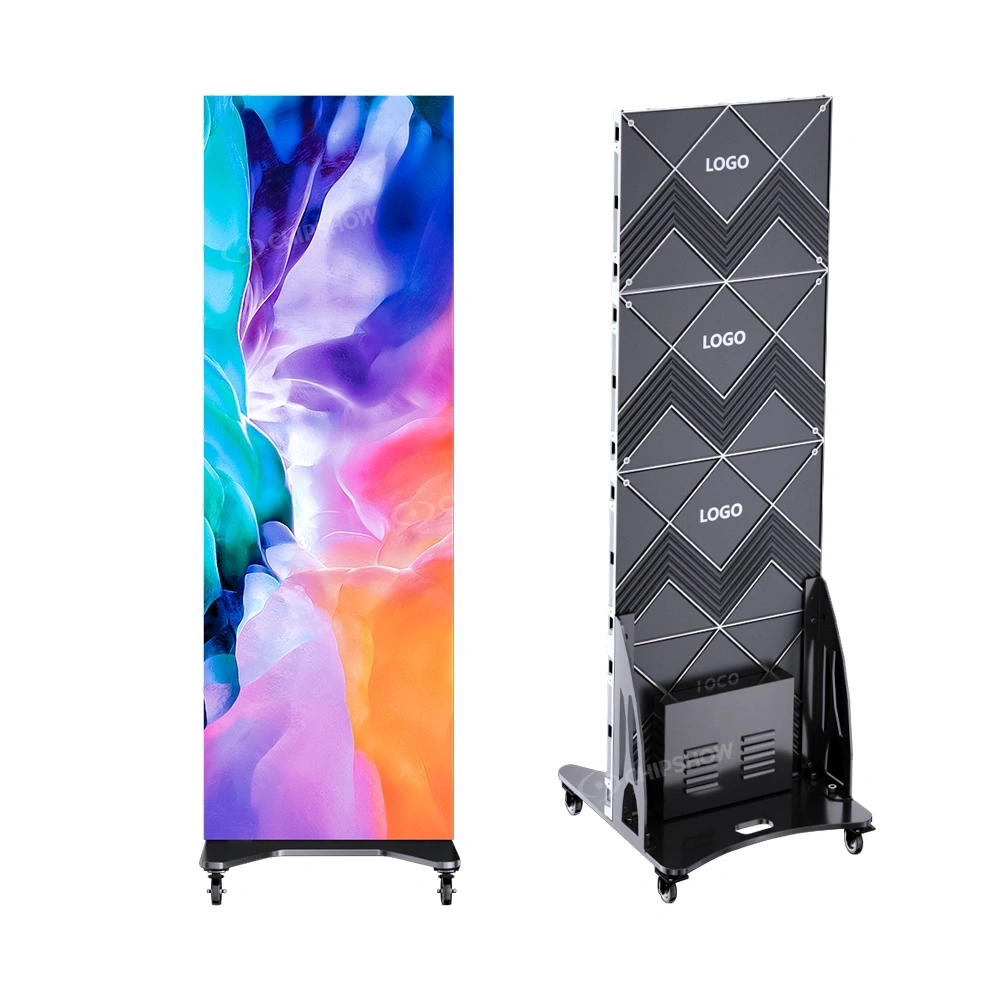
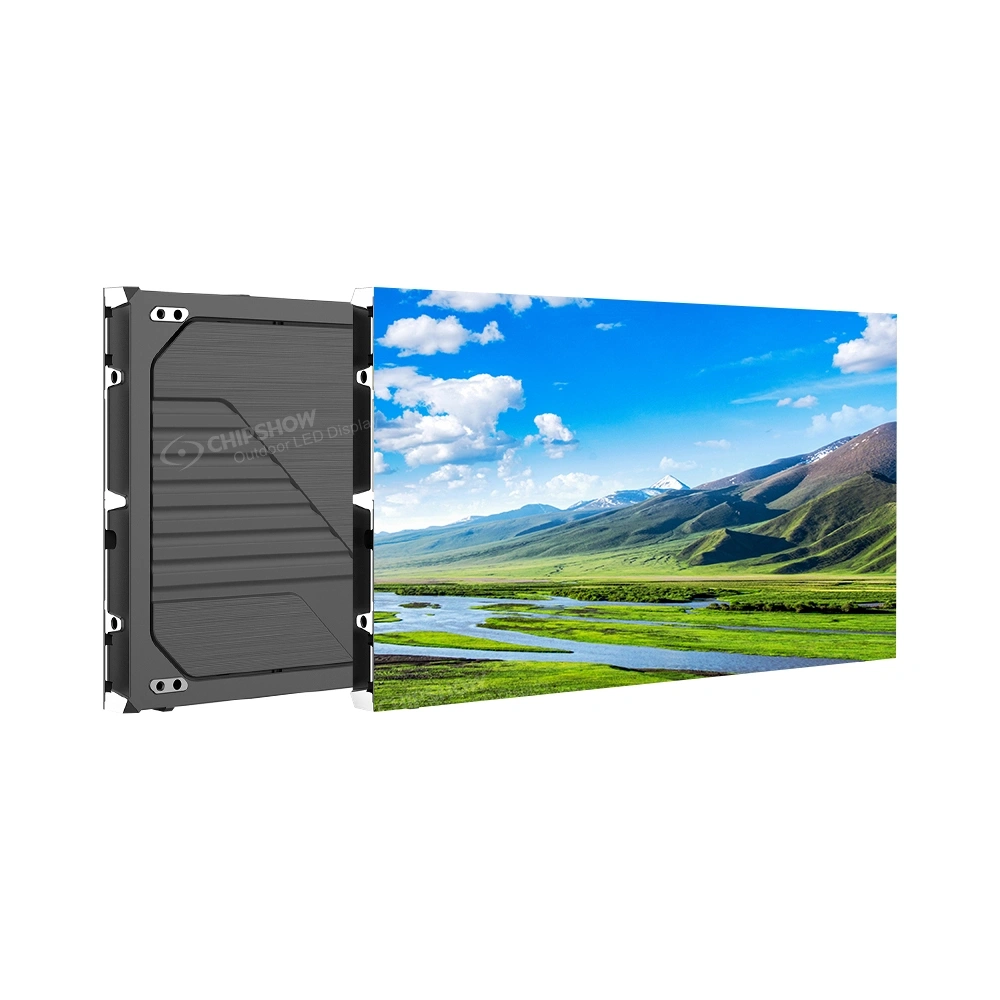
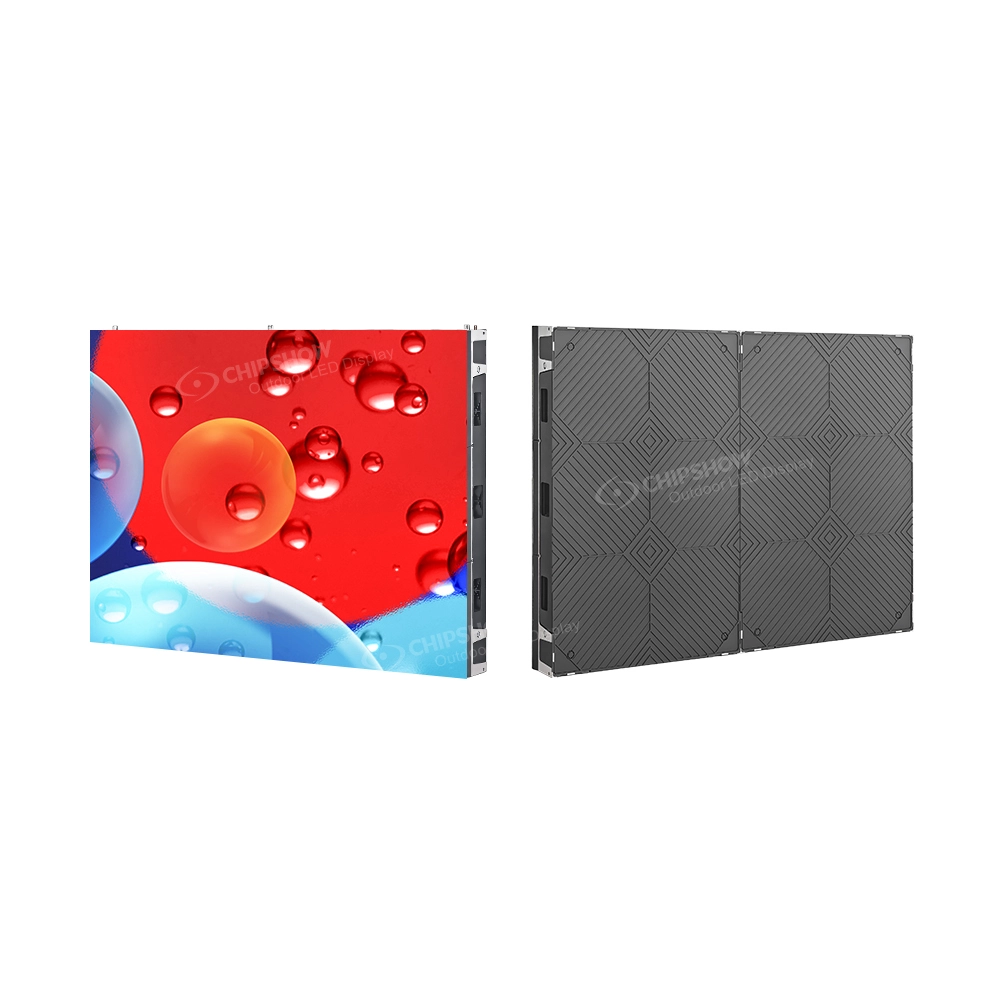
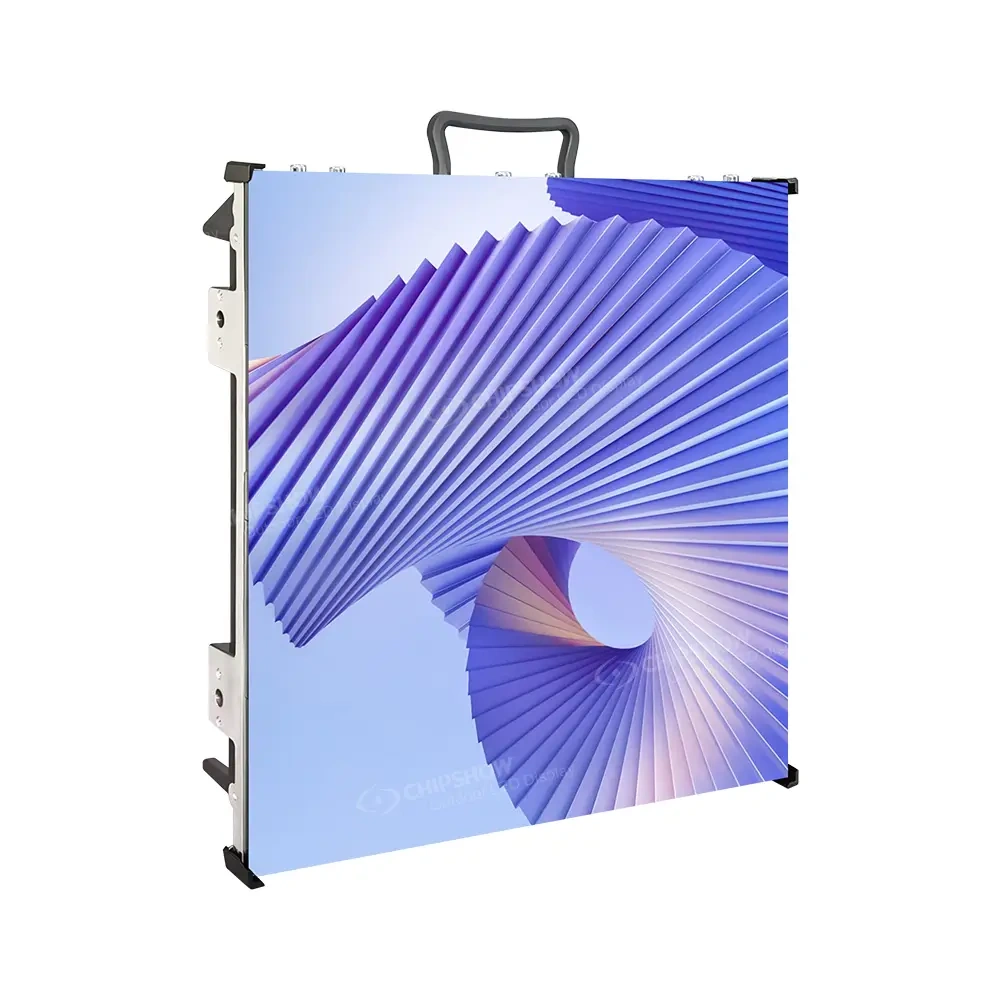
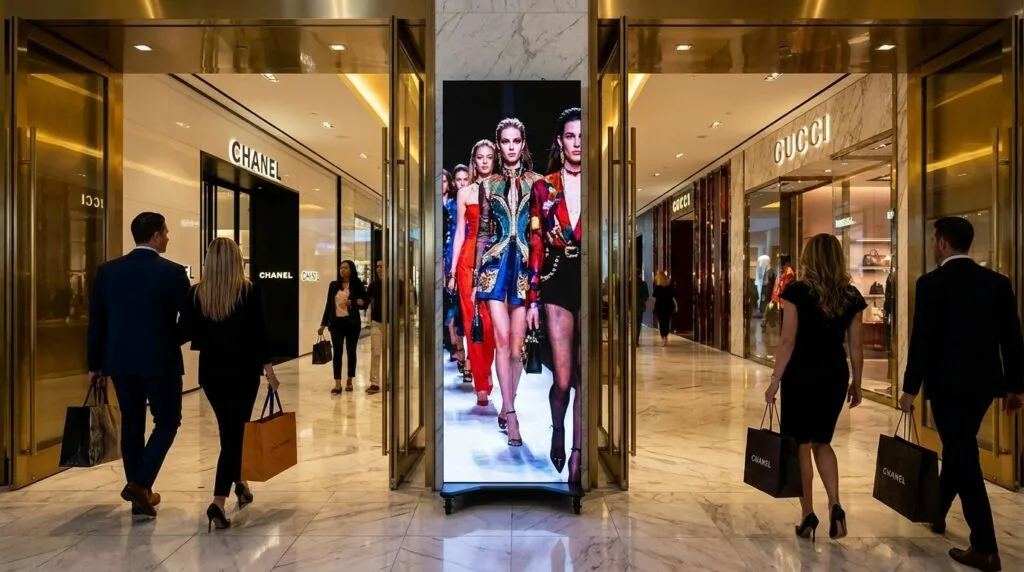
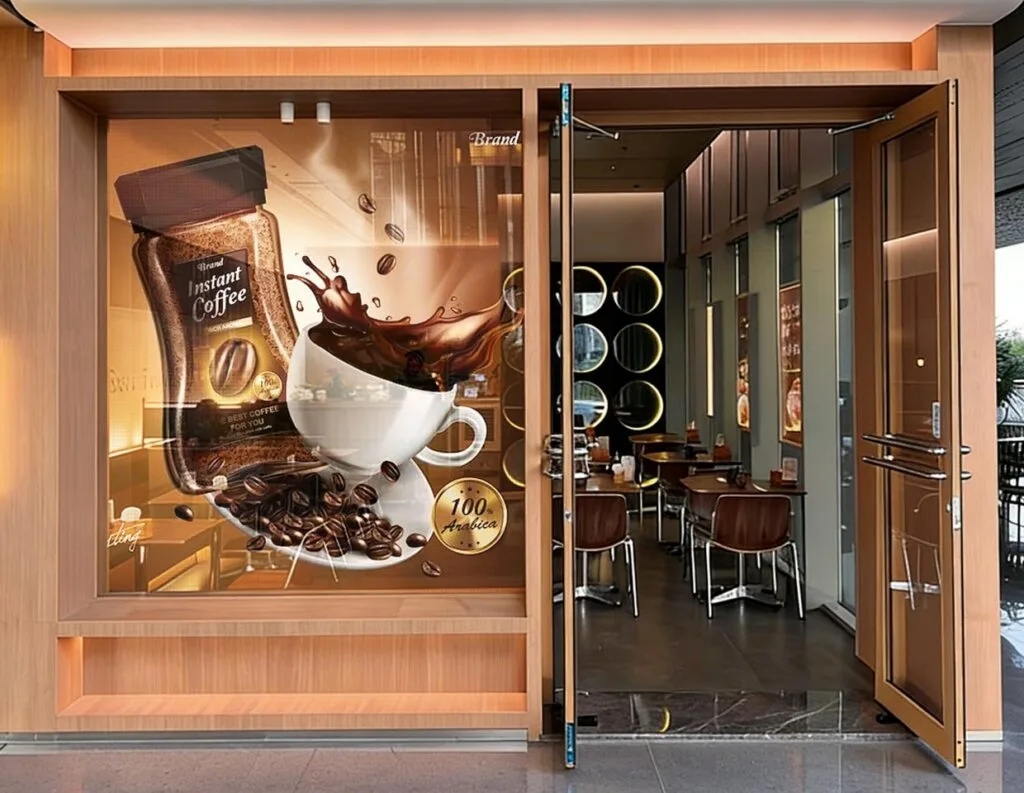
City-centre luxury retail operates within constraints specific to European high streets. The retail unit typically occupies the ground floor of a mixed-use building where residential tenants live on upper floors. Street-front glazing creates ambient light that a projector cannot overcome without blackout measures that would compromise the open storefront. The display must also meet EMC Class B emission limits under EN 55032—a regulatory requirement for electronic installations within 30 metres of residential property. LED is the appropriate choice for these conditions. Indoor commercial LED series such as Chipshow’s C-Max provide the brightness and CE marking with Class B compliance documentation.
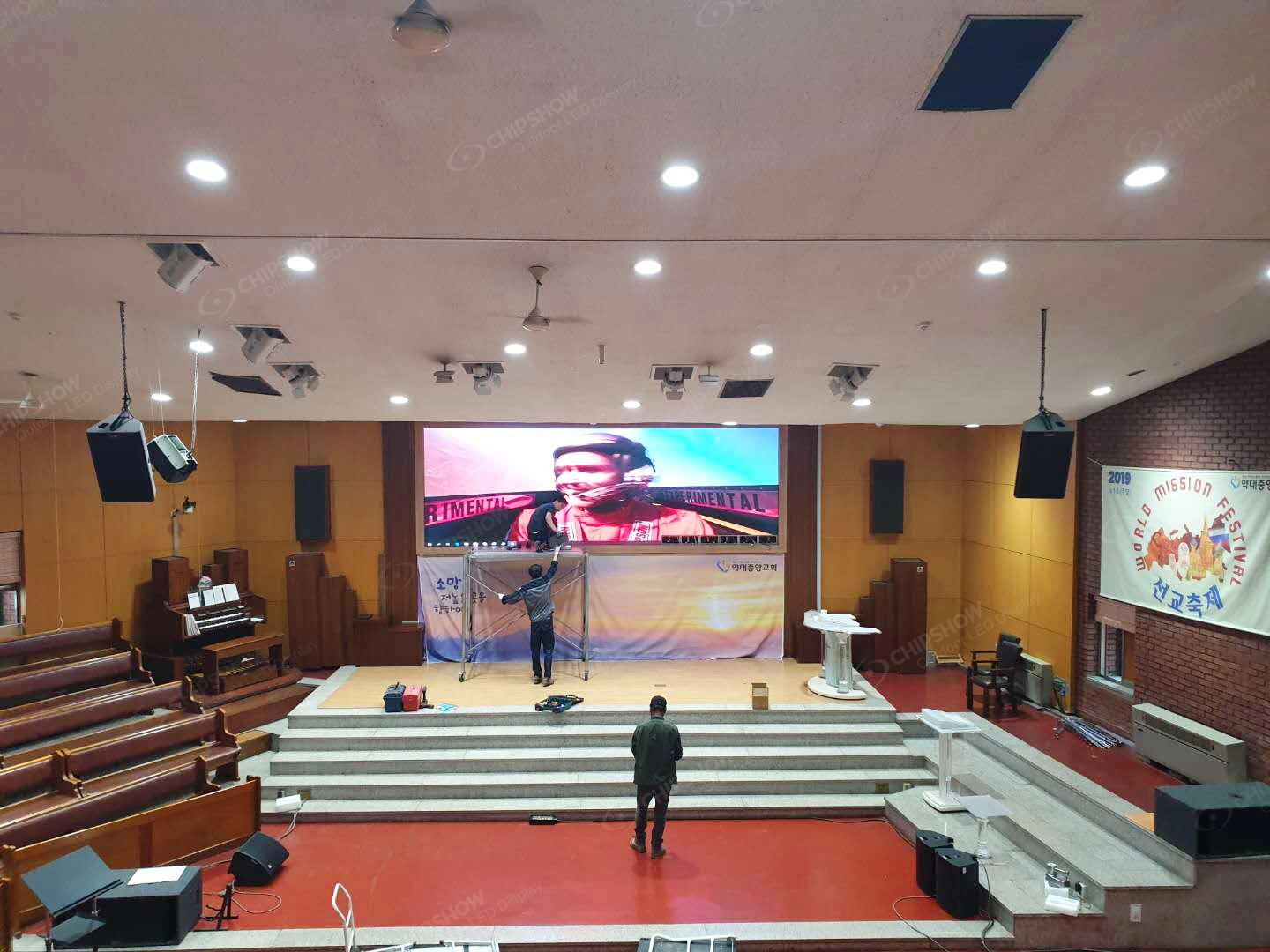
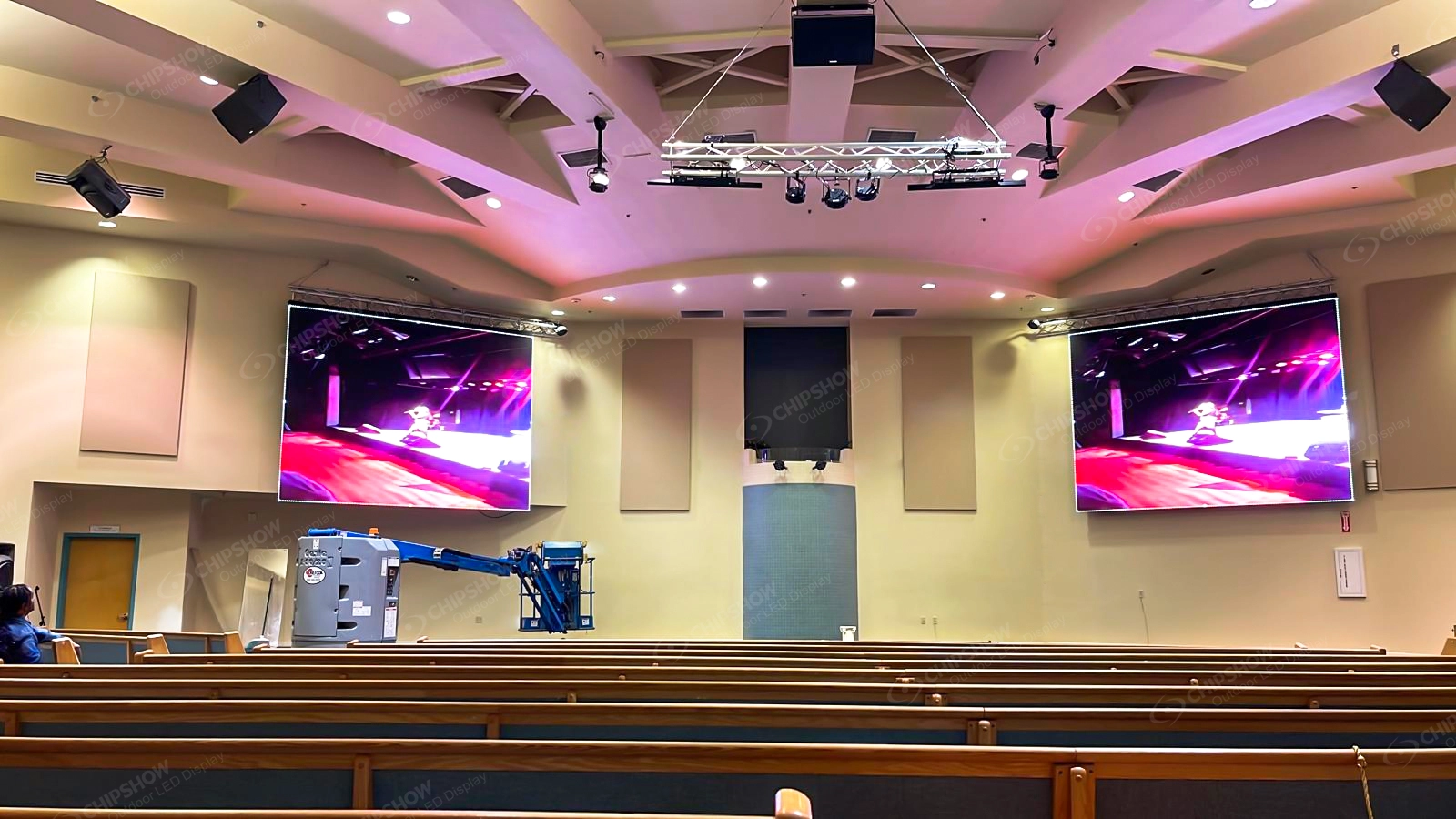
Conference rooms and training facilities with controlled lighting—dimmable fixtures, blinds on windows—are the environments where projection makes the strongest case. A laser projector at a fraction of the hardware cost delivers image quality suitable for presentations, video conferencing, and training sessions, provided the room can be darkened. If the room has floor-to-ceiling glass facing an atrium or exterior wall that cannot be blacked out, or if silent fanless operation is required for high-stakes boardroom presentations, indoor LED displays become the appropriate choice.
Corporate headquarters in period buildings present a structural constraint that often overrides the cost comparison. A listed or architecturally significant building prohibits wall penetration, heavy steel mounting frames, and visible equipment that disrupts the protected facade. Lightweight LED panels with front-service access address these constraints without structural alteration. The heavier rigging and ceiling-mounted hardware that projection requires may not receive conservation authority approval.
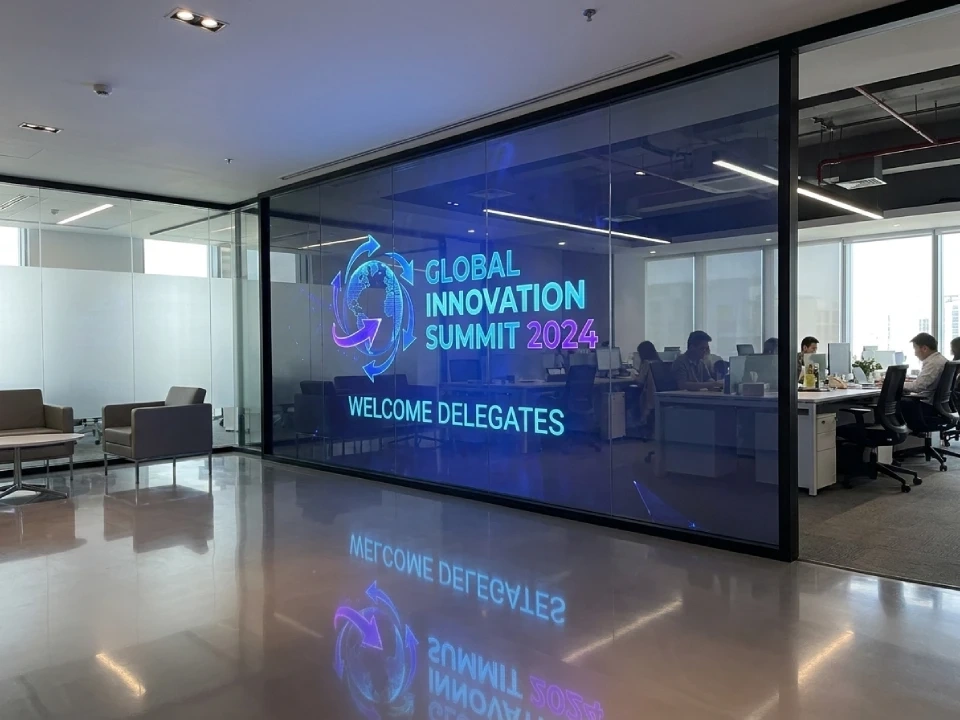
Municipal civic buildings represent a split decision. Council chambers and committee rooms with dimmable lighting and modest daily use are well served by projection at a lower initial cost. Public-facing areas—atriums, information points, exhibition spaces—that receive daylight through large windows and skylights favour LED for consistent visibility. For the procurement process, publicly funded installations increasingly require energy performance documentation aligned with ErP Directive 2009/125/EC, which LED manufacturers with documented power efficiency data can support.
Transport information displays in heritage stations face three simultaneous constraints: glass-roofed concourses flood the space with natural light that renders projection unusable during daytime, the listed-building status prohibits heavy mounting infrastructure, and the displays must operate continuously through passenger service hours. LED addresses all three: daylight-readable brightness, lightweight mounting, and no lamp-replacement downtime.
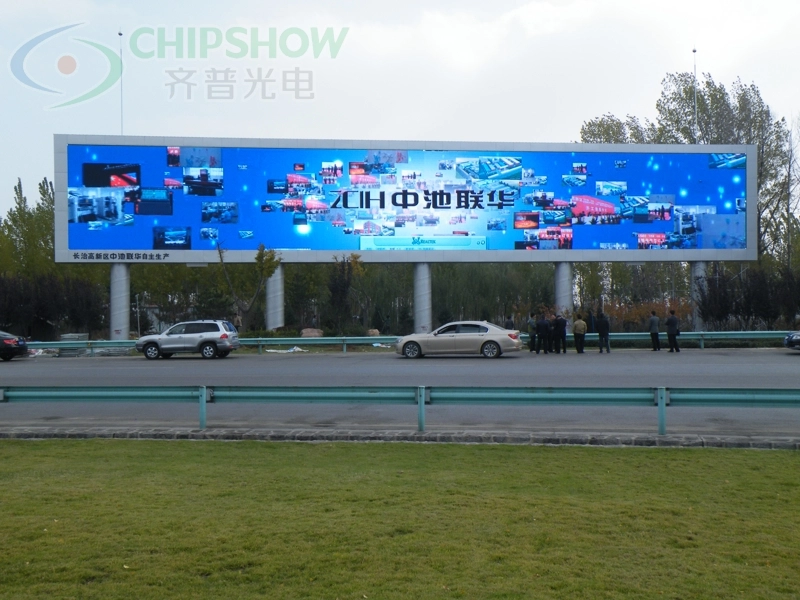
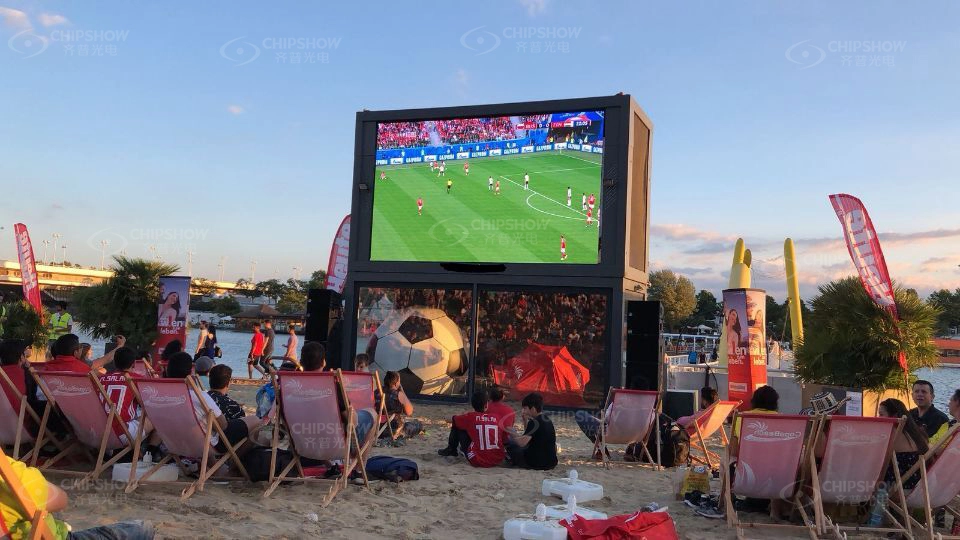
Outdoor advertising and DOOH applications are the clearest case in the comparison. A projector cannot compete with direct sunlight; the 5,000-nit minimum brightness for outdoor digital signage disqualifies projection entirely. Outdoor installations must also withstand year-round exposure to rain, frost, and UV radiation. For installations within 30 metres of residential property, EMC Class B compliance under EN 55032 is typically required. C-Slim outdoor LED series rated for 5,500 nits and above with full CE marking and Class B compliance are engineered for these conditions.
What Specification Sheets Leave Out
Three operational factors influence the long-term ownership experience in a European commercial environment.
Maintenance access. A ceiling-mounted projector requires a ladder or lift for lamp replacement and filter cleaning—routine tasks occurring several times annually. An LED wall with front-service modules allows a technician to replace a failed panel without accessing the rear. In retail and listed-building environments where rear access is unavailable or structurally impractical, front-serviceability is a requirement that eliminates certain designs before other criteria apply.
Noise and heat. Projectors generate audible fan noise and radiate heat into the room. In a quiet corporate boardroom or a small conference space, the cooling fan is a distraction. LED walls with fanless or passive cooling operate silently, making them suitable for environments where ambient noise is a concern.
Regulatory compliance. Any LED display permanently installed in a commercial or public venue within the European Union must carry CE marking demonstrating conformity with the EMC Directive 2014/30/EU and the Low Voltage Directive 2014/35/EU. For installations within 30 metres of residential property—a standard condition in European city-centre mixed-use developments—the display must meet EMC Class B emission limits under EN 55032. A system certified only to Class A may be refused installation approval by the local authority.
Conclusion
Choose between an LED wall and a projector using the room’s ambient light, content, operating hours and a project-specific cost comparison. Suitability, conformity documentation and maintenance needs depend on the exact equipment and installation. Contact Chipshow’s EU team for the selected model’s current specifications, applicable conformity documents, confirmed stock location and a dated delivery quotation.
Frequently Asked Questions
Q1: Does an LED video wall always outperform a projector?
No. The correct technology depends on the environment. In a bright retail storefront, an outdoor DOOH location, or a 24/7 control room, LED is the appropriate choice. In a dimmable conference room with moderate daily use, a laser projector delivers comparable image quality at a lower initial cost.
Q2: What certifications does an LED video wall need for European installation?
CE marking under the EMC Directive 2014/30/EU and the Low Voltage Directive 2014/35/EU. For installations within 30 metres of residential property, EMC Class B certification under EN 55032. EN 62368-1 safety certification is mandatory for AV equipment classification. Chipshow’s C-Max, C-Slim series carry full CE marking with Class B documentation.
Q3: How does an LED video wall’s lifespan compare to a projector?
LED panels are rated for 50,000 to 100,000 hours. A standard projector lamp lasts 2,000 to 5,000 hours; laser-phosphor projectors extend to 10,000 to 30,000 hours. In a commercial environment running 12 hours daily, an LED installation can operate for over a decade.
Q4: What lighting conditions make a projector impractical?
Any environment with uncontrolled ambient light—retail stores with street-facing windows, corporate lobbies with skylights, outdoor installations—renders a projector impractical. Projectors require controlled, dimmable lighting to produce commercially acceptable image quality.
Ready to scope your display? The LED screen selector walks through viewing distance, format and layout in one pass.