LED Brightness vs Power Consumption: Nits, Costs, EU Rules
How brightness choices drive power costs on European outdoor LED displays. Compare nits, W/m², night dimming rules, and common cathode savings across Europe.
LED Brightness vs Power Consumption for European Outdoor Displays
Share:
Higher brightness raises power draw faster than most buyers expect, because the final thousand nits demand disproportionate current and add heat. Most European sites need less peak brightness than spec sheets suggest, but the right setting depends on the site’s orientation, seasons, and viewing distance, confirmed by an on-site survey. In many European municipalities, night dimming rules make automatic brightness control a permit condition. Common cathode architecture cuts power consumption by up to 30 percent.
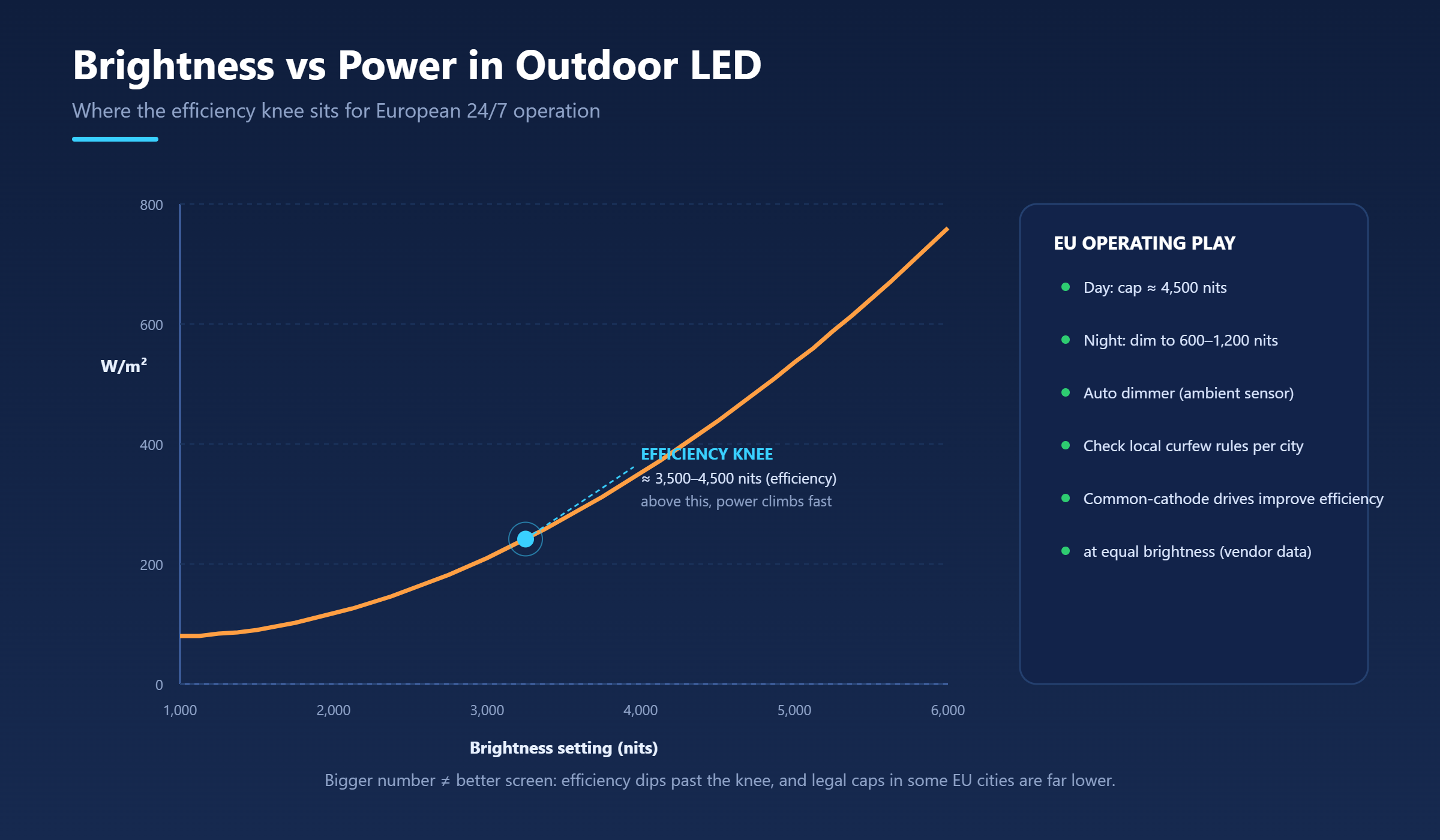
Brightness vs power: past the ≈3,500–4,500 nits knee, draw climbs fast — dim at night and follow local curfew rules.
Not sure which format fits your project? Use the LED screen selector to shortlist screens by nearest viewer and venue before requesting a quote.
Across Europe, three pressures now converge on each new outdoor LED screen purchase: commercial electricity prices that reached roughly €0.23 to €0.26 per kWh in the most expensive European markets in 2025, tightening municipal rules on after-dark luminance, and EU sustainability reporting rules that push efficiency up the procurement agenda. A screen specified for peak brightness alone can clear the visibility bar yet carry an operating cost and a permit risk that undermine the investment. Concretely, the article answers three questions: why the nits a site needs vary sharply with orientation and climate, what each extra 1,000 nits adds to running cost, and why automatic dimming has become a condition of many municipal permits rather than an optional extra.
Why Higher Brightness Raises Power Costs
Brightness and power consumption move together, yet the relationship is steeper than a straight line. An outdoor LED display is rated in nits, the unit for candelas per square meter (cd/m²), and its power draw is usually quoted in watts per square meter (W/m²) at peak output. As a reference point, Chipshow’s C-Slim platform, rated up to 14,000 nits, draws about 450 W/m² at full brightness. Pushing a panel toward the top of its brightness range, however, costs disproportionately more than cruising at its middle: as a general property of LED modules, the final thousand nits demand more current per unit of visible gain and convert a growing share of that current into heat rather than light.
Two established properties of LED modules explain the steepness. First, LED efficiency falls as drive current rises, so each increment of brightness extracted from the same diode costs more energy than the previous one. Second, sustained high output raises operating temperature, and heat both shortens LED lifespan and forces the cooling and power systems to work harder. Running a display below its peak for much of the day cuts power draw with little loss of visual impact under standard daylight conditions, which shows how far typical daily use sits below the spec-sheet peak.
This difference matters in practice because the power bill follows the brightness a screen actually runs at, while the peak figure on its spec sheet is reached only briefly, in worst-case afternoon sun. A screen rated at 14,000 nits is bought for that worst case, yet programmable modes can step it down to a fraction of that level for the rest of the day. Procurement teams comparing suppliers should therefore ask for the recommended sustained brightness and the power draw at that setting, rather than comparing spec-sheet peak figures. Two panels with identical maximum ratings can differ substantially in what they cost to run at the brightness a given site actually needs.
Simple arithmetic turns the spec sheet into a cost ceiling. The peak draw per square meter comes from the product documentation; for Chipshow’s C-Slim platform it is about 450 W/m² at full brightness. Multiplying that figure by the screen area gives the full-brightness draw in watts, and dividing by 1,000 converts it to kilowatts. Multiplying kilowatts by the local commercial electricity price per kWh, roughly €0.23 to €0.26 in the most expensive European markets in 2025, gives the cost of one hour at full output. The result marks the ceiling of the operating budget rather than its typical level, because a screen spends most of the day well below full brightness; the figure that matters for budgeting is the draw at the site’s surveyed operating brightness.
How Much Brightness a European Site Needs
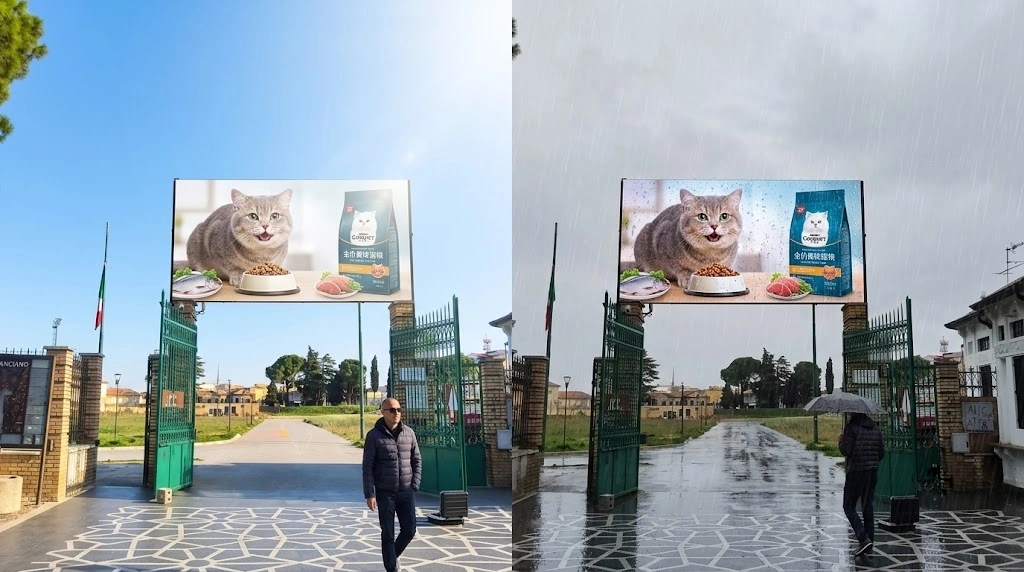
Ambient light at the screen face sets the requirement, and ambient light varies more across a single country than many buyers assume. Direct afternoon sun can push illumination above 100,000 lux, a figure widely cited in lighting standards, while an overcast northern sky or a shaded, north-facing facade presents a fraction of that load. Matching the brightness tier to the site, rather than to the largest number on a datasheet, is the single most effective way to keep both purchase cost and energy cost under control.
Getting the specification wrong is expensive in both directions. A panel specified below what its site requires cannot compete with the ambient light around it, and a display that reads as washed out in daylight fails its commercial purpose regardless of how little power it draws. A panel specified far above the requirement carries the opposite penalty: capacity the site rarely uses is paid for continuously, in a higher power bill for the life of the installation. The on-site survey exists to avoid both outcomes.
Because the requirement depends on the site rather than on the product, the practical route is an on-site survey: measure ambient light across seasons at the planned screen face, confirm orientation and viewing distance, and specify the operating brightness from the documented modes a platform offers.
One further distinction protects buyers from overpaying: contrast, the ratio between screen output and ambient light reflecting off the screen face, often decides real-world legibility as much as raw brightness. A moderately bright panel with a high contrast ratio and a low-reflection mask can read better in daylight than a brighter panel with a glossy face. Site orientation, mounting height, and facade material all influence this balance, which is why the final setting is confirmed with an on-site survey before specification.
Night Dimming Rules Shape Permit Approval
Daytime brightness is a commercial decision. Nighttime brightness is increasingly a legal one. Industry reporting across European markets indicates that many municipalities limit after-dark luminance to roughly 600 to 1,000 cd/m², and some jurisdictions add scheduled dimming or shutdown windows during late-night hours. An increasing number of EU authorities now treat automatic dimming as a condition of zoning approval, which changes the buying calculus: a display that lacks integrated brightness control can pass the technical tests and still fail at the permit stage.
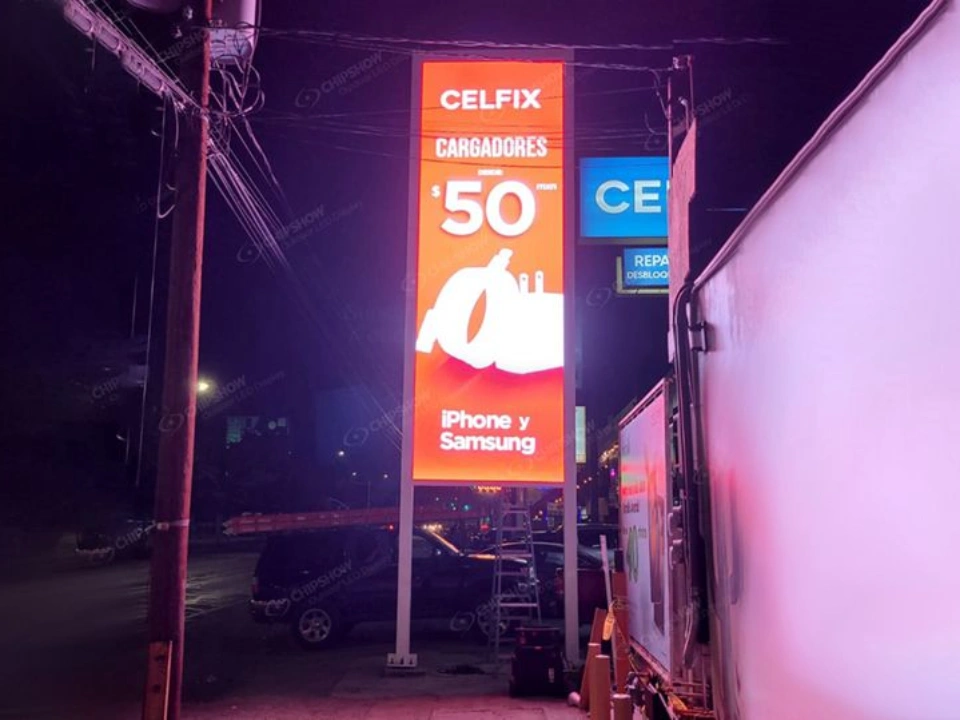
Automatic brightness control (ABC) is how screens meet those limits in practice. Ambient light sensors adjust output in real time, so the same screen that runs near its daytime peak at noon can step down through dusk to a compliance level after dark. Dimming also serves the energy budget: while the screen sits far below its peak for hours each night, average power draw stays well under the peak W/m² rating on the spec sheet, and lower operating temperatures support LED lifespan across long European summers.
For buyers, the practical translation is straightforward. Specify displays with sensor-based dimming as standard rather than as an option, confirm that brightness modes can be mapped to local requirements, and document the dimming behavior in the permit application. Platforms offering preset brightness modes make this documentation simple: modes that manage daytime energy also demonstrate to a municipal reviewer that the screen meets after-dark limits by configuration rather than by manual intervention.
From Survey Result to Specification
The survey produces figures, and those figures feed a short sequence of checks that ends in a specification any supplier can quote against:
Required brightness. The seasonal ambient-light measurements at the screen face set the operating brightness the site needs, and the peak rating only has to cover the worst-case sun exposure the survey recorded.
Power at that setting. The comparison that matters is the power draw at the recommended operating brightness rather than the spec-sheet peak, so each supplier is asked for the W/m² figure at the surveyed setting.
After-dark behavior. The municipality’s night luminance rules determine whether sensor-based dimming must be standard and what the permit documentation has to show.
Electrical supply. Peak draw and startup surge determine breaker sizing and, on older buildings, whether the incoming supply needs an upgrade before installation.
A specification that records these four outputs can go to any supplier as a like-for-like basis for quotes, and suppliers can be compared on how precisely they answer each item.
Where Real Energy Savings Come From
The technologies below are ranked by the size of the saving, so buyers can see where the budget should go first. The order reflects how each measure acts on power draw:
1. Common cathode architecture, up to 30 percent savings. Traditional common anode designs feed one voltage line to the red, green, and blue diodes together, and the surplus voltage the red channel cannot use dissipates as heat across the PCB. Common cathode designs separate the electrical paths and supply each color die at its optimal voltage. The documented result is up to 30 percent lower power consumption versus common anode equivalents, with lower operating temperatures as a side benefit.
2. Automatic brightness control. Ambient light sensors adjust output continuously, so the display runs at reduced luminance during the parts of the day when full output is unneeded, and raises output again under passing cloud or bright sun. Visual consistency survives the saving.
3. Passive thermal design removes the cooling overhead. Fan-cooled cabinets consume energy in their own right, and fan motors draw current while introducing filters that need servicing and moving parts that eventually fail. Fanless designs that dissipate heat through optimized aluminum-backed structures remove that overhead along with the maintenance burden.
4. High-efficiency power supplies and runtime scheduling. Power supply efficiency determines how much of the incoming current reaches the LEDs, and scheduling lower output during low-traffic overnight hours adds to the savings from brightness control. These measures are smaller than the first three but inexpensive to adopt at the specification stage.
Common cathode and automatic brightness control act on different parts of the same bill: the first lowers the baseline draw of the hardware, the second lowers draw during the hours when full output is unneeded. On a typical outdoor screen, the combined difference compounds across European electricity tariffs into a material share of total cost of ownership over a five-year horizon.
Specification Checklist Before Requesting Quotes
Comparable-looking screens differ most in what they cost to run. The following questions, asked of any supplier, expose differences that spec-sheet peak figures hide:
What is the calibrated operating brightness recommended for this site’s orientation and climate, and what is the power draw in W/m² at that setting?
Is common cathode architecture standard, and is the up to 30 percent saving documented against common anode equivalents?
Is an ambient light sensor with automatic brightness control included as standard, and can brightness modes be mapped to municipal after-dark limits?
Which certifications accompany the product, such as CE and RoHS approvals, and can documentation support the local permit application?
What is the cabinet weight and structural profile, since lighter magnesium alloy cabinets ease wind-load calculations and reduce steelwork on facades?
How is heat managed, passive or fan-cooled, and what does that mean for energy overhead and maintenance intervals?
What is the front and rear service access story, since dual access reduces the labor time of each intervention across the screen’s life?
Suppliers who answer these questions with documented figures, rather than ranges and assurances, are the ones whose screens will behave in operation as they promise on paper.
How C-Slim and C-Smart Balance Both
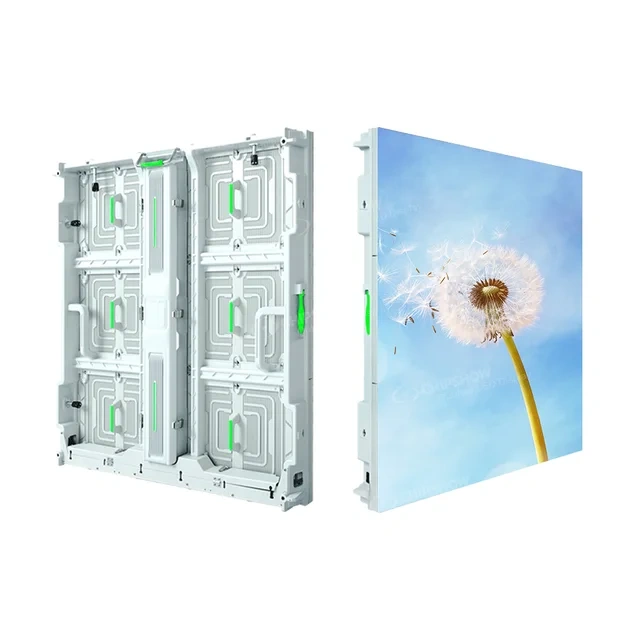
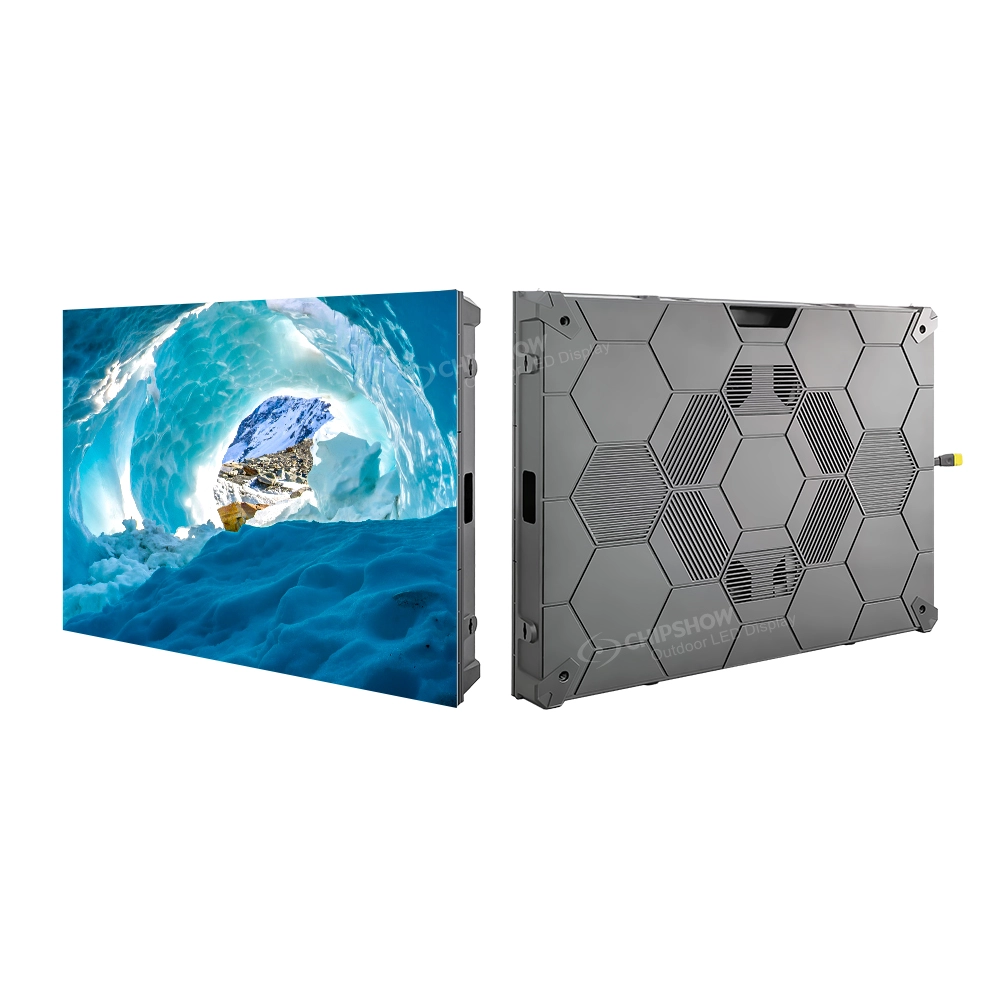
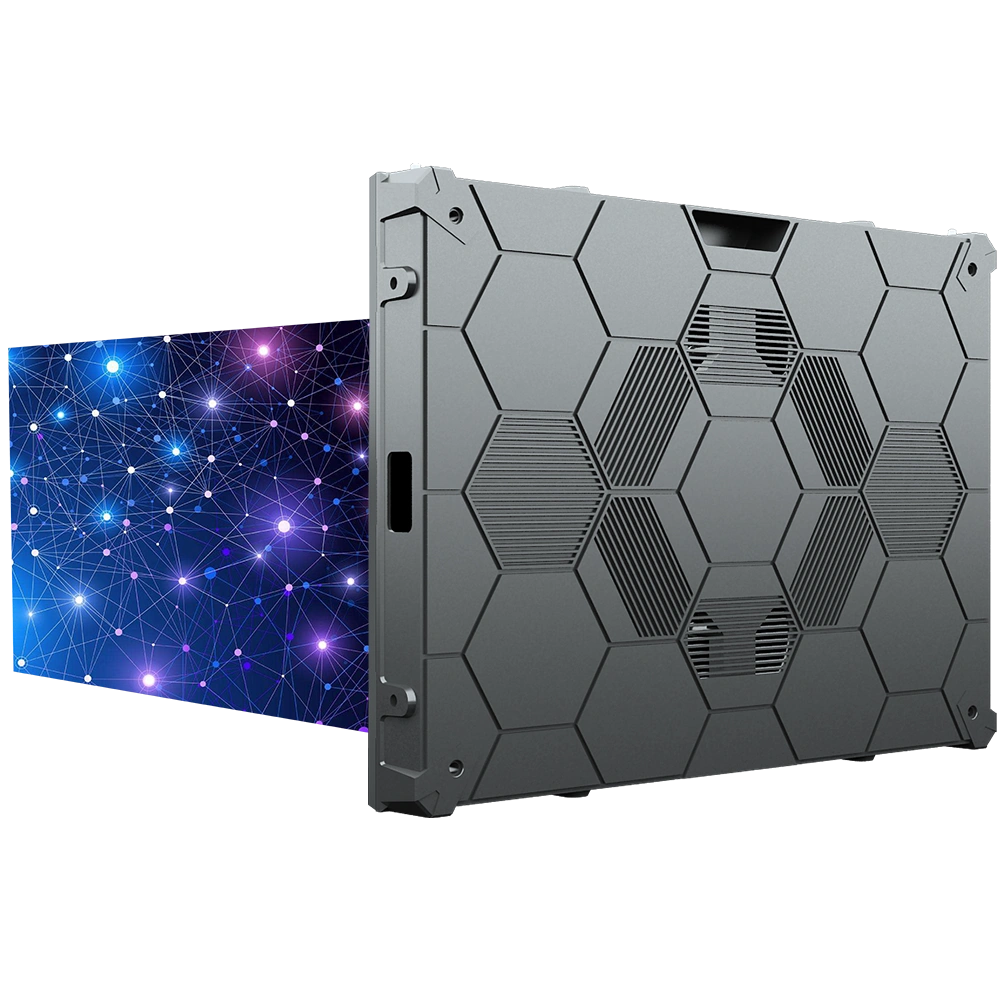
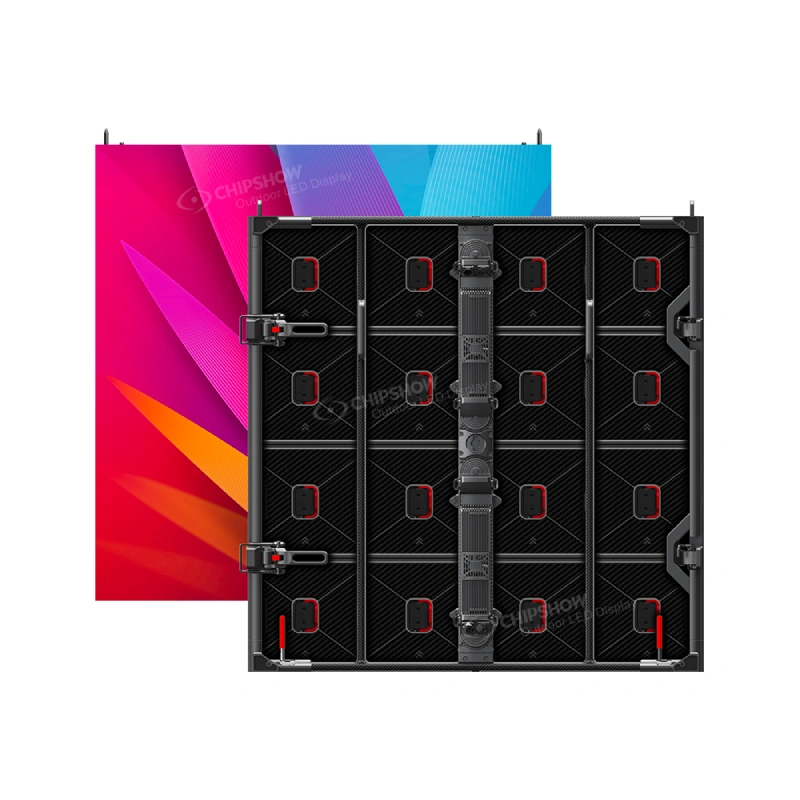
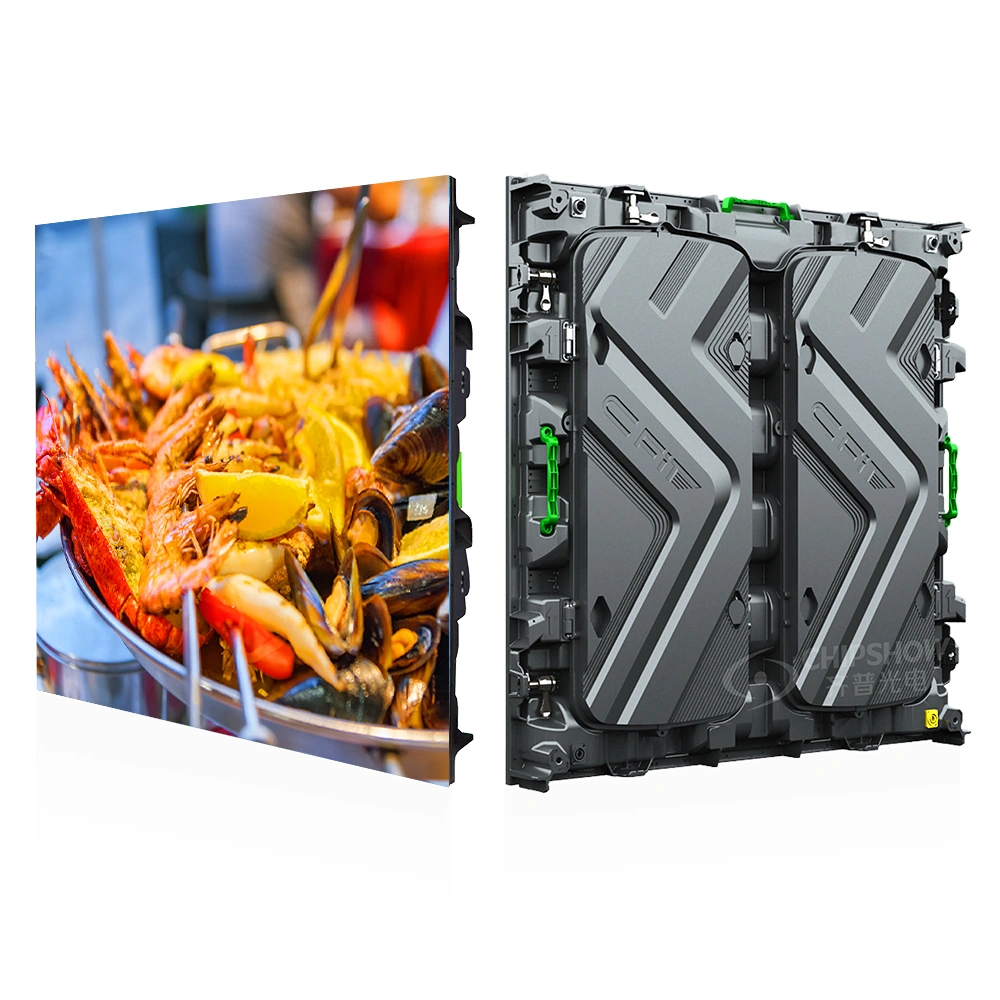
Two Chipshow platforms deliver the full documented brightness range. The C-Slim outdoor fixed LED display spans it in one platform: five preset brightness modes from 5,000 to 14,000 nits, the up to 30 percent common cathode saving, and auto-dimming readiness for after-dark municipal limits. Where a smaller sign does not need that ceiling, the C-Smart outdoor small signage display covers the lower end: P6.67 rated up to 8,000 nits and P3.91 rated up to 6,000 nits, in a light module-and-bracket form.
Both platforms follow the same design position: brightness is a dial matched to the site, and efficiency is the architecture beneath it. Full specifications and certification documents live on the product pages, and the broader outdoor LED display buying guide for 2026 maps both platforms against the complete set of European technical and compliance requirements.
Conclusion
In Europe the decision matters more than in most regions: commercial electricity tariffs make inefficient hardware expensive to run, direct Southern European sun demands high peak brightness, and night dimming rules require screens that adjust automatically. Matching the brightness tier to the site, asking for documented power figures, and choosing a platform built around both keeps operating cost and permit risk under control. Contact Chipshow team to match a brightness tier and platform to a specific site.
Frequently Asked Questions
Q1:How many nits does an outdoor LED display need in Europe?
Ambient light at the screen face sets the requirement, and it varies with orientation, seasons, and viewing distance. An on-site survey of seasonal ambient light gives the reliable figure for a specific location, and Chipshow’s outdoor platforms document brightness modes from 5,000 to 14,000 nits that can match the result.
Q2:Does higher brightness always mean higher energy consumption?
The relationship is direct but steeper than linear. Each additional tier of brightness costs more current than the previous one, and sustained high output adds heat that further raises consumption. Screens specified well above their site’s requirement carry that premium permanently, which is why matching the brightness tier to the site matters more than maximizing the spec-sheet peak rating.
Q3:What brightness is allowed at night in European cities?
Many European municipalities limit after-dark luminance to roughly 600 to 1,000 cd/m², and some jurisdictions add dimming schedules or shutdown windows late at night. Rules vary by city and by zone, so permit documentation for a specific location should be confirmed with the local authority. Displays with automatic brightness control adapt to these limits by configuration.
Q4:How much power does an outdoor LED billboard consume per square meter?
Actual power draw per square meter depends on brightness settings, content, operating hours, and dimming behavior, and it is almost always well below the peak rating quoted on a spec sheet. At full brightness, Chipshow’s C-Slim platform draws about 450 W/m², and everyday running levels sit below that. Site-level estimates should use the recommended operating draw for the site’s orientation and climate, confirmed during an on-site survey, rather than the spec-sheet maximum.
Q5:How much energy does common cathode technology save?
Common cathode architecture reduces power consumption by up to 30 percent compared with common anode designs, because each color diode receives its optimal voltage instead of a shared surplus that becomes heat. Lower operating temperatures follow, supporting LED lifespan and reducing cooling overhead.
Q6:Is auto-dimming required for outdoor LED displays in Europe?
In a growing number of EU jurisdictions, automatic dimming has become a condition of zoning approval for digital billboards, and many municipalities enforce after-dark luminance limits that make sensor-based control the practical route to compliance. Beyond compliance, dimming holds average power draw well below the peak rating, so it serves both the permit file and the operating budget.
Compare product references and EU stock options for your venue with the Europe LED screen selector before requesting a quote.
Table of Contents
Thanks, we will contact you soon!
Solutions
Match real venues with brand-ready experiences
Outdoor DOOH
Indoor DOOH
Stage & Events
Sports & Stadium
House of Worship
Conference & Education
Retail & Shopping Mall
Traffic & VMS
Outdoor DOOH
Outdoor DOOH & Billboards
Designed for: - Reach pedestrians and nearby traffic with legible advertising in compact urban locations. - Balance required brightness with energy use and the surrounding architecture. Features: Pixel-Pitch Selection · Architectural Integration · Brightness & Energy Balance Apply to: Urban DOOH · Property Advertising Screens · Building Façades
Designed for: - Show advertising, information and branded content clearly across indoor commercial and public spaces. - Preserve colour and contrast at close range and across wide interior sightlines. Features: Fine Pixel Pitch · Colour Consistency · Wide Viewing Angles Apply to: Shopping Centre Atriums · Transport Hubs · Control Rooms
Designed for: - Configure outdoor screens around small and mid-sized stages, venues and audience layouts. - Speed up changeovers across different venues, stage layouts and event requirements. Features: IP65 Protection · Flexible Splicing · Efficient Handling Apply to: Outdoor Festivals · Regional Concerts · Brand Activations
Designed for: - Give spectators clear views of scores, replays and sponsor content throughout the venue. - Accommodate wide seating angles, outdoor exposure and routine service requirements. Features: Wide Viewing Angles · Outdoor Stability · Maintenance Access Apply to: Stadium Perimeters · Scoreboards & Video Screens · Outdoor Fan Zones
Designed for: - Provide clear views of lyrics, service content and live video across varied seating positions. - Blend quiet LED displays into existing interiors without competing with their architectural character. Features: High Contrast · Quiet Operation · Architectural Integration Apply to: Historic Churches · Modern Sanctuaries · Multi-Faith Centres
Designed for: - Improve close-range viewing of presentations, shared data and remote participants. - Limit visual glare and operating noise in meeting and teaching spaces. Features: Fine Pixel Pitch · Low-Glare Options · Quiet Operation Apply to: Boardrooms · Lecture Theatres · Training Rooms
Designed for: - Capture attention from the pavement while preserving merchandise visibility inside. - Combine daylight visibility, transparency and a clean fit around existing shopfronts. Features: Daylight Visibility · High Transparency · Shopfront Integration Apply to: High-Street Shopfronts · Shopping Centre Entrances · Department Store Windows
Retail LED for EU shopping centres, flagship stores and luxury boutiques. Slim depth suits existing retail architecture; EMC Class B for mixed-use spaces.
Tender Compliant? We hold full CPR certification (No. 2531-CPR-CSC10059). Contact us for project-specific engineering and compliance docs.